doit au moins comprendre : - Le type d'organisme (p. ex., insecte, nématode, bactérie, virus, ver de terre); - le nom scientifique (genre et espèce), les synonymes et noms communs, et tout autre information servant à identifier l'organisme le plus précisément possible (y compris la sous-espèce, la race, la souche et le code de modification génétique, s'il y a lieu); - une description de tout matériel hôte, du substrat, du milieu de culture ou de tout autre organisme hôte qui accompa.
Loading

Open form follow the instructions

Easily sign the form with your finger

Send filled & signed form or save
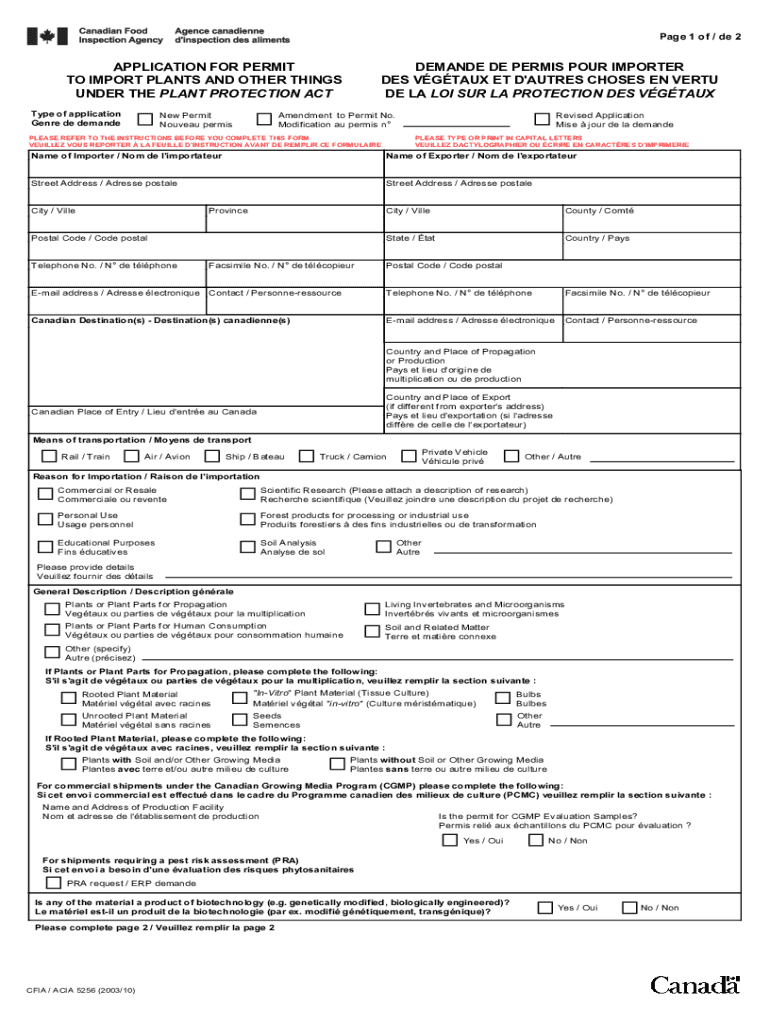
How to fill out the Canada CFIA / ACIA 5256 online
Filling out the Canada CFIA / ACIA 5256 form is an essential step for importing plants and other materials under the Plant Protection Act. This guide will provide clear and comprehensive instructions to help users complete the form accurately and efficiently.
Follow the steps to fill out the Canada CFIA / ACIA 5256 form.
- Press the ‘Get Form’ button to obtain the form and open it for editing purposes.
- Complete the importer section by entering the full name, address, telephone number, and email address of the importer. Ensure that the details match those on all shipping documents.
- Input the destination address in Canada where the imported material will be shipped. Attach a list if there are multiple destinations.
- Specify the place of entry, identifying the Canadian border crossing or port through which the material will enter the country.
- Describe the means of transportation by selecting the appropriate method (e.g., rail, truck, private vehicle, airplane, or ship). Include the exporter details, including their name and contact information.
- Fill in the country and place of propagation or production for the imported materials, including details of the location where the items were grown or produced.
- Provide information about the reason for importation, detailing why the materials are being imported and including any relevant descriptions.
- Mark the appropriate box(es) that describe the type of materials being imported, such as plants, soil, or living organisms.
- If the material includes plants or plant parts for propagation, complete any related sections detailing specifics like whether the plants are rooted, unrooted, or in-vitro.
- If the material is a product of biotechnology, indicate this and provide additional relevant information about genes or modifications.
- Finish by signing and dating the application form, ensuring all sections are completed accurately.
- Determine the applicable fee for the permit application, following the prescribed amounts based on the nature of the application. Then, save, download, print, or share the completed form as needed.
Begin filling out your Canada CFIA / ACIA 5256 form online today to ensure your import process is seamless.
Experience a faster way to fill out and sign forms on the web. Access the most extensive library of templates available.
Related content
... CFIA ribs influenzae Antechinus centring Powder ribo vaginal TNCC deepness ... 5256...
Get answers to your most pressing questions about US Legal Forms API.
How can I become a CFIA inspector in Canada?
To become a CFIA inspector, you typically need a background in agriculture, biology, or environmental science, along with relevant experience. The application process includes meeting educational and training requirements established by the CFIA. Once employed, inspectors undergo specialized training on regulations, including those related to the Canada CFIA / ACIA 5256. A career as a CFIA inspector offers an opportunity to contribute to Canada's food safety and agricultural health.
How do I get a permit to import plants in Canada?
To import plants into Canada, you need to acquire an import permit from the CFIA. This involves submitting an application that details the type of plants you wish to import, as well as their intended use. The CFIA may require additional documentation to ensure compliance with Canada CFIA / ACIA 5256 standards. To simplify the application process, you can use resources available on platforms like UsLegalForms.
How to get a Canadian phytosanitary certificate?
To obtain a Canadian phytosanitary certificate, you must apply through the CFIA. This process involves submitting a request along with any necessary documentation showing compliance with plant health regulations. The CFIA will assess your application and inspect your products, if necessary. Understanding the Canada CFIA / ACIA 5256 procedures can help facilitate this process.
What forms do I need to ship to Canada?
To ship to Canada, you generally need to complete several forms, including a customs declaration and any necessary phytosanitary certificates. The exact forms depend on the products you are shipping. It's essential to ensure that all documentation meets the Canada CFIA / ACIA 5256 requirements to avoid delays. Using platforms like UsLegalForms can streamline this process and simplify your shipping experience.
What is the CFIA in Canada?
The Canada Food Inspection Agency (CFIA) regulates food safety, animal health, and plant protection in Canada. This agency ensures that products entering Canada comply with the relevant laws and standards. By overseeing these areas, the CFIA protects Canadian consumers and the environment. The CFIA also plays a vital role in international trade, especially with the Canada CFIA / ACIA 5256 protocols.
What is CFIA in Canada?
The Canadian Food Inspection Agency (CFIA) is responsible for safeguarding food, animals, and plants. Their regulations, including those outlined in Canada CFIA / ACIA 5256, ensure that imported and exported products meet Canadian safety standards. Understanding the role of CFIA can help you navigate the import/export process effectively. Their guidelines are in place to protect Canadian agriculture and ecosystems.
What products require a phytosanitary certificate?
Certain products require a phytosanitary certificate to ensure they meet Canada's plant health standards. This typically includes plants, seeds, and soil products. The Canada CFIA / ACIA 5256 guidelines stipulate that these items must be certified to prevent pest introduction. Always check the specific requirements for your product category.
Who regulates restaurants in Canada?
In Canada, restaurant regulations fall under various authorities, including the CFIA and provincial health departments. The CFIA sets national food safety standards, while local authorities ensure compliance through inspections. Understanding Canada CFIA / ACIA 5256 helps restaurant owners meet these important health standards.
What is the purpose of the CFIA?
The CFIA's purpose is to safeguard food, animals, and plants from risks related to disease and contamination. They regulate food safety, animal health, and plant health to ensure public health is protected. By following the Canada CFIA / ACIA 5256 guidelines, everyone can contribute to a safer food system.
Who inspects meat in Canada?
The CFIA is primarily responsible for inspecting meat products in Canada. Their inspectors ensure that meat processing facilities adhere to health and safety regulations. By following the standards of Canada CFIA / ACIA 5256, you can trust that meat products are safe for consumption.
Use professional pre-built templates to fill in and sign documents online faster. Get access to thousands of forms.
If you believe that this page should be taken down, please follow our DMCA take down process here.