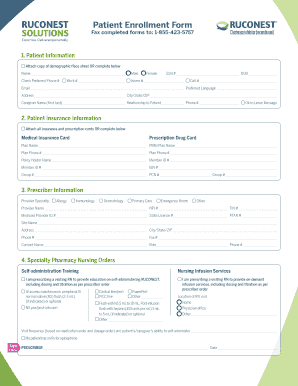
Ion Care No Known Allergies Concurrent Medications Dispense as written PRESCRIBER Print Date Substitution permitted PRESCRIBER Print Date I appoint Pharming Healthcare, Inc., RUCONEST SOLUTIONS, its affiliates, and their representatives on my behalf to convey this prescription described herein to the dispensing pharmacy. I understand that I may not delegate signature authority. 6. Optional Prescription for Bridge to Therapy Program for RUCONEST Patient Name Dispen.
Loading
Open form follow the instructions
Easily sign the form with your finger
Send filled & signed form or save
How to fill out the Physical Examination In Telemedicine Template online
Filling out the Physical Examination In Telemedicine Template online is a crucial step to ensure accurate documentation and effective telemedicine practices. This guide will provide step-by-step instructions to help users navigate through the form efficiently.
Follow the steps to complete the template with ease.
- Press the ‘Get Form’ button to acquire the template and open it in your browser.
- Begin by entering patient information. Include full name, date of birth, preferred contact number, and email address. If available, attach a demographic sheet.
- Provide insurance information. Complete all relevant fields regarding the patient's medical and prescription coverage or upload copies of the insurance cards.
- Fill out prescriber information, stating the provider's specialty, name, and relevant identification numbers. Include contact details for the prescriber.
- Complete the specialty pharmacy nursing orders section, detailing required services or prescriptions. Include instructions for nursing visits and other necessary interventions.
- For prescription details, provide necessary medication information, dosage, quantity, and special instructions needed for administration.
- After entering all required information, review the completed template for accuracy and completeness.
- Once satisfied with the information, users can save changes, download or print the completed form, or choose to share it as needed.
Start completing your document online today to streamline your telemedicine process.
Experience a faster way to fill out and sign forms on the web. Access the most extensive library of templates available.
Related content
On the day of the telehealth visit, patients should be ... for example, atrioventricular...
As Telehealth Visits Rise, Stanford Physicians Offer Tips for Remote Physical Exams.
Get answers to your most pressing questions about US Legal Forms API.
What is a basic physical assessment?
It measures important vital signs -- temperature, blood pressure, and heart rate -- and evaluates your body using observation, palpitation, percussion, and auscultation. Observation includes using instruments to look into your eyes, ears, nose, and throat.
What should be included in a physical assessment?
In general, the standard physical exam typically includes: Vital signs: blood pressure, breathing rate, pulse rate, temperature, height, and weight. Vision acuity: testing the sharpness or clarity of vision from a distance. Head, eyes, ears, nose and throat exam: inspection, palpation, and testing, as appropriate.
What are the 4 methods used by the physician during a physical examination?
Physical examination is the process of evaluating objective anatomic findings through the use of observation, palpation, percussion, and auscultation. The information obtained must be thoughtfully integrated with the patient's history and pathophysiology.
What are the basic components of a physical examination?
A physical examination usually includes: Inspection (looking at the body) Palpation (feeling the body with fingers or hands) Auscultation (listening to sounds) Percussion (producing sounds, usually by tapping on specific areas of the body)
What are the five basic techniques used in physical assessment?
The components of a physical exam include: Inspection. Your examiner will look at, or "inspect" specific areas of your body for normal color, shape and consistency. ... Palpation. ... Percussion. ... Auscultation. ... The Neurologic Examination:
How do you perform a physical assessment?
WHEN YOU PERFORM a physical assessment, you'll use four techniques: inspection, palpation, percussion, and auscultation. Use them in sequence—unless you're performing an abdominal assessment. Palpation and percussion can alter bowel sounds, so you'd inspect, auscultate, percuss, then palpate an abdomen.
What are the 4 techniques of physical assessment?
Physical examination Inspection (looking at the body) Palpation (feeling the body with fingers or hands) Auscultation (listening to sounds) Percussion (producing sounds, usually by tapping on specific areas of the body)
How do you write a normal physical exam?
PHYSICAL EXAMINATION - Normal. Vital signs: BP 120/80; P 68/min reg; RR 14/min; T 36.9 °C; Wt. ... General: Well-developed, well-nourished, appearing stated age. ... Head: Normocephalic without scalp lesions. ... Neck: Neck supple with full range of motion (ROM). ... Chest & back: No abnormal curvature of spine. ... Lungs: ... Cardiovascular:
Use professional pre-built templates to fill in and sign documents online faster. Get access to thousands of forms.
If you believe that this page should be taken down, please follow our DMCA take down process here.