10. 11. IV. DOES OR WILL YOUR BUILDING CONTAIN ANY OF THE FOLLOWING? Smoke Control Systems in Open Wells Underground Storage Tanks Swimming Pools, Spas and Hot Tubs LPGas Tanks 43212109876543210987654321098765432121098765432109876543210987654321 43212109876543210987654321098765432121098765432109876543210987654321 43212109876543210987654321098765432121098765432109876543210987654321 43212109876543210987654321098765432121098765432109876543210987654321 4321210987654321098765432109876543212109876.
Open form follow the instructions
Easily sign the form with your finger
Send filled & signed form or save
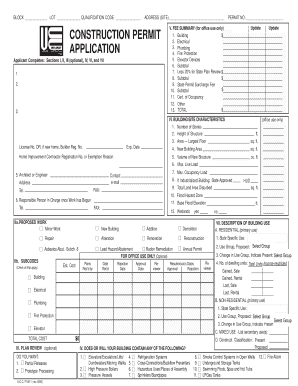
How to fill out the NJ UCC F100-1 online
The NJ UCC F100-1 form is essential for applying for construction permits in New Jersey. This guide provides step-by-step instructions on how to accurately complete the form online, ensuring that users of all backgrounds can understand the process.
Follow the steps to successfully complete the NJ UCC F100-1 form online.
- Click the ‘Get Form’ button to access the NJ UCC F100-1. This action will open the form in an editing interface for you to begin filling it out.
- Fill in the identification section. Provide the proposed work site address, ensuring all relevant fields are completed, such as block and lot numbers.
- Complete the 'Proposed Work' section by detailing the type of construction being sought, whether it's for new buildings, renovations, or minor work.
- In the 'Building/Site Characteristics' section, accurately indicate the number of stories, height, and area of the structure. Provide clear figures in the designated fields.
- Include information on the responsible person in charge of the project once work commences, along with their contact details.
- If applicable, fill in the 'Lead Hazard Abatement' section to certify compliance with relevant safety regulations.
- Review your entries for accuracy. Ensure all required sections are completed based on whether you are the owner in fee or an agent acting on behalf of the owner.
- Finalize the application by signing the certification in lieu of oath. Make sure to date the form and provide any necessary additional signatures.
- Once you have filled out the form completely, you can save your changes, download a copy, print it for your records, or share it as needed.
Start filling out your NJ UCC F100-1 form online today for a smooth permit application experience.
Experience a faster way to fill out and sign forms on the web. Access the most extensive library of templates available.
Related content
U.C.C. F100-1 (rev. 8/23). V. FEE SUMMARY (for office use only). $. 1. Number of Stories...
The municipal enforcing agency shall arrange for the printing of all forms to be used in...
Get answers to your most pressing questions about US Legal Forms API.
How long does it take to get a building permit in NJ?
The time frame for obtaining a building permit in NJ can vary widely, but typically ranges from two weeks to a couple of months. This variability depends on factors like the scope of your project and the responsiveness of the local authorities. To expedite your experience, make sure your application aligns with the NJ UCC F100-1 regulations. Utilize resources like uslegalforms to guide you through the preparation process.
What electrical work can be done without a permit in NJ?
In NJ, minor electrical work such as changing light fixtures or replacing switches generally does not require a permit. However, for any significant alterations or installations, compliance with NJ UCC F100-1 is mandatory. Always consider local regulations, as they may impose additional requirements. When in doubt, consult whsuslegalforms to ensure you are undertaking the correct procedures.
What is the UCC law in New Jersey?
The UCC law, or Uniform Construction Code, in New Jersey establishes standards for construction and renovation projects to ensure safety and accessibility. Key components include building codes that outline structural integrity, energy efficiency, and occupancy requirements as specified in NJ UCC F100-1. Understanding these regulations is essential for any construction project. You can always refer to uslegalforms for detailed guidance on compliance.
How long does it take to get a building permit approved in NJ?
The approval process for a building permit in NJ usually takes between two and six weeks, depending on the complexity of your project and the municipality's workload. Ensure your application meets the NJ UCC F100-1 requirements to avoid delays. It's important to follow this timeline closely, as any pending documents or resubmissions can significantly extend the approval period. A resource like uslegalforms can streamline your application process.
What happens if you build without a permit in NJ?
Building without a permit in NJ can lead to significant penalties, including fines or orders to cease construction. If you proceed without proper authorization, you may be required to remove or modify the work to comply with NJ UCC F100-1 standards. It’s crucial to consult with your local building authority to mitigate any potential legal issues. Using uslegalforms can help you understand what you’re facing and how to rectify it.
How to get a building permit after construction?
To obtain a building permit after construction, you typically need to submit a request to your local building authority. This request often requires documentation showing compliance with the NJ UCC F100-1 guidelines. In some cases, an inspection may also be necessary to ensure your construction meets safety and zoning laws. Consider using a platform like uslegalforms to navigate the process more easily.
How many times can a UCC be continued?
You can continue a UCC filing as many times as necessary in New Jersey, as long as you file a UCC-3 continuation statement before the expiration of the original term. This flexibility allows you to maintain your interests in accordance with the NJ UCC F100-1. Staying proactive will help avoid any disruptions.
How long is a UCC-3 good for?
3 form, which is used to amend or continue a UCC filing, remains valid for five years in New Jersey, similar to the original UCC. It's crucial to file this form on time to preserve your security interests under the NJ UCC F1001. This simple step can save you from potential complications.
How long is a UCC fixture filing good for?
A UCC fixture filing in New Jersey is valid for 30 years, which provides a long timeframe for securing interests in specific fixtures. However, if you wish to maintain your rights beyond this period, filing a continuation statement is essential. Therefore, managing your NJ UCC F100-1 effectively can prevent any lapses.
How long is a UCC valid for in NJ?
In New Jersey, a UCC is generally valid for five years from the date of filing. After these five years, the UCC will expire unless it is renewed. By filing a UCC-3 continuation statement, you can extend the validity of your NJ UCC F100-1, ensuring your security interests remain protected.
Use professional pre-built templates to fill in and sign documents online faster. Get access to thousands of forms.
If you believe that this page should be taken down, please follow our DMCA take down process here.