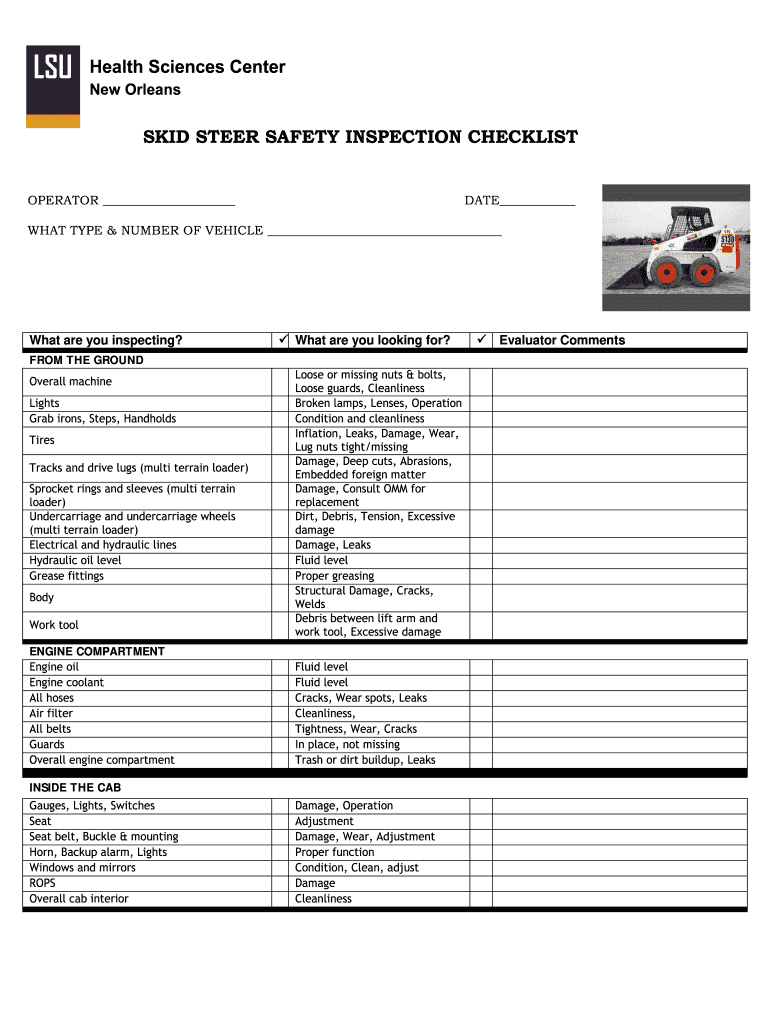
__ What are you inspecting? What are you looking for? FROM THE GROUND Overall machine Lights Grab irons, Steps, Handholds Tires Tracks and drive lugs (multi terrain loader) Sprocket rings and sleeves (multi terrain loader) Undercarriage and undercarriage wheels (multi terrain loader) Electrical and hydraulic lines Hydraulic oil level Grease fittings Body Work tool Loose or missing nuts & bolts, Loose guards, Cleanliness Broken lamps, Lenses, Operation Condition and cleanliness Inflation, Lea.
Loading

Open form follow the instructions

Easily sign the form with your finger

Send filled & signed form or save
How to fill out the LSU Skid Steer Safety Inspection Checklist online
Filling out the LSU Skid Steer Safety Inspection Checklist online is a key step in ensuring the safety and operational efficiency of skid steers. This guide will provide you with clear, step-by-step instructions to help you accurately complete the checklist.
Follow the steps to complete the checklist effectively.
- Click ‘Get Form’ button to obtain the form and open it in the editor.
- Begin by entering the operator's name in the designated field labeled 'OPERATOR'. This is important for accountability and identification of the person conducting the inspection.
- Next, input the date in the 'DATE' field to record when the inspection is taking place. This helps maintain a timeline for safety assessments.
- Fill in the 'WHAT TYPE & NUMBER OF VEHICLE' section with the specific details of the skid steer being inspected. Accurate identification aids in the proper assessment of the machine.
- Proceed to the 'FROM THE GROUND' section. Here, inspect and document the condition of the overall machine, lights, grab irons, steps, handholds, tires, and other components. Use the checklist prompts to note any issues such as loose or missing parts, damage, or cleanliness.
- Continue by inspecting the 'ENGINE COMPARTMENT'. Check the engine oil and coolant levels, hoses, air filter, and belts. Each component should be evaluated for cleanliness and signs of wear or leaks.
- Move to the 'INSIDE THE CAB' area. Inspect the gauges, lights, switches, and the seat for any damage or operational issues. Make sure all safety features, such as the seat belt and horn, are functional.
- After completing each inspection section, you can provide additional comments in the 'Evaluator Comments' field. This space is useful for noting any observations or additional actions needed.
- Once all fields are completed, review the entire checklist for accuracy. Make any necessary edits to ensure all information is correct and comprehensive.
- Finally, you can save changes, download, print, or share the form as needed to ensure compliance and record-keeping.
Start completing the LSU Skid Steer Safety Inspection Checklist online today for enhanced safety and compliance.
Experience a faster way to fill out and sign forms on the web. Access the most extensive library of templates available.
Related content
Jul 20, 2025 — $200/hour for JD330G Skid Steer (or other brand of similar power). 2....
SAFETY AND OPERATIONAL CHECKS (PRIOR TO FIRST USE EACH DAY). Have a qualified mechanic...
The QKB 830 is especially suitable for local oscillator service in airborne, shipboard, or...
Get answers to your most pressing questions about US Legal Forms API.
How do you inspect a skid steer?
To inspect a skid steer, follow the steps outlined in the LSU Skid Steer Safety Inspection Checklist carefully. Start by checking fluid levels, tire condition, and the functionality of safety features. A thorough inspection helps identify potential issues early, ensuring that the skid steer operates safely and efficiently during your projects.
What are the safety rules for skid steers?
Safety rules for skid steers include wearing proper safety gear, maintaining a clear surrounding workspace, and adhering to operational protocols. The LSU Skid Steer Safety Inspection Checklist should be your go-to resource to reinforce these rules before operation. By following these guidelines, you not only protect yourself but also those around you.
What is the biggest red flag in a home inspection?
In the context of skid steers, a significant red flag during an inspection may involve visible wear and tear on critical components or safety elements. If the LSU Skid Steer Safety Inspection Checklist highlights concerns such as leaks, unusual noises, or unsafe equipment, it may indicate deeper issues. Addressing these concerns promptly can prevent accidents and costly repairs later on.
What are the 4 points of inspection?
The four points of inspection typically focus on the skid steer’s operational, structural, safety, and maintenance aspects. By ensuring that the machine meets the standards outlined in the LSU Skid Steer Safety Inspection Checklist, you can enhance its performance and safety. Remember, inspecting both the machine and the environment contributes to safer operations.
What is the number one safety factor when operating a skid steer loader?
The number one safety factor in operating a skid steer loader is proper training and understanding of the machine's controls. Familiarity with the LSU Skid Steer Safety Inspection Checklist can significantly enhance safety awareness. Adequate training and knowledge empower operators to recognize hazards and respond effectively, minimizing risks.
Why are checklists used in inspection?
Checklists, including the LSU Skid Steer Safety Inspection Checklist, are essential tools to maintain consistency and thoroughness in inspections. They provide a structured approach, helping operators remember important details and minimize the chance of missing critical safety elements. By using checklists, you promote a culture of safety and accountability in the operation of skid steers.
What is the checklist of inspection?
The LSU Skid Steer Safety Inspection Checklist is a detailed list designed to ensure that all safety measures are taken before operating a skid steer. It covers crucial aspects such as equipment condition, safety features, and operator training. By following this checklist, you can help prevent accidents and ensure a safe working environment.
What to check when buying a skid steer?
When buying a skid steer, focus on several key aspects to ensure you make an informed decision. Check the overall condition of the machine, including track wear and hydraulic systems. Additionally, using the LSU Skid Steer Safety Inspection Checklist can guide you in assessing the essential safety features and ensuring that the machine meets your operational needs.
What maintenance does a skid steer need?
Routine maintenance for a skid steer involves several tasks that ensure optimal performance. Regularly check and change the oil, inspect filters, and maintain proper tire pressure. Additionally, adhering to the LSU Skid Steer Safety Inspection Checklist will help you identify any potential issues before they develop into costly repairs.
Do you need a certification for a skid steer?
Yes, operating a skid steer typically requires certification. This certification demonstrates that the operator understands safety protocols and efficient machine operation. Many organizations offer training programs to help you obtain this certification, ensuring you are well-prepared to follow the LSU Skid Steer Safety Inspection Checklist during your work.
Use professional pre-built templates to fill in and sign documents online faster. Get access to thousands of forms.
If you believe that this page should be taken down, please follow our DMCA take down process here.