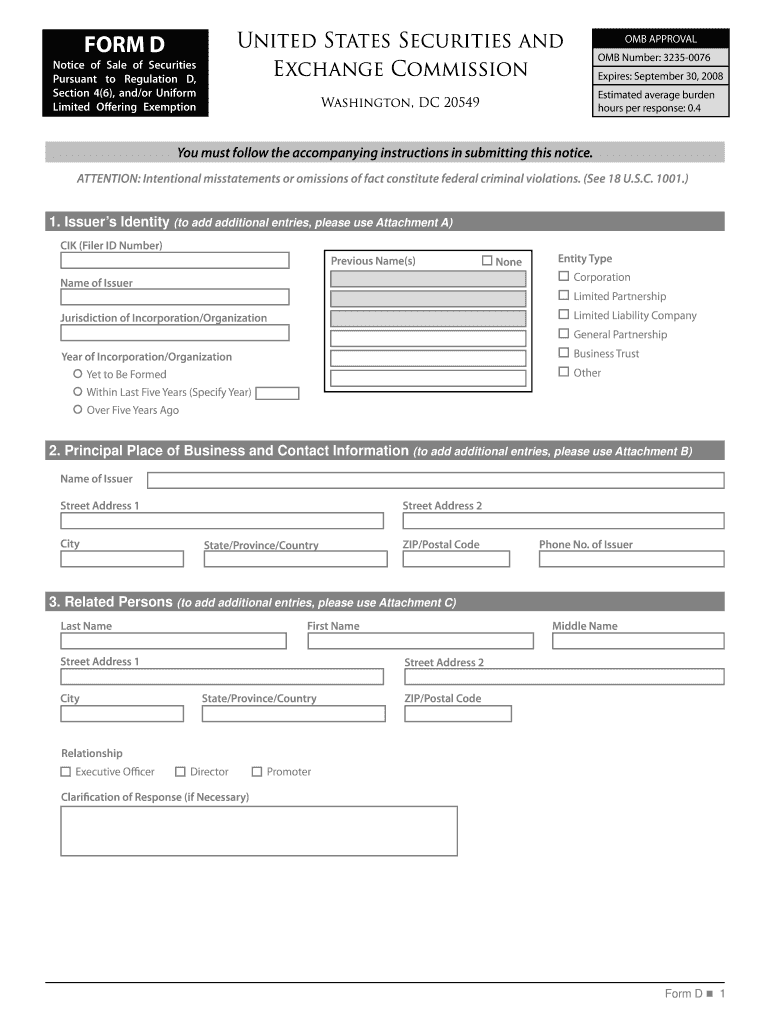
R: 3235-0076 Estimated average burden hours per response: 0.4 OMB APPROVAL Expires: September 30, 2008 You must follow the accompanying instructions in submitting this notice. ATTENTION: Intentional misstatements or omissions of fact constitute federal criminal violations. (See 18 U.S.C. 1001.) 1. Issuer’s Identity (to add additional entries, please use Attachment A) CIK (Filer ID Number) Previous Name(s) None Entity Type Corporation Name of Issuer Limited Partnership Limited Liability .
Loading

Open form follow the instructions

Easily sign the form with your finger

Send filled & signed form or save
How to fill out the SEC Form D online
Filling out the SEC Form D online can seem daunting, but this guide will assist you through each step of the process. This form is necessary for issuers of securities that are seeking an exemption from registration under Regulation D of the Securities Act.
Follow the steps to complete and submit your SEC Form D successfully.
- Press the ‘Get Form’ button to access the SEC Form D in your online editor.
- Complete the 'Issuer’s Identity' section. Provide the legal name of the issuer, any previous names, type of entity, jurisdiction of incorporation, and year of incorporation. If additional issuers are involved, use Attachment A to provide their details.
- Fill in the 'Principal Place of Business and Contact Information' section. Enter the issuer’s full street address, including city, state, and ZIP code, along with a contact phone number. If there are multiple issuers, provide the main issuer's details first.
- In the 'Related Persons' section, list individuals with specific relationships to the issuer. Include their full names, addresses, and relationships such as executive officers, directors, and promoters. Use Attachment C for additional entries if necessary.
- Select the 'Industry Group' that best reflects the issuer's activities. If applicable, choose multiple groups that align with the issuer's business operations.
- Provide information about the 'Issuer Size' by entering the revenue range or net asset values. Indicate if you choose not to disclose this information.
- Select the relevant federal exemptions and exclusions claimed, according to provided guidelines. This will determine the compliance of your offering with federal regulations.
- Indicate the 'Type of Filing,' which includes options such as 'New Notice' or 'Amendment,' along with the 'Date of First Sale' if applicable.
- Answer the question about the 'Duration of Offering,' specifying if the offering is intended to last more than one year.
- Select the types of securities being offered, which can include equity, debt, options, and others as necessary.
- For 'Minimum Investment,' indicate the minimum dollar amount accepted from outside investors. If there is no minimum, enter ‘0’.
- Provide details on 'Sales Compensation,' including any commissions or fees owed to individuals involved in the selling process. Use Attachment D for additional entries as needed.
- Fill in the 'Offering and Sales Amounts' section, specifying the total offering amount, total amount sold, and any remaining amounts. Clarifications can also be added if necessary.
- Complete the 'Investors' section by specifying if securities have been sold to non-accredited investors and include the total number of investors who have participated.
- Describe the 'Use of Proceeds,' indicating how funds will be deployed or allocated from the offering.
- Finally, review all provided information for accuracy. Once verified, sign and submit the form. Ensure to retain a manually signed copy of the document for your records.
Now that you have the guidance to complete the SEC Form D online, proceed to fill it out and submit your documents efficiently.
Experience a faster way to fill out and sign forms on the web. Access the most extensive library of templates available.
Related content
Who must file: Each issuer of securities that sells its securities in reliance on an...
(2) An issuer may file an amendment to a previously filed notice of sales on Form D at any...
Rule 505 Regulation D offers a way for companies to raise capital up to $5 million in a...
Get answers to your most pressing questions about US Legal Forms API.
What happens if you don't file Form D?
Failure to file Form D when required can lead to significant legal consequences for a company, including penalties and inability to sell securities. Additionally, lacking a proper filing may result in the loss of exemptions under Regulation D, which can hinder fundraising efforts. Furthermore, such oversight may damage the company's credibility with potential investors. Therefore, it is essential to stay on top of filing requirements to ensure a smooth fundraising process.
Do startups need to file Form D?
Yes, startups often need to file Form D if they wish to raise capital through the sale of securities while claiming an exemption under SEC regulations. This form helps ensure that the startup complies with federal securities laws, which can protect them from legal issues down the line. Additionally, filing Form D can signal professionalism and transparency to potential investors. Ultimately, startups can benefit significantly from utilizing this form.
What triggers a Form D filing?
A Form D filing is typically triggered when a company begins to sell securities that qualify for an exemption under Regulation D. This can include various fundraising efforts, such as private placements or offerings to accredited investors. Companies should file Form D before they start selling securities to ensure compliance with SEC regulations. Therefore, it's crucial to remain proactive in your fundraising strategy.
Is a Form D required?
While a Form D is not universally required, it is necessary if a company wishes to claim an exemption under Regulation D. Filing Form D notifies the SEC of the offering, providing details about the securities being sold. Moreover, some states may require notification as well, depending on their own regulations. Therefore, it is essential to review both federal and state requirements before proceeding with fundraising.
What is Regulation D of the SEC?
Regulation D of the SEC governs the exemptions that allow companies to sell securities without registering with the SEC. This regulation includes several rules, with Rules 504, 505, and 506 specifying the various conditions under which companies can operate. More importantly, Regulation D simplifies the fundraising process for startups, ensuring they have access to necessary capital while adhering to federal regulations. Knowing Regulation D can empower entrepreneurs to make informed decisions.
Is Form D mandatory?
Filing Form D is not mandatory for all companies, but it is required in situations where they seek to claim an exemption from the registration process. While some companies may choose not to file, doing so provides important disclosure and transparency to potential investors. Furthermore, filing Form D can enhance a company’s credibility in the eyes of regulators and investors alike. Thus, it is wise for companies to consider this step when raising capital.
What is the SEC Form D?
The SEC Form D is a document that companies file with the Securities and Exchange Commission when they sell securities without registration. This form is often used to notify the SEC of an exemption relied upon in the proposed securities offered under Regulation D. By filing Form D, companies can indicate their intent to raise capital while complying with federal laws. Understanding SEC Form D is crucial for those looking to attract investors.
When should you file a Form D?
You should file SEC Form D after you begin offering to sell securities but before you close any sales. Ideally, file it within 15 days of your first sale to comply with SEC regulations. This timely filing helps ensure transparency with investors and protects your legal standing.
Who does Regulation D apply to?
Regulation D applies to private companies seeking to raise capital without full registration of their securities. This includes startups, small businesses, and larger companies looking for private funding. Understanding this regulation is crucial for any company considering raising funds through private investors.
How do I submit Form D to the SEC?
To submit SEC Form D, you need to file electronically through the SEC’s EDGAR system. This process is straightforward and requires you to provide essential information about your offering. You can also streamline your submission using platforms like USLegalForms, which can guide you through the requirements and forms.
Use professional pre-built templates to fill in and sign documents online faster. Get access to thousands of forms.
If you believe that this page should be taken down, please follow our DMCA take down process here.
This form is available in several versions. Select the version you need from the drop-down list below.