R each. Proof of the individual shareholding is to be submitted. • Holding Companies & Trusts – Please contact the Vendor Database Call Centre on Tel 011 355 2222 should your business be owned by a holding company or a trust to request an alternative page 7. • Co-operatives – The Co-operatives Act of 2005 makes allowances for co-operatives to engage in transactions as a legal body, in the same way as companies and other kinds of business enterprises do. Various levels and types of co.
Loading

Open form follow the instructions

Easily sign the form with your finger

Send filled & signed form or save
How to fill out the GPG Vendor Database online
Filling out the GPG Vendor Database form is an essential step for vendors looking to engage with the Gauteng Provincial Government. This guide provides clear and concise instructions to help you navigate the process effectively.
Follow the steps to successfully complete the GPG Vendor Database form
- Press the ‘Get Form’ button to access the GPG Vendor Database form and open it in an online editor.
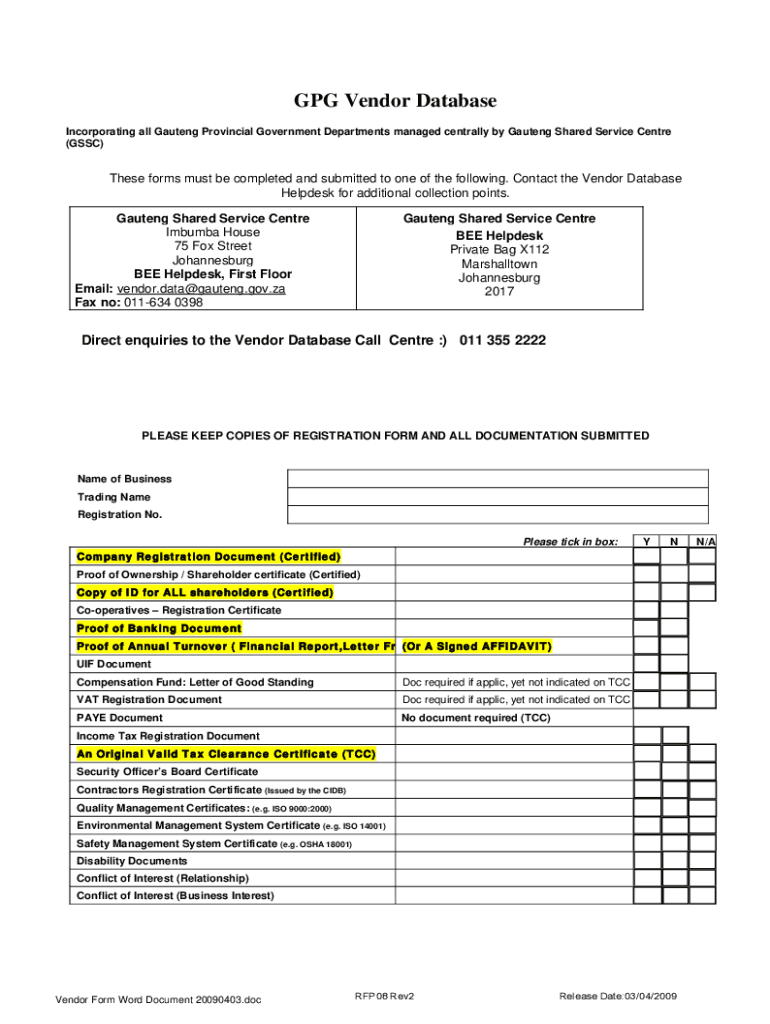
- Complete the first section with your business name, trading name, and registration number. Ensure that all fields are filled accurately as this information is crucial for identification.
- Review and attach all required supporting documentation as listed in the instructions. This may include certified copies of your company registration, proof of banking, annual turnover documents, and more.
- Indicate whether your business involves any historically disadvantaged individuals (HDIs) in the ownership structure. Fill out the relevant fields, marking 'Yes', 'No', or 'N/A' as appropriate.
- Provide financial details and business operation information, including your annual average turnover and number of employees; documentary proof will be required for verification.
- Ensure all sections concerning ownership, shareholders, and employee particulars are completed thoroughly, noting the required certifications and documents for each.
- Fill out the Business Equity (BEE) initiatives section if applicable, and answer questions regarding previous contracting or tendering experience.
- Finalize the form by signing the Certificate of Correctness, confirming the accuracy of the provided information, ensuring all details are correct and up to date.
- Once you have completed the form, save your changes. You can then download, print, or share the form as necessary, ensuring to keep copies of the registration form and all submitted documents for your records.
Start completing your GPG Vendor Database form online today to ensure your participation in government procurement opportunities.
Experience a faster way to fill out and sign forms on the web. Access the most extensive library of templates available.
Related content
Jan 6, 2017 — What that research showed was there were tons of SSH private keys, GPG...
List Regularly Updated, Pharmacies Below Fulfil Medical Cannabis Prescriptions. There are...
Get answers to your most pressing questions about US Legal Forms API.
How to create a vendor database?
To create a vendor database, start by identifying the criteria you need for vendor selection. Next, collect data on potential vendors, including their offerings, prices, and reputations. Including this information in a GPG Vendor Database makes it easier to manage relationships and optimize your purchasing decisions.
What is a vendor database?
A vendor database is a structured collection of information about suppliers and service providers. It helps businesses keep track of vendor performance, contact information, and service offerings. Utilizing a GPG Vendor Database enhances your procurement process, allowing you to make informed decisions based on accurate data.
How to prepare a vendor database?
Preparing a vendor database starts with gathering essential information about each vendor. This includes names, contact details, service types, and performance metrics. A well-organized GPG Vendor Database can streamline interactions and improve supplier management, ensuring you always have the best options available.
What is an example of a database vendor?
A database vendor is a company that provides a platform or service for managing data. For instance, companies like Oracle and Microsoft are well-known database vendors. In the context of the GPG Vendor Database, these vendors offer features that help businesses efficiently track and manage their suppliers.
How to build a vendor management system?
Building a vendor management system involves setting clear processes for supplier selection, engagement, and evaluation. Start by defining your business needs and documenting all supplier interactions in a tool like the GPG Vendor Database. Integrate the system with existing procurement practices to ensure efficiency. With a well-structured vendor management system, you can strengthen supplier relationships and optimize purchasing decisions.
How to create a supplier database?
To create a supplier database, start by gathering all relevant information about your suppliers. Use spreadsheets or specialized software, like the GPG Vendor Database, to organize this data systematically. Ensure you include details like contact info, product offerings, and performance metrics. Regularly update the database to maintain accurate and up-to-date supplier information, enabling smooth procurement operations.
What should a supplier database include?
structured supplier database should include essential information such as supplier names, contact details, payment terms, and product categories. Additionally, tracking performance metrics can enhance your supplier relations. The GPG Vendor Database can help you compile and organize this information efficiently.
How to get vendor code?
To obtain a vendor code, you typically need to register your business with a relevant authority or platform. This involves filling out necessary forms and providing your business details. Once approved, your vendor code will allow you to interact seamlessly with systems like the GPG Vendor Database.
How do you create a supplier database?
Creating a supplier database involves a systematic approach. Start by identifying the suppliers relevant to your business needs. Then, gather necessary information like contact details, payment terms, and services offered. Using a structured format, such as the GPG Vendor Database, can streamline this process and help you maintain consistency.
How do I publish a public PGP key?
To publish a public PGP key, you can upload it to a trusted key server or share it directly with your contacts. Key servers allow users to search for and find your public key efficiently. Additionally, using resources from the GPG Vendor Database will guide you through best practices for securely publishing your key.
Use professional pre-built templates to fill in and sign documents online faster. Get access to thousands of forms.
If you believe that this page should be taken down, please follow our DMCA take down process here.