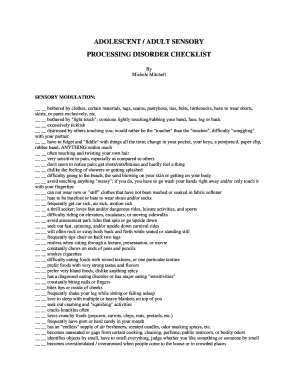
ADOLESCENT / ADULT SENSORY PROCESSING DISORDER CHECKLIST By Michele Mitchell SENSORY MODULATION: bothered by clothes; certain materials, tags, seams, pantyhose, ties, belts, turtlenecks, have to wear.
Loading
Open form follow the instructions
Easily sign the form with your finger
Send filled & signed form or save
How to fill out the ADOLESCENT And Adult SPD Checklistdoc - Spdsupport online
The ADOLESCENT And Adult SPD Checklistdoc is an essential tool for assessing sensory processing disorder in individuals. This guide provides step-by-step instructions to help users effectively fill out the checklist online, ensuring a comprehensive evaluation of sensory responses and challenges.
Follow the steps to successfully complete the checklist online.
- Click ‘Get Form’ button to obtain the ADOLESCENT And Adult SPD Checklistdoc and open it in the editor.
- Begin by carefully reviewing the checklist sections. The form is divided into categories such as sensory modulation, sensory discrimination, sensory-based motor skills, social/emotional, and internal regulation.
- In each section, you will see a series of statements. For each statement, indicate your level of agreement by marking the appropriate box.
- Make sure to read each statement thoroughly. It is important to be honest and reflective about your experiences as this will yield the most accurate results.
- Once all sections are completed, review your answers to ensure consistency and completeness.
- After finalizing your responses, you can choose to save any changes made to the checklist, download a copy for your records, or print it out for further use.
- If desired, share the completed checklist with a relevant professional who can provide support and guidance based on your responses.
Start filling out the ADOLESCENT And Adult SPD Checklistdoc online today for a better understanding of sensory processing challenges.
Experience a faster way to fill out and sign forms on the web. Access the most extensive library of templates available.
Related content
SAMHSA provides links to other Internet sites as a service to its users and is not...
sensory-friendly event for teens and young adults aged 13-21. ... checklist/. Flying. Tips...
Help protect you in almost every type of crash, including frontal, side, and rear impacts...
Get answers to your most pressing questions about US Legal Forms API.
How do I know if I have Sensory Processing Disorder?
Signs of sensory processing hypersensitivities (over-responsiveness): Extreme response to or fear of sudden, high-pitched, loud, or metallic noises (flushing toilets, clanking silverware, etc.) May notice or be distracted by background noises that others don't seem to hear. Fearful of surprise touches.
How do I know if my child has SPD?
The Symptoms of SPD They can range from hypersensitivity or being overly sensitive to sounds, textures, tastes, smells, sights, and feelings. One person might have difficulty with everyday tasks, while another may not do anything without getting overwhelmed by their senses.
What is SPD Sensory Processing Disorder in adults?
Adults with SPD may exhibit the following signs: Feeling that a shade is pulled over the outside world. Experiencing muted sights, sounds, and touch. Frequent feelings of sensory overload.
How do you assess SPD?
Currently the standardised assessment tool used to diagnose Sensory Processing Disorder is the Sensory Integration and Praxis Tests. This consists of 17 tests that are used to test several aspects of sensory processing.
What is a sensory assessment for adults?
A sensory assessment will explore the sensory processing issues and make recommendations for treatment, allowing an individual, the family and work place to make adaptations to reduce the sensory triggers for the person. These recommendations could include: Adaptations to work or home environment.
How do you assess sensory integration?
Historically, many expert clinicians have considered the Ayres' 'Sensory Integration and Praxis Test' (SIPT) as the gold standard test for assessing how well sensory information is perceived and integrated at different levels of complexity.
How do adults deal with SPD?
Working with an occupational therapist is one way to do this. Physical therapy, visual therapy, listening therapy, and speech and language treatment are just a few of the exercises they may perform. If an afflicted individual develops anxiety or a mood problem due to having SPD, psychotherapy may also be recommended.
Use professional pre-built templates to fill in and sign documents online faster. Get access to thousands of forms.
If you believe that this page should be taken down, please follow our DMCA take down process here.