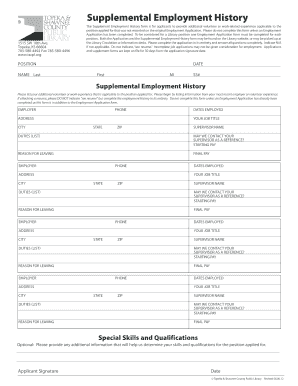
Tscpl.org Position The Supplement Employment History form is for applicants to provide additional volunteer or work-related experience applicable to the position applied for that was not recorded on the original Employment Application. Please do not complete this form unless an Employment Application has been completed. To be considered for a Library position one Employment Application form must be completed for each position. Both the Application and the Supplemental Employment History form may be found on the Library website or may be picked up at the Library Circulation or Information desks. Please begin by listing information from your most recent employer or volunteer experience. If attaching a resume please DO NOT indicate see resume but complete the employment history in its entirety. Do not complete this form unless an Employment Application has already been completed as this form is in addition to the Employment Application form. Employer PHONE dates employed Address YOUR JOB....
Loading
Open form follow the instructions
Easily sign the form with your finger
Send filled & signed form or save
How to fill out the Supplemental Employment History online
The Supplemental Employment History form is a key document for applicants to share additional relevant work or volunteer experiences that may not be included in the original Employment Application. This guide provides clear, step-by-step instructions on how to complete the form efficiently.
Follow the steps to successfully complete the Supplemental Employment History form.
- Click ‘Get Form’ button to obtain the form and open it in the editor.
- Fill in your personal details at the top of the form, including your last name, first name, middle initial, and social security number.
- Begin the Supplemental Employment History section by listing your most recent employer or relevant volunteer experience. Ensure you include all necessary information, such as the employer's name, phone number, and address.
- Provide specific details about your job title, supervisor's name, and a list of duties you performed in that position.
- Indicate whether you permit contact with your supervisor as a reference by answering the relevant question.
- Document your starting and final pay, along with your reason for leaving the position.
- Repeat steps 3 to 6 for any additional employers or volunteer experiences you wish to include.
- In the Special Skills and Qualifications section, provide any pertinent information that can enhance your application.
- Review the completed form to ensure all fields are filled out accurately. Remember to avoid using 'see resume' in place of completing sections.
- Upon completion, save your changes, download, print, or share the form as necessary.
Complete your Supplemental Employment History form online today to enhance your application.
Experience a faster way to fill out and sign forms on the web. Access the most extensive library of templates available.
Related content
SUPPLEMENTAL EMPLOYMENT HISTORY. 5 Employer. Type of Business. Job Title. Employer...
List your work history for at least the past seven years. Begin with the most recent...
Supplemental Security Income (SSI) is a need-based program, not a work history program. A...
Get answers to your most pressing questions about US Legal Forms API.
What are examples of supplemental information?
Supplemental information can include details such as volunteer activities, certifications, coursework, or any special projects that enhance your resume. Including such details helps paint a fuller picture of your capabilities and experiences. By developing your Supplemental Employment History, you can provide additional context that matters to potential employers.
What to do when you have no work left?
When you find yourself with no work, take proactive steps to update your skillset and seek new opportunities. Utilize your Supplemental Employment History to highlight transferable skills that can apply to various jobs. Networking, volunteering, or pursuing further education can also open doors for new employment options.
What to do if you have no employment history?
If you do not have any employment history, consider including internships, freelance work, or any projects you've completed. You can use the Supplemental Employment History section to outline your experiences, skills, and accomplishments. Platforms like US Legal Forms can assist you in presenting your background effectively, making it easier to engage potential employers.
How do I make a resume if I haven't worked in years?
When creating a resume after a long gap in employment, start by listing any relevant skills, volunteering, or courses you have completed. Include a section designed as your Supplemental Employment History to explain your experiences during your time away from the workforce. This strategy demonstrates your ongoing engagement and commitment to professional development.
What to do if you don't have any work experience?
If you lack work experience, focus on highlighting your education, volunteer work, and any skills you have developed. Consider creating a strong Supplemental Employment History that emphasizes your capabilities and willingness to learn. This approach showcases your potential to future employers despite your lack of formal work experience.
What are supplementary works?
Supplementary works refer to jobs or projects that complement your main employment. These can include anything from part-time positions to freelance tasks that diversify your work experience. A well-articulated Supplemental Employment History helps potential employers understand your full range of capabilities.
What is a supplemental position?
A supplemental position is a role that adds value to your primary job, often providing additional income or unique experiences. These positions can range from part-time jobs to freelance opportunities that enhance your skills. Documenting these roles in your Supplemental Employment History is key for presenting a comprehensive view of your professional background.
What is supplemental work?
Supplemental work encompasses any job or project that supplements your primary employment. This type of work can help employees increase their income or gain new experiences relevant to their career. Maintaining an updated Supplemental Employment History is essential for highlighting these valuable contributions.
What does supplementary employment mean?
Supplementary employment is work performed in addition to your regular job. It can improve your financial situation or provide opportunities to diversify your skill set. Tracking these roles in a clear Supplemental Employment History allows employers to see how you balance multiple responsibilities.
What does sub mean in employment?
The term 'sub' in employment often refers to a substitute position or a secondary role that supports a primary job. Sub employment allows individuals to gain diverse experiences while also fulfilling temporary requirements in their main position. When observing your Supplemental Employment History, including sub roles can showcase your adaptability.
Use professional pre-built templates to fill in and sign documents online faster. Get access to thousands of forms.
If you believe that this page should be taken down, please follow our DMCA take down process here.