Loading
Form preview
  • US Legal Forms
  • Form Library
  • Realtor Forms
  • Colorado Realtor Forms
  • Co Td72-8-10 2010

Get Co Td72-8-10 2010-2026

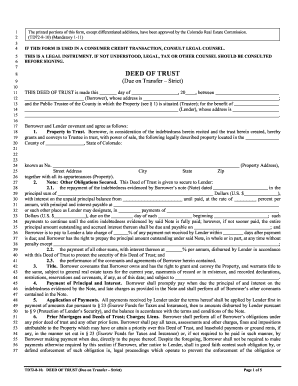
Trust, and leasehold payments or ground rents, if any, in the manner set out in § 23 (Escrow Funds for Taxes and Insurance) or, if not required to be paid in such manner, by Borrower making payment when due, directly to the payee thereof. Despite the foregoing, Borrower shall not be required to make payments otherwise required by this section if Borrower, after notice to Lender, shall in good faith contest such obligation by, or defend enforcement of such obligation in, legal proceedings which .

How it works

  1. Open form

    Open form follow the instructions

  2. Easily sign form

    Easily sign the form with your finger

  3. Share form

    Send filled & signed form or save

How to fill out the CO TD72-8-10 online

The CO TD72-8-10 form, known as the Deed of Trust, serves as a crucial legal instrument in real estate transactions in Colorado. This guide provides comprehensive steps on how to accurately complete this form online, ensuring users can navigate the process with confidence.

Follow the steps to successfully fill out the CO TD72-8-10 online

  1. Press the ‘Get Form’ button to access the CO TD72-8-10 form and open it in your preferred editing application.
  2. Begin by entering the current date in the designated field at the top of the form. This should reflect the day you are completing the document.
  3. In the sections labeled 'Borrower' and 'Lender,' provide the full names and addresses of all parties involved in the transaction. Ensure accuracy as this information is legally binding.
  4. For the 'Property in Trust' section, enter the legally described property address, including specific details like the street address, city, state, and zip code.
  5. Complete the 'Note: Other Obligations Secured' section, detailing any debts secured under this Deed of Trust. Fill in the principal sum of the loan, interest rates, and payment schedules as required.
  6. In the 'Title' section, affirm ownership of the property by the Borrower, noting any existing taxes, easements, or liens that are applicable.
  7. Continue through the form, addressing the obligations regarding payment of principal and interest, insurance requirements, and the responsibilities of the Borrower to maintain the property.
  8. Once all relevant fields are completed, review the form for accuracy. This includes checking all dates, names, and numerical values.
  9. Finally, save your changes, and utilize the available options to download, print, or share the completed CO TD72-8-10 form as needed.

Fill out your CO TD72-8-10 form online today to ensure a smooth real estate transaction.

Get form

Experience a faster way to fill out and sign forms on the web. Access the most extensive library of templates available.
Get form

Related content

Deed of Trust (Due on Transfer-Strict)
TD72-8-10. DEED OF TRUST (Due on Transfer – Strict). Page 2 of 5. Page 3. 116 ... If a...
Learn more
19 CFR § 101.3 - Customs service ports and ports...
The Secretary of Homeland Security is authorized to establish, rearrange or consolidate...
Learn more
Python 3 Web Development Beginner's Guide
All rights reserved. No part of this book may be reproduced, stored in a retrieval system...
Learn more

Related links form

ME Zoning Petition 2014 MI Application for Building Permit MI Application for Mechanical Permit MI Application for Renewal or Registration of Contractor Licence 2010

Questions & Answers

Get answers to your most pressing questions about US Legal Forms API.

Contact support

Removing someone from a deed of trust often involves obtaining their consent and drafting an appropriate legal document. This can be accomplished through a Release of Deed of Trust or a similar form, depending on the situation. After all parties agree and sign the document, file it with your local county office to remove the individual from the deed effectively.

To fill out a Colorado quit claim deed, obtain the correct form and enter the grantee and grantor information accurately. Then specify the property description clearly and include the necessary signatures with a notary. Finally, file the completed deed with your county clerk and recorder to ensure proper recording, securing your rights to the property.

Releasing a deed of trust involves preparing a legal document that officially cancels the deed. This usually includes filling out a Release of Deed of Trust form with accurate information about the involved parties and property. When filed with the local county office, this step records the release publicly, allowing you to manage your property without encumbrances.

Exiting a trust deed typically requires the release of the deed in question. If your debt has been settled, you can create a Release of Deed of Trust document, detailing the confirmed payment or fulfilled obligation. Once filed with the appropriate local authority, this action effectively allows you to get out of the trust deed, giving you full control over your property.

To release a deed of trust in Colorado, start by drafting a Release of Deed of Trust. This legal document must note the trustor's name, the beneficiary's name, and the relevant property details. Filing this release with your county clerk and recorder will finalize the process, ensuring that all parties recognize the deed as no longer active.

A deed of trust is normally used to secure real estate loans and establish the legal framework between borrowers and lenders. It is a common practice in real estate transactions to ensure both parties are protected. Utilizing the CO TD72-8-10 not only provides clarity but also helps simplify the borrowing process, ensuring that all necessary details are captured.

One disadvantage of a deed of trust is that it may lead to foreclosure proceedings faster than traditional mortgages if the borrower defaults. This means losing the property can happen without going through a court process, which can be alarming for the borrower. However, understanding the CO TD72-8-10 can help mitigate concerns by clarifying the terms and conditions involved in the agreement.

Releasing a deed of trust requires obtaining a release document from the lender after all obligations are met. This document should then be recorded with the local county office to update property records. When managing your CO TD72-8-10 situation, consider using uslegalforms for a smoother process.

To release a deed of trust in Colorado, you must obtain a release document from the lender and then file it with the county clerk's office. This document verifies that you have fulfilled your obligations under the deed of trust. Utilizing platforms like uslegalforms can streamline this process, especially for CO TD72-8-10.

The original deed of trust is usually kept by the lender or the trustee involved in the transaction. However, as the property owner, you should retain a copy for your records. For assistance in managing documents related to CO TD72-8-10, consider the resources available at uslegalforms.

Get This Form Now!

Use professional pre-built templates to fill in and sign documents online faster. Get access to thousands of forms.
Get form
If you believe that this page should be taken down, please follow our DMCA take down processhere.
Get CO TD72-8-10
Get form
  • Adoption
  • Bankruptcy
  • Contractors
  • Divorce
  • Home Sales
  • Employment
  • Identity Theft
  • Incorporation
  • Landlord Tenant
  • Living Trust
  • Name Change
  • Personal Planning
  • Small Business
  • Wills & Estates
  • Packages A-Z
  • Affidavits
  • Bankruptcy
  • Bill of Sale
  • Corporate - LLC
  • Divorce
  • Employment
  • Identity Theft
  • Internet Technology
  • Landlord Tenant
  • Living Wills
  • Name Change
  • Power of Attorney
  • Real Estate
  • Small Estates
  • Wills
  • All Forms
  • Forms A-Z
  • Form Library
  • Legal Hub
  • About Us
  • Help Portal
  • Legal Resources
  • Blog
  • Affiliates
  • Contact Us
  • Delete My Account
  • Site Map
  • Industries
  • Forms in Spanish
  • Localized Forms
  • State-specific Forms
  • Forms Kit
  • Real Estate Handbook
  • All Guides
  • Notarize
  • Incorporation services
  • For Consumers
  • For Small Business
  • For Attorneys
  • USLegal
  • FormsPass
  • pdfFiller
  • signNow
  • altaFlow
  • DocHub
  • Instapage
Form Packages
  • Adoption
  • Bankruptcy
  • Contractors
  • Divorce
  • Home Sales
  • Employment
  • Identity Theft
  • Incorporation
  • Landlord Tenant
  • Living Trust
  • Name Change
  • Personal Planning
  • Small Business
  • Wills & Estates
  • Packages A-Z
Form Categories
  • Affidavits
  • Bankruptcy
  • Bill of Sale
  • Corporate - LLC
  • Divorce
  • Employment
  • Identity Theft
  • Internet Technology
  • Landlord Tenant
  • Living Wills
  • Name Change
  • Power of Attorney
  • Real Estate
  • Small Estates
  • Wills
  • All Forms
  • Forms A-Z
  • Form Library
Customer Service
  • Legal Hub
  • About Us
  • Help Portal
  • Legal Resources
  • Blog
  • Affiliates
  • Contact Us
  • Delete My Account
  • Site Map
  • Industries
  • Forms in Spanish
  • Localized Forms
  • State-specific Forms
  • Forms Kit
Legal Guides
  • Real Estate Handbook
  • All Guides
Prepared for you
  • Notarize
  • Incorporation services
Our Customers
  • For Consumers
  • For Small Business
  • For Attorneys
Our Sites
  • USLegal
  • FormsPass
  • pdfFiller
  • signNow
  • altaFlow
  • DocHub
  • Instapage
Social Media
Call us now toll free:
+1 833 426 79 33
As seen in:
© Copyright 1999-2026 airSlate Legal Forms, Inc. 3720 Flowood Dr, Flowood, Mississippi 39232
  • Your Privacy Choices
  • Terms of Service
  • Privacy Notice
  • Content Takedown Policy
  • Bug Bounty Program