Loading
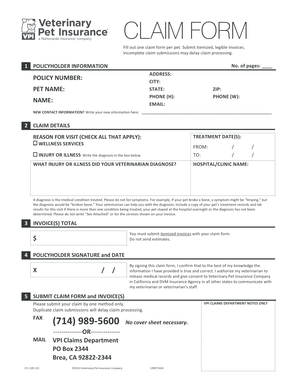
Get Nationwide Blank Claim Form
How it works
-

Open form follow the instructions
-

Easily sign the form with your finger
-

Send filled & signed form or save
How to fill out the Nationwide Blank Claim Form online
This guide provides clear and thorough instructions for completing the Nationwide Blank Claim Form online. By following these steps, users can ensure their claims are submitted accurately and promptly, facilitating a smoother processing experience.
Follow the steps to complete your claim form successfully
- Click the ‘Get Form’ button to access the form and open it in your editing tool.
- Fill out the policyholder information section, which includes your name, address, and contact details. Make sure all information is accurate and legible to avoid processing delays.
- In the claim details section, check the applicable reason(s) for your pet's visit, such as wellness services or injury/illness. For injuries or illnesses, enter the specific diagnosis as provided by your veterinarian.
- Provide treatment dates in the designated fields, ensuring you include both the start and end dates as needed.
- Describe the identified injury or illness clearly in the provided space, avoiding any symptoms and ensuring the diagnosis is accurate.
- Enter the total amount of your itemized invoices in the invoices total section. Remember, estimates cannot be submitted.
- Sign and date the policyholder signature section. Your signature confirms that the information given is true and that you authorize the release of relevant medical records.
- Choose one method to submit your claim form and invoices: by fax or by mail. Ensure no cover sheet is used if faxing, and verify the mailing address is correct to prevent processing delays.
- Once completed, save changes to your document, then download, print, or share the claim form as needed.
Complete your claim form online today and ensure a timely processing of your pet's veterinary claim.
Most time-limited pet insurance policies only cover your pet's illness or injury for 12 months from when the condition was first noticed or until the cost limit is reached, whichever comes first.