Loading
Get Pregnancy Risk Assessment Template
How it works
-

Open form follow the instructions
-

Easily sign the form with your finger
-

Send filled & signed form or save
How to fill out the Pregnancy Risk Assessment Template online
Filling out the Pregnancy Risk Assessment Template is a crucial step in ensuring the health and well-being of both the pregnant individual and their baby. This guide will provide you with clear, step-by-step instructions on completing this important document online.
Follow the steps to successfully complete the Pregnancy Risk Assessment Template.
- Click ‘Get Form’ button to access the Pregnancy Risk Assessment Template and open it in your preferred editor.
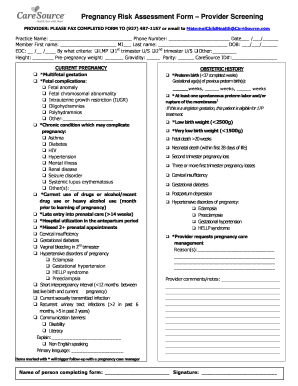
- Begin by entering the practice name, phone number, and date in the top section of the form. Ensure all contact information is accurate to facilitate communication.
- Fill in the member's first name, middle initial, last name, and date of birth. Double-check these details to avoid any errors.
- In the Estimated Due Date (EDC) section, select the appropriate criteria: Last Menstrual Period (LMP), 1st trimester ultrasound (U/S), 2nd trimester ultrasound, or other. Provide additional details if necessary.
- Complete the current pregnancy section, marking any applicable checkboxes relating to multifetal gestation, fetal complications, chronic conditions, or drug and alcohol use.
- Provide obstetric history by checking any relevant past experiences, including preterm births or low birth weight. Make sure to fill in any specific details requested.
- If a provider requests pregnancy care management, specify the reasons in the provided area for follow-up and care coordination.
- Finalize the form by entering the name and signature of the person completing it. Ensure all sections are filled out completely before submission.
- After reviewing the completed form for accuracy, save your changes. You can then download, print, or share the form as required for further processing.
Start filling out the Pregnancy Risk Assessment Template online today to ensure timely and effective prenatal care.
Risk assessment in pregnancy helps to predict which women are most likely to experience adverse health events and enables providers to administer risk-appropriate perinatal care.