D shall hold the money in a separate interest-bearing or non-interest-bearing account in a Florida banking institution for the benefit of Tenant. If Landlord deposits the money in an interest-bearing account, Landlord must pay Tenant interest of at least 75% of the annualized average interest paid by the bank or 5% per year simple interest, whichever Landlord chooses. Landlord cannot mix such money with any other funds of Landlord or pledge, mortgage, or make any other use of such money until th.

Open form follow the instructions

Easily sign the form with your finger

Send filled & signed form or save
How to fill out the FL Multi-Family Lease online
Filling out the FL Multi-Family Lease online can seem daunting, but with clear guidance, you can complete it efficiently. This guide will provide you with step-by-step instructions to help you navigate each section of the lease with confidence.
Follow the steps to complete your lease accurately.
- Click ‘Get Form’ button to access the FL Multi-Family Lease and open it in your preferred online editor.
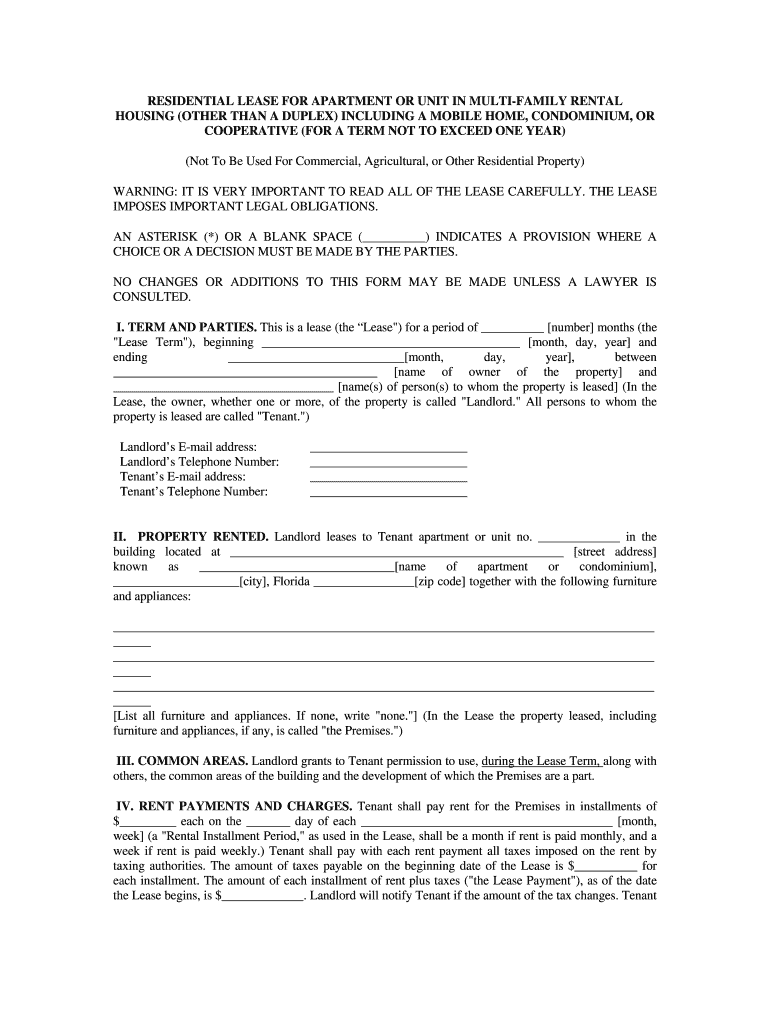
- Begin by completing the section labeled 'Term and Parties.' Here, specify the lease term duration and the names of both the landlord and tenant. Ensure to provide valid contact details for both parties.
- For the 'Property Rented' section, fill in the apartment or unit number, the complete street address, and, if applicable, the name of the apartment or condominium. Don’t forget to list any furniture or appliances included in the lease.
- In the 'Common Areas' section, acknowledge the tenant's right to use shared spaces by checking applicable boxes.
- Proceed to the 'Rent Payments and Charges' section. Specify the rent amount, payment frequency, and any applicable taxes. Consider prorating rent if the lease begins on a non-standard date.
- Fill out the 'Deposits, Advance Rent, and Late Charges' section by indicating any security deposits, advance rent, or pet deposits required, and outline any late payment penalties.
- In the 'Security Deposits and Advance Rent' section, note how the landlord will handle the security deposit, including interest terms if applicable.
- Complete the 'Notices' section by providing the name and contact information for the landlord's agent, ensuring it is clear where all official communications should be sent.
- Follow with the 'Use of Premises' section, confirming that the premises will be used solely for residential purposes, and review any rules or restrictions that apply.
- In the 'Utilities' section, specify which utilities the tenant will be responsible for, and list any that the landlord will cover.
- Continue to fill in the sections regarding maintenance responsibilities, knowing that each party’s obligations must be clearly defined.
- Review the entire lease for accuracy and completeness. Once satisfied, users can save changes, download, print, or share their completed FL Multi-Family Lease.
Start filling out your FL Multi-Family Lease online today for a seamless rental experience.
Experience a faster way to fill out and sign forms on the web. Access the most extensive library of templates available.
Related content
The MLR program shall provide improvements to existing multifamily rental property within...
The annual lease fee for standard term leases shall be six percent of the annual income...
Technology and regulatory evolution are driving change throughout single- and multi-family...
Get answers to your most pressing questions about US Legal Forms API.
What are the disadvantages of multi-family homes?
While multifamily homes offer potential rental income, they also come with disadvantages. For instance, managing multiple tenants can lead to increased wear and tear, and disputes may arise over common areas. It’s essential to weigh these factors carefully when considering an FL Multi-Family Lease, and platforms like uslegalforms can help clarify legal responsibilities.
What is the difference between an apartment and a multifamily?
An apartment refers specifically to a rental unit within a multifamily building. In contrast, multifamily refers to the whole property that contains multiple apartments or units for different households. When dealing with an FL Multi-Family Lease, it’s important to know this distinction to properly address the rights and responsibilities tied to living in such arrangements.
How many units are considered multi-family?
A multifamily property typically includes at least two separate residential units. This means that buildings with two homes, like duplexes, or large apartment complexes with dozens of units fit under the multifamily category. Understanding the type and number of units can help you navigate the specifics of a FL Multi-Family Lease effectively.
How to get approved for a multifamily home?
To get approved for a multifamily home, potential buyers should start by assessing their creditworthiness. Generally, lenders look for a good credit score, a stable income history, and a budget that accommodates the additional expenses of a FL Multi-Family Lease, such as property taxes and maintenance. It’s also helpful to gather all necessary financial documentation to streamline the approval process.
Can one person break a two person lease in Florida?
Yes, a tenant can break a two-person lease in Florida, but doing so may come with certain obligations or penalties. If both tenants signed the FL Multi-Family Lease, breaking it unilaterally could lead to legal implications. It’s best to consult with a lawyer or to review the lease agreement terms to understand the options available.
What is a family lease agreement?
A family lease agreement is a legal document between landlords and tenants that outlines the rental terms for a multifamily property. This agreement typically includes details about lease duration, rent payment, and maintenance responsibilities. For those entering into an FL Multi-Family Lease, understanding this document helps ensure a clear and mutually beneficial rental relationship.
What is a multifamily in Florida?
In Florida, a multifamily property is defined as a residential building that includes two or more units for multiple families to live in. This can range from a small duplex to large apartment complexes. The FL Multi-Family Lease is essential for both landlords and tenants, as it outlines the terms under which multiple renting families cohabitate in the same building.
What is an example of multifamily?
A multifamily property typically refers to a building or complex that houses multiple separate residences. For example, a duplex, triplex, or an apartment building all qualify as multifamily units. These properties provide investors and homeowners with the opportunity to generate rental income from multiple tenants, making them a popular choice in the real estate market.
Can someone live in my apartment without being on the lease Florida?
In Florida, someone can live in your apartment without being on the lease, provided it does not conflict with the terms of your FL Multi-Family Lease. It's wise to inform your landlord to prevent unauthorized occupants. Understanding the lease terms will help you navigate these situations better.
Can my girlfriend live in my apartment without being on the lease?
Yes, your girlfriend can live in your apartment without being on the lease, as long as it does not violate the FL Multi-Family Lease terms. However, it's advisable to check with your landlord to avoid potential issues. Having her on the lease can clarify responsibilities for both of you.
Use professional pre-built templates to fill in and sign documents online faster. Get access to thousands of forms.
If you believe that this page should be taken down, please follow our DMCA take down process here.