MONTHLY INCOME AND BENEFITS (Add [17] plus [18].) PART 3: AUTOMATIC DEDUCTIONS FROM INCOME for the 12 months from (date) 20. 21. 22. 23. 24. 28. TYPE OF EXPENSE Income tax deducted from pay Canada Pension Plan Other pension plans Employment insurance Union or association dues to (date) Monthly 25. Group insurance 26. Other (Specify.) 27. NET MONTHLY INCOME (Do the subtraction: [19] minus [27].) TOTAL AUTOMATIC DEDUCTIONS $0.00 $0.00 Form 13.1: Financial Statement (Page 3) Court file.
Loading

Open form follow the instructions

Easily sign the form with your finger

Send filled & signed form or save
How to fill out the Ontario Form 13.1 online
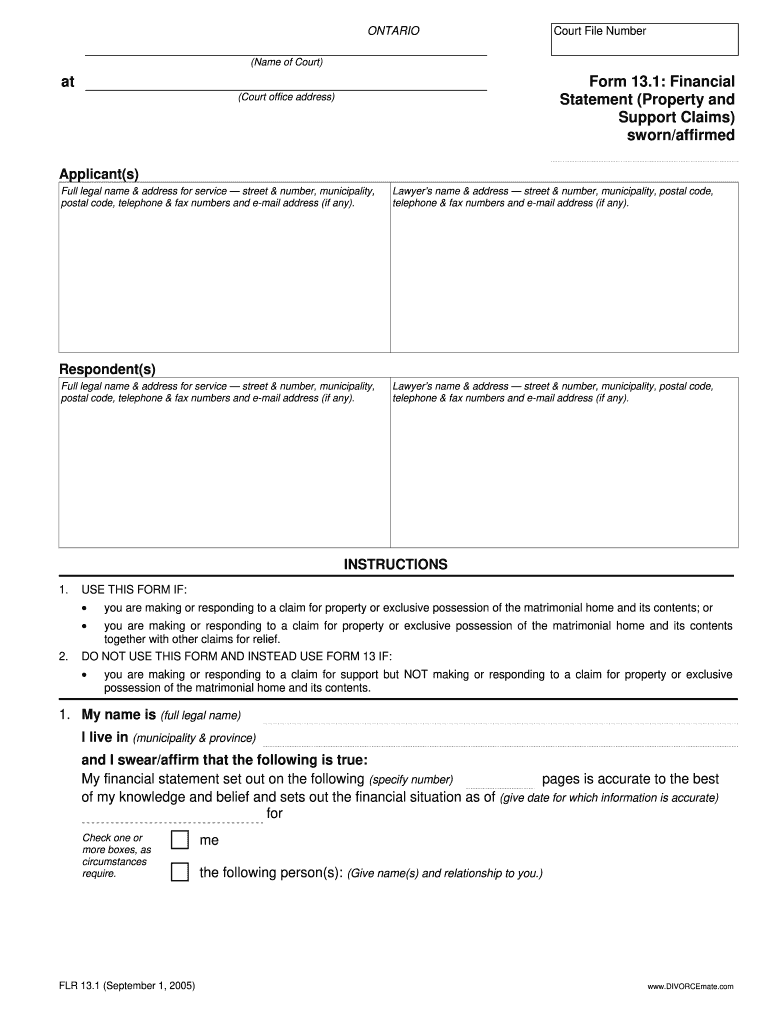
Filling out the Ontario Form 13.1, also known as the Financial Statement for property and support claims, is an essential step in legal processes related to family law. This guide provides clear and supportive instructions on how to complete this form online, ensuring your information is accurate and complete.
Follow the steps to fill out the Ontario Form 13.1 online successfully
- Press the ‘Get Form’ button to retrieve the Ontario Form 13.1 and open it in your editing tool.
- Begin by entering the court file number at the top of the form, along with the name of the court and its address.
- Provide your full legal name and address in the designated fields. This includes your municipality, postal code, and any contact details like telephone, fax, and email.
- If you have a lawyer, input their details under the lawyer's section including their name, address, and contact information.
- Next, enter the details for the respondent, mirroring the structure used for the applicant.
- In the instructions section, specify that you are making or responding to financial claims as appropriate.
- Move on to Part 1: Income. Fill in your income sources for the past 12 months, ensuring you specify amounts accurately.
- Complete Part 2: Other Benefits by detailing any non-cash benefits you receive.
- Proceed to Part 3, documenting any automatic deductions from your income.
- In Part 4: Total Expenses, list all monthly living expenses, including children's expenses if applicable.
- Continue to complete Parts 5 through 12, focusing on providing accurate financial information regarding your assets and debts.
- Summarize your total income, expenses, and net family property as directed.
- Finally, review all the information for accuracy and completeness. Save changes, then download, print, or share the completed form as necessary.
Complete your Ontario Form 13.1 online today for a smoother legal process!
Experience a faster way to fill out and sign forms on the web. Access the most extensive library of templates available.
Related content
Court forms: Application (General) (Form 8) and Financial Statement (Property and. Support...
by I Rule — The CD requirements are set out in National Instrument 51-102. Continuous...
13.1 New Products. The joint development of new products for use in the ... Ontario...
Get answers to your most pressing questions about US Legal Forms API.
Can I file for divorce without a lawyer in Ontario?
Yes, you can file for divorce without a lawyer in Ontario by completing the necessary forms, including the Ontario Form 13.1. Many people choose to represent themselves, especially in simple cases. However, it's essential to educate yourself about the process to avoid complications. Utilizing online resources like uslegalforms can provide you with the necessary tools and guidance to file confidently.
How to get court documents in Ontario?
In Ontario, you can access court documents by visiting the courthouse where your case is filed. You may need to fill out an Ontario Form 13.1 to request specific records. Court clerks can assist you in tracking down the documents you need. Additionally, consider using online services that provide access to court filings for convenience.
How to get disclosure for criminal charges in Ontario?
To obtain disclosure for criminal charges in Ontario, you must request it from the Crown attorney handling your case. It's crucial to understand your legal rights in this situation. While this process does not directly relate to the Ontario Form 13.1, having legal representation can ensure you navigate disclosure properly. You may want to consider reaching out to a legal expert for guidance.
What is the fastest way to get a divorce in Ontario?
The fastest route to divorce in Ontario often involves an uncontested divorce process, where both parties agree on key issues. You should complete the Ontario Form 13.1 accurately and file it promptly. Ensuring that you have all required documentation ready can expedite the process. Using a service like uslegalforms can simplify completing and submitting these forms correctly.
What forms do I need to file for child custody in Ontario?
When seeking child custody in Ontario, you typically need to complete various forms, including the Ontario Form 13.1. This form helps establish your request for custody as part of your overall divorce application. Additionally, you might need to provide a detailed parenting plan to support your application. Being thorough with these forms increases your chances of a favorable outcome.
What is the first step to divorce in Ontario?
To begin the divorce process in Ontario, you need to understand the legal requirements and prepare the necessary documents. The first official step involves filling out the Ontario Form 13.1, which serves as the application for divorce. By completing this form, you initiate your case in the court system. After filing, ensure you follow all required procedures to move forward with your divorce.
What is tenant acknowledgement?
Tenant acknowledgement refers to a formal recognition by tenants of their rights and obligations within a lease agreement. This acknowledgment is important for ensuring both parties understand the terms of the rental. By using Ontario Form 13.1, landlords can effectively manage tenant awareness and compliance. This promotes an informed rental relationship and helps avoid future conflicts.
Is the N1 form mandatory in Ontario?
Yes, the N1 form is mandatory for landlords who wish to increase rent in Ontario. This legal notice outlines the proposed increase and must be served in accordance with the law. Understanding how Ontario Form 13.1 plays into rental notifications can ensure compliance with legal requirements. It aids in maintaining a fair rental process.
What is the purpose of an N11 form in Ontario?
The N11 form is a mutual agreement form that allows both landlords and tenants in Ontario to end a tenancy. This document indicates that both parties consent to terminate the lease according to agreed terms. Incorporating awareness of Ontario Form 13.1 in this process can provide clarity on respective rights and responsibilities. It protects the interests of both parties involved.
What is an N5 form in Ontario?
The N5 form is a legal document that landlords in Ontario use to inform tenants about a breach of lease terms. This could include issues like late rent or property damage. Knowing how Ontario Form 13.1 relates to these situations can be very helpful when addressing disputes. Proper use of these forms fosters transparency and accountability in housing relationships.
Use professional pre-built templates to fill in and sign documents online faster. Get access to thousands of forms.
If you believe that this page should be taken down, please follow our DMCA take down process here.
This form is available in several versions. Select the version you need from the drop-down list below.