Loading
Form preview
  • US Legal Forms
  • Other Templates
  • More Forms
  • More Uncategorized Forms
  • Naming Acids What Makes An Acid Unique

Get Naming Acids What Makes An Acid Unique

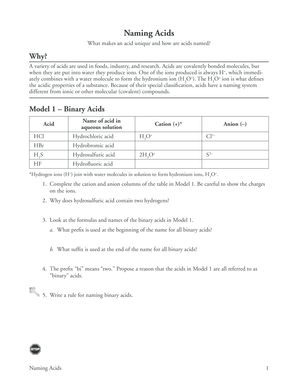
Naming Acids What makes an acid unique and how are acids named? Why? A variety of acids are used in foods, industry, and research. Acids are covalently bonded molecules, but when they are put into.

How it works

  1. Open form

    Open form follow the instructions

  2. Easily sign form

    Easily sign the form with your finger

  3. Share form

    Send filled & signed form or save

How to fill out the Naming Acids What Makes An Acid Unique online

Understanding how to properly name acids is essential for both academic and practical applications. This guide will provide you with a clear and detailed roadmap to filling out the Naming Acids What Makes An Acid Unique form online, ensuring you have all the necessary information at your fingertips.

Follow the steps to effectively complete the Naming Acids form.

  1. Begin by clicking the ‘Get Form’ button to access the document. This will allow you to download the form and open it in your preferred editing software.
  2. Familiarize yourself with the sections of the form. The first model covers binary acids. Carefully review the names and formulas provided, ensuring you understand how to fill out the cation and anion columns correctly.
  3. In the binary acids section, complete the table by accurately writing the names of the acids in aqueous solution next to their corresponding formulas. Pay attention to the charges on the ions.
  4. Review the questions related to the binary acids. Answer why hydrosulfuric acid contains two hydrogens and identify the prefix and suffix used for naming these acids.
  5. Move on to the ternary acids section. Similar to the binary acids, fill in the table with the names and formulas based on the provided data.
  6. Address the questions associated with the ternary acids. Consider how their structure differs from binary acids and complete the ending statements for the polyatomic anions.
  7. Ensure you fill out all tables and respond to all questions throughout the document. Check for accuracy in your answers and proper formatting.
  8. Once you have completed all sections, review your work for any necessary corrections.
  9. Finally, save your changes. You can download or print the completed form for your records, or share it as needed.

Start filling out the Naming Acids What Makes An Acid Unique form online today and enhance your understanding of acids!

Get form

Experience a faster way to fill out and sign forms on the web. Access the most extensive library of templates available.
Get form

Related content

Sialic Acids - Essentials of Glycobiology - NCBI...
This chapter describes the sialic acid family of monosaccharides , with respect to their...
Learn more
Section 6.2: Naming Compounds
TABLE 6.2 Names and formulas of some common ionic compounds. ... This older method gives...
Learn more
Acetate - Wikipedia
An acetate /ˈæsɪteɪt/ is a salt formed by the combination of acetic acid with a base...
Learn more

Related links form

FL HSMV 82040 2006 FL HSMV 82042 2002 FL HSMV 82048 2001 FL HSMV 82091 2009

Questions & Answers

Get answers to your most pressing questions about US Legal Forms API.

Contact support

Since all acids contain hydrogen, the name of an acid is based on the anion that goes with it. These anions can either be monatomic or polyatomic.

Rules for Naming the Acids To name an acid, we look at the -ide molecule in the covalent bond. We change the -ide ending to -ic. We add the prefix hydro to denote the hydrogen atom. We add the word acid at the end.

There is no special system for naming bases. Since they all contain the OH− anion, names of bases end in hydroxide. The cation is simply named first.

Of course, there are exceptions...if the name of the acid sounds weird using the anion name, then the element name is used instead. e.g. H2SO4 is based on sulfate. If you cross out the "-ate" and add "-ic" and you would have sulfic acid.... If you cross out "-ate" and add "-ic" and you would have posphic acid.

Example When the anion ends in –ide, the acid name begins with the prefix hydro-. ... When the anion ends in –ate, the name of the acid is the root of the anion followed by the suffix –ic. ... When the anion ends in –ite, the name of the acid is the root of the anion followed by the suffix –ous.

A quick way to identify acids is to see if there is an H (denoting hydrogen) in front of the molecular formula of the compound. To name acids, the prefix hydro- is placed in front of the nonmetal modified to end with –ic. The state of acids is aqueous (aq) because acids are found in water.

The acid name comes from the root name of the anion name. The prefix hydro- and the suffix -ic are then added to the root name of the anion. All acids beginning with the prefix „hydro“ are otherwise known as binary acids. HCl, which contains the anion chloride, is called hydrochloric acid.

All binary acids begin with the prefix hydro-, which precedes the name of any nonmetal other than hydrogen, in the compound. The name of this nonmetal is modified to end with the suffix -ic.

Get This Form Now!

Use professional pre-built templates to fill in and sign documents online faster. Get access to thousands of forms.
Get form
If you believe that this page should be taken down, please follow our DMCA take down processhere.
Get Naming Acids What Makes An Acid Unique
Get form
  • Adoption
  • Bankruptcy
  • Contractors
  • Divorce
  • Home Sales
  • Employment
  • Identity Theft
  • Incorporation
  • Landlord Tenant
  • Living Trust
  • Name Change
  • Personal Planning
  • Small Business
  • Wills & Estates
  • Packages A-Z
  • Affidavits
  • Bankruptcy
  • Bill of Sale
  • Corporate - LLC
  • Divorce
  • Employment
  • Identity Theft
  • Internet Technology
  • Landlord Tenant
  • Living Wills
  • Name Change
  • Power of Attorney
  • Real Estate
  • Small Estates
  • Wills
  • All Forms
  • Forms A-Z
  • Other Templates
  • Legal Hub
  • About Us
  • Help Portal
  • Legal Resources
  • Blog
  • Affiliates
  • Contact Us
  • Delete My Account
  • Site Map
  • Industries
  • Forms in Spanish
  • Localized Forms
  • State-specific Forms
  • Forms Kit
  • Real Estate Handbook
  • All Guides
  • Notarize
  • Incorporation services
  • For Consumers
  • For Small Business
  • For Attorneys
  • USLegal
  • FormsPass
  • pdfFiller
  • signNow
  • altaFlow
  • DocHub
  • Instapage
Form Packages
  • Adoption
  • Bankruptcy
  • Contractors
  • Divorce
  • Home Sales
  • Employment
  • Identity Theft
  • Incorporation
  • Landlord Tenant
  • Living Trust
  • Name Change
  • Personal Planning
  • Small Business
  • Wills & Estates
  • Packages A-Z
Form Categories
  • Affidavits
  • Bankruptcy
  • Bill of Sale
  • Corporate - LLC
  • Divorce
  • Employment
  • Identity Theft
  • Internet Technology
  • Landlord Tenant
  • Living Wills
  • Name Change
  • Power of Attorney
  • Real Estate
  • Small Estates
  • Wills
  • All Forms
  • Forms A-Z
  • Other Templates
Customer Service
  • Legal Hub
  • About Us
  • Help Portal
  • Legal Resources
  • Blog
  • Affiliates
  • Contact Us
  • Delete My Account
  • Site Map
  • Industries
  • Forms in Spanish
  • Localized Forms
  • State-specific Forms
  • Forms Kit
Legal Guides
  • Real Estate Handbook
  • All Guides
Prepared for you
  • Notarize
  • Incorporation services
Our Customers
  • For Consumers
  • For Small Business
  • For Attorneys
Our Sites
  • USLegal
  • FormsPass
  • pdfFiller
  • signNow
  • altaFlow
  • DocHub
  • Instapage
Social Media
Call us now toll free:
+1 833 426 79 33
As seen in:
© Copyright 1999-2026 airSlate Legal Forms, Inc. 17 Station Street, Suite 303, Brookline, MA 02445
  • Your Privacy Choices
  • Terms of Service
  • Privacy Notice
  • Content Takedown Policy
  • Bug Bounty Program