Loading
Form preview
  • US Legal Forms
  • Other Templates
  • Miscellaneous Forms
  • Multi-State Miscellaneous Forms
  • Electrical Panel Schedule

Get Electrical Panel Schedule

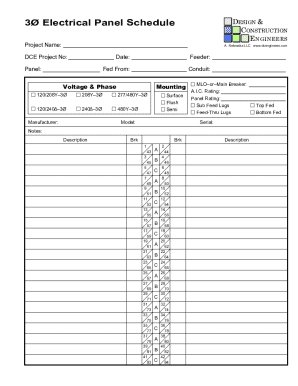
0 30 72 32 74 34 76 36 78 38 80 40 82 42 84 Description Top Fed Bottom Fed 1Ø Electrical Panel Schedule Project Name: A Nebraska LLC www.dcengineers.com DCE Project No: Date: Feeder: Fed From: Panel: Conduit: Voltage & Phase 120/208–1Ø 120/240–1Ø DESIGN & CONSTRUCTION E NGINEERS 120–1Ø 208–1Ø 240–1Ø Manufacturer: Mounting 277/480–1Ø 277–1Ø 480–1Ø Surface Flush Semi Model: MLO–or–Main Breaker: A.I.C. Rating: Panel Rating: Sub Feed Lugs Feed-Thru Lug.

How it works

  1. Open form

    Open form follow the instructions

  2. Easily sign form

    Easily sign the form with your finger

  3. Share form

    Send filled & signed form or save

How to fill out the Electrical Panel Schedule online

Filling out the Electrical Panel Schedule is essential for documenting and managing electrical systems in construction projects. This guide provides clear instructions on how to complete the form efficiently and accurately.

Follow the steps to fill out the Electrical Panel Schedule online.

  1. Click ‘Get Form’ button to access the document and open it in your preferred editor.
  2. Begin by entering the project name at the top of the schedule. This should reflect the specific project for which the electrical panel needs to be documented.
  3. Next, fill in the DCE project number and the date to provide important identification and timing information concerning the project.
  4. Indicate the source of the power supply by filling in the 'Fed From' field, specifying the relevant power source.
  5. Complete the 'Panel' field by identifying the electrical panel being used in the project to ensure accurate documentation.
  6. In the 'Feeder' section, specify the feeder size and type to accurately represent the electrical distribution.
  7. Fill in the 'Conduit' information, detailing the type of conduit used for wiring, as it is crucial for system safety and compliance.
  8. Select the correct 'Voltage & Phase' option from the dropdown, making sure it matches the specifications of your electrical system.
  9. Specify the mounting type (surface, flush, or semi) in the appropriate field based on how the panel will be installed.
  10. Document the manufacturer and model of the electrical panel to maintain a clear record of equipment used.
  11. Fill out the MLO or main breaker information by entering the A.I.C rating and panel rating, which are critical for understanding the panel's capability.
  12. Indicate the serial number for tracking and warranty purposes in the 'Serial' field.
  13. In the 'Notes' section, provide any additional information relevant to the installation or specifications of the electrical panel.
  14. For breaker configuration, document the necessary details for each breaker and its description as provided in the schedule rows.
  15. Once all fields are completed, you may save your changes, download a copy of the filled-out form, print it for hard copies, or share it with your team.

Complete your Electrical Panel Schedule online now for effective project management.

Get form

Experience a faster way to fill out and sign forms on the web. Access the most extensive library of templates available.
Get form

Related content

Sample 1Ø Panel Schedule
A 1Ø panel schedule includes panel number, section, load types (receptacle, motor...
Learn more
Panel Schedule Template - LearnTech Hub
Mar 29, 2025 — Panel schedule templates serve as comprehensive documentation for...
Learn more
Quick Start
Record Inputs in Panel Schedule - After completion of all connections, include in the...
Learn more

Related links form

Archer Construction Change Order Request Form Argumentative Writing: Graphic Organizer Arlington Community Church Facility Rental Agreement Atlanta Eye Custom Optical Laboratories Form

Questions & Answers

Get answers to your most pressing questions about US Legal Forms API.

Contact support

While specific requirements for panel schedules can vary, they are highly recommended for safety and efficiency. Many local building codes encourage or mandate the use of panel schedules to maintain safety standards. Utilizing services like USLegalForms can help you ensure compliance and create a comprehensive panel schedule that meets all necessary regulations.

A panel schedule shows the layout of the circuits connected to an electrical panel, detailing each circuit's load and purpose. This document is vital for electricians and property owners alike, providing clear insights into the electrical system's structure. By understanding this information, users can better manage their electrical resources and facilitate repairs when necessary.

Panel scheduling refers to the process of organizing and documenting the circuits and their corresponding loads within an electrical panel. This practice promotes efficiency and safety by preventing overloads and ensuring proper power distribution. Proper panel scheduling helps both homeowners and professionals maintain clear, effective electrical systems.

The electrical panel schedule is a detailed document that provides information on the circuits within an electrical panel. It specifies circuit numbers, associated loads, and various usage purposes. This document is essential for easy reference, maintenance, and safety checks, making it a valuable asset in any electrical system.

Creating an electrical panel schedule involves listing each circuit in the panel alongside its corresponding load, location, and purpose. Start by mapping out the layout of your electrical system and documenting all devices connected to it. Utilizing tools or templates available through resources like USLegalForms simplifies this process, ensuring accuracy and ease of use.

Regulations for electrical panels vary by location, but they generally include adherence to local building codes and safety standards. Compliance ensures the electrical panel operates safely and efficiently, protecting against electrical hazards. Familiarizing yourself with these regulations is essential, and platforms like USLegalForms can help you access necessary documentation.

The schedule of electrical panels details the configuration and distribution of circuits within an electrical panel. It indicates which circuits are allocated for specific electrical devices and areas, aiding in organization and maintenance. Having a clear schedule ensures easy identification and allows for quick troubleshooting when issues arise.

The load schedule of an electrical panel outlines the amount of electrical load each circuit in the panel can safely carry. By ensuring that the total load does not exceed the panel’s capacity, you can prevent overloads and potential hazards. Understanding your electrical panel's load schedule is crucial for efficient power distribution throughout your space.

Similar to the previous answer, the rule of 6 pertains to the maximum number of devices allowed on a given circuit. It applies to residential wiring standards primarily. By establishing an organized electrical panel schedule that follows this rule, you can ensure a safer electrical environment for your home or business.

The rule of six in electrical panels states that the total number of devices or outlets should not exceed six per circuit to ensure safety. This guideline helps manage the load efficiently. By incorporating this rule into your electrical panel schedule, you reduce the risk of circuit overloads and electrical hazards.

Get This Form Now!

Use professional pre-built templates to fill in and sign documents online faster. Get access to thousands of forms.
Get form
If you believe that this page should be taken down, please follow our DMCA take down processhere.
Get Electrical Panel Schedule
Get form
  • Adoption
  • Bankruptcy
  • Contractors
  • Divorce
  • Home Sales
  • Employment
  • Identity Theft
  • Incorporation
  • Landlord Tenant
  • Living Trust
  • Name Change
  • Personal Planning
  • Small Business
  • Wills & Estates
  • Packages A-Z
  • Affidavits
  • Bankruptcy
  • Bill of Sale
  • Corporate - LLC
  • Divorce
  • Employment
  • Identity Theft
  • Internet Technology
  • Landlord Tenant
  • Living Wills
  • Name Change
  • Power of Attorney
  • Real Estate
  • Small Estates
  • Wills
  • All Forms
  • Forms A-Z
  • Other Templates
  • Legal Hub
  • About Us
  • Help Portal
  • Legal Resources
  • Blog
  • Affiliates
  • Contact Us
  • Delete My Account
  • Site Map
  • Industries
  • Forms in Spanish
  • Localized Forms
  • State-specific Forms
  • Forms Kit
  • Real Estate Handbook
  • All Guides
  • Notarize
  • Incorporation services
  • For Consumers
  • For Small Business
  • For Attorneys
  • USLegal
  • FormsPass
  • pdfFiller
  • signNow
  • altaFlow
  • DocHub
  • Instapage
Form Packages
  • Adoption
  • Bankruptcy
  • Contractors
  • Divorce
  • Home Sales
  • Employment
  • Identity Theft
  • Incorporation
  • Landlord Tenant
  • Living Trust
  • Name Change
  • Personal Planning
  • Small Business
  • Wills & Estates
  • Packages A-Z
Form Categories
  • Affidavits
  • Bankruptcy
  • Bill of Sale
  • Corporate - LLC
  • Divorce
  • Employment
  • Identity Theft
  • Internet Technology
  • Landlord Tenant
  • Living Wills
  • Name Change
  • Power of Attorney
  • Real Estate
  • Small Estates
  • Wills
  • All Forms
  • Forms A-Z
  • Other Templates
Customer Service
  • Legal Hub
  • About Us
  • Help Portal
  • Legal Resources
  • Blog
  • Affiliates
  • Contact Us
  • Delete My Account
  • Site Map
  • Industries
  • Forms in Spanish
  • Localized Forms
  • State-specific Forms
  • Forms Kit
Legal Guides
  • Real Estate Handbook
  • All Guides
Prepared for you
  • Notarize
  • Incorporation services
Our Customers
  • For Consumers
  • For Small Business
  • For Attorneys
Our Sites
  • USLegal
  • FormsPass
  • pdfFiller
  • signNow
  • altaFlow
  • DocHub
  • Instapage
Social Media
Call us now toll free:
+1 833 426 79 33
As seen in:
© Copyright 1999-2026 airSlate Legal Forms, Inc. 17 Station Street, Suite 303, Brookline, MA 02445
  • Your Privacy Choices
  • Terms of Service
  • Privacy Notice
  • Content Takedown Policy
  • Bug Bounty Program