Loading
Get Plumbing Inspection Checklist
How it works
-

Open form follow the instructions
-

Easily sign the form with your finger
-

Send filled & signed form or save
How to fill out the Plumbing Inspection Checklist online
The Plumbing Inspection Checklist is an essential tool for ensuring that plumbing installations meet required standards. This guide provides clear and concise instructions on how to fill out this checklist online, ensuring a seamless experience for all users.
Follow the steps to effectively complete the Plumbing Inspection Checklist online.
- Click ‘Get Form’ button to obtain the Plumbing Inspection Checklist and open it in your preferred editor.
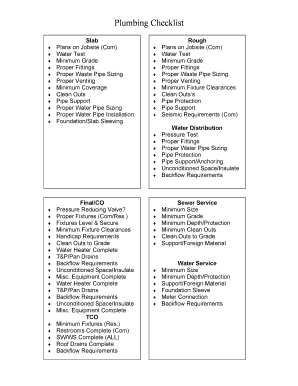
- Review the checklist sections carefully. Each section corresponds to different aspects of plumbing, such as slab, rough, water distribution, sewer service, and water service.
- Begin with the slab section, noting items such as plans on job site, water test, and proper fittings. Check each item systematically to confirm compliance.
- Proceed to the final/CO section, ensuring all requirements are met for proper fixtures, fixture clearances, and secure installation.
- Complete the rough section by checking for critical elements such as minimum grade and clean outs. Ensure seismic requirements are also addressed if applicable.
- In the water distribution section, focus on items like pressure test, proper fittings, and backflow requirements.
- Move on to the sewer service section and review minimum size, depth, and clean outs, confirming all criteria are fulfilled.
- Finally, fill out the water service section, verifying size, depth, and support elements are appropriately documented.
- Once all sections are completed, review your entries for accuracy and consistency before finalizing the form.
- Save changes, and consider downloading, printing, or sharing the completed checklist based on your needs.
Complete your Plumbing Inspection Checklist online today for efficient documentation.
Related links form
During the inspection, a plumber will check your toilets, sewage lines, water supply, pipe condition, water heater, and so on. They're looking for signs of corrosion, leaks, and general poor condition that could result in problems later on.