Loading
Get Daily Log Book - Abbott Diabetes Care
How it works
-

Open form follow the instructions
-

Easily sign the form with your finger
-

Send filled & signed form or save
How to fill out the Daily Log Book - Abbott Diabetes Care online
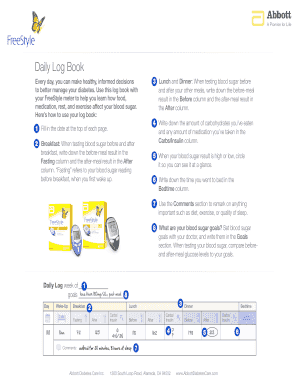
The Daily Log Book - Abbott Diabetes Care is a valuable tool for monitoring and managing your diabetes. By accurately recording data related to your food intake, medication, and blood sugar levels, you can make informed decisions about your health.
Follow the steps to effectively complete your Daily Log Book online.
- Press the ‘Get Form’ button to access the Daily Log Book and open it in the designated editor.
- Begin by entering the date at the top of each page. This helps maintain an accurate record of your daily monitoring.
- Record your blood sugar readings before and after breakfast. Write the fasting reading in the Fasting column and the post-meal reading in the After column.
- For lunch and dinner, input your before-meal readings in the Before column and after-meal readings in the After column.
- In the Carbs/ column, document the total carbohydrates you consumed along with any medication taken.
- If you note a high or low blood sugar result, circle it for easy reference.
- Write the time you went to bed in the Bedtime column, ensuring a complete overview of your day.
- Utilize the Comments section for any additional notes regarding your diet, exercise, or sleep quality.
- Establish blood sugar goals in the Goals section, collaborating with your healthcare provider, and compare your readings to these targets.
- Finally, review all entries for accuracy. Once completed, you can save changes, download, print, or share the log book as needed.
Start managing your diabetes more effectively by completing your Daily Log Book online today.
Turn on the reader by pressing the button on the bottom right hand corner. Hold the reader within 4 cm (1.5 inches) of the sensor to scan it. You can scan through clothing. The reader can collect data from the sensor within 1 – 4 cm of the sensor. Your reader will show your glucose level on the screen.