Loading
Get L-0212 - Superior Court - Occourts
How it works
-

Open form follow the instructions
-

Easily sign the form with your finger
-

Send filled & signed form or save
How to fill out the L-0212 - Superior Court - Occourts online
Filling out the L-0212 form for the Superior Court can be a straightforward process when you follow the right steps. This guide will walk you through each section, ensuring that you understand what information to provide.
Follow the steps to effectively complete the L-0212 form.
- Use the ‘Get Form’ button to access the online version of the L-0212 form and open it in your editing interface.
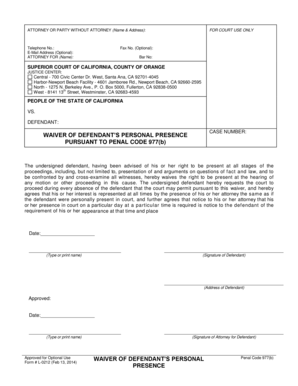
- Begin by entering the details of the attorney or party representing the defendant. This includes the name and address, as well as optional fields such as telephone number, email address, and fax number.
- If applicable, provide the name of the attorney for the defendant in the designated field.
- Record the relevant details for court use, including the case number and the court information, selecting the appropriate Justice Center from the provided list.
- In the section entitled 'Waiver of Defendant’s Personal Presence,' ensure that the defendant's name is clearly printed and that they understand their rights regarding presence in court proceedings.
- The defendant must sign and date the form to indicate their consent to waive their right to be present during hearings, confirming their understanding of the legal implications.
- If an attorney is present for the defendant, their signature and name should be included in the designated areas, along with the date of approval.
- Once all fields are completed, you have the option to save your changes, download the file, print it for physical submission, or share it as needed.
Complete your documents online with confidence today.
On the other hand, a special appearance in California family court regards a personal appearance by a party or their attorney to argue that the court does not have personal jurisdiction over this party, and thus the court does not have sufficient information to make a personal judgment against the party.