Loading
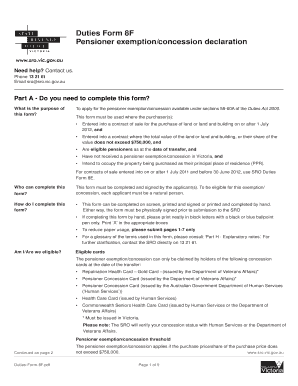
Get Sro Duties Form 8f - Pensioner Exemption/concession Declaration - Sro Vic Gov
How it works
-

Open form follow the instructions
-

Easily sign the form with your finger
-

Send filled & signed form or save
How to fill out the SRO Duties Form 8F - Pensioner Exemption/concession Declaration - Sro Vic Gov online
This guide provides a detailed overview of the steps necessary to complete the SRO Duties Form 8F - Pensioner Exemption/concession Declaration. Designed for users of all backgrounds, this guide will help you accurately fill out the form online and ensure a smooth application process.
Follow the steps to successfully complete the form.
- Press the ‘Get Form’ button to access the form and open it in your preferred editing tool.
- Carefully read Part A to confirm if you qualify to complete this form. Ensure you meet all eligibility criteria outlined.
- In Part B, provide the necessary declarant details for each applicant, including names and addresses. Remember to print legibly if completing by hand.
- Complete Part C with the particulars of the transaction, including title details and property type. If there is not enough space, attach a separate schedule.
- Fill in Part D for eligibility verification. Each applicant must answer all questions accurately, indicating their concession card status.
- In Part E, be sure to attach all required supporting documents as specified, including the signed transfer of land form and copies of concession cards.
- Sign and date the declaration in Part F to confirm all information is true and complete.
- Review all parts of the form to ensure accuracy. Save your changes or print the completed form.
- Finally, submit the completed form along with all required documents either online or via mail to the State Revenue Office.
Take action now by completing the SRO Duties Form 8F online to secure your pensioner exemption or concession.
What are concessions? Concessions are discounts on services to help low-income Victorian households pay their bills. Concessions are available for essential services – electricity, gas, water and council rates – and for other services such as health, education and public transport.