Loading
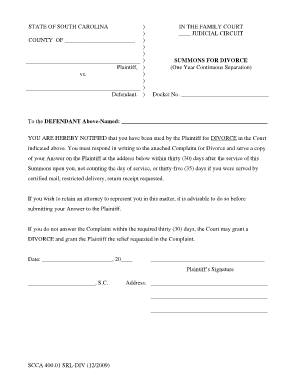
Get Divorce In South Carolina
How it works
-

Open form follow the instructions
-

Easily sign the form with your finger
-

Send filled & signed form or save
How to fill out the Divorce In South Carolina online
Filing for divorce can be a significant and challenging process. This guide will help you understand how to complete the Divorce In South Carolina form accurately and efficiently, ensuring that you are fully prepared for the legal requirements ahead.
Follow the steps to fill out your Divorce form online
- Click ‘Get Form’ button to obtain the Divorce In South Carolina form and open it in the editing interface.
- Begin by filling in the docket number in the space provided at the top of the form. This number is assigned by the court and is essential for identifying your case.
- Next, provide the names of the plaintiff and defendant as indicated. Ensure the names are spelled correctly, as these will be used throughout the legal documents.
- In the section labeled 'To the Defendant Above-Named,' include the name of the defendant who is being notified of the divorce proceedings.
- Complete the notification section that states the defendant has been sued for divorce. This section is crucial as it communicates the purpose of the document.
- If applicable, indicate the date when the summons was issued. This date can be critical for establishing timelines in the case.
- Provide the plaintiff's signature as an indication of the completed summons form. This signature must be current and reflect the date of signing.
- In the address section, clearly write the address of the plaintiff. This must include the street address, city, state, and any relevant zip code.
- Review the entire document for accuracy and completeness before finalizing it.
- Once you have completed the form, you can save your changes, download the document, or choose to print it for physical submissions.
Start your online divorce process today by completing the necessary documents.
In South Carolina, Are Retirement Accounts Split in a Divorce? If it's a marital asset, then yes. If the retirement account started during the marriage, then it's almost certainly a marital asset, and the spouse could be entitled to some of it, possibly even more than 50% depending on the circumstances.