Loading
Get Waiver Of Service
How it works
-

Open form follow the instructions
-

Easily sign the form with your finger
-

Send filled & signed form or save
How to fill out the Waiver Of Service online
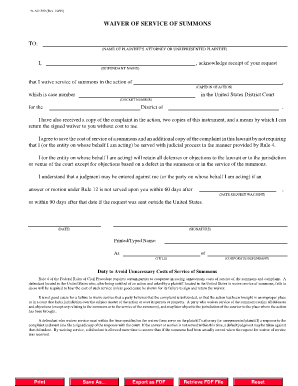
Filling out the Waiver Of Service is an important step in the legal process, allowing defendants to acknowledge receipt of a summons without formal service. This guide provides clear, step-by-step instructions to assist you in completing the form accurately and efficiently online.
Follow the steps to complete your Waiver Of Service form online:
- Click the ‘Get Form’ button to access the Waiver Of Service form and open it in your preferred document editor.
- In the section labeled ‘TO,’ enter the name of the plaintiff's attorney or the unrepresented plaintiff.
- In the next field, input your name as the defendant, specifying your full name.
- Under ‘which is case number,’ you must provide the case number associated with your legal action.
- Fill in the ‘caption of action’ field, detailing the nature of the case.
- Next, indicate the specific district and state for the United States District Court where the case is being filed.
- Confirm that you have received a copy of the complaint and remark on the means provided for returning the signed waiver.
- Acknowledge your agreement to waive the service of summons by checking the understanding presented on retaining your defenses.
- Complete the date fields by entering the date the request for the waiver was sent.
- Sign the document to indicate your consent and print/type your name beneath your signature.
- If applicable, indicate your title in the provided space to represent any corporate entity.
- Once you have filled out all required fields, you may save your changes, download, print, or share the completed form as needed.
Complete your Waiver Of Service online today to streamline your legal process.
In general, a Texas waiver of service is a term the legal system uses to describe when a person signs a statement stating that they do not want to be served with notice regarding a legal matter they are involved in and thereby waive their right to be served.