Loading
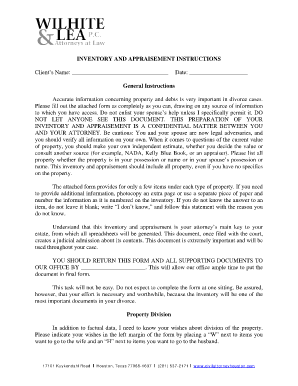
Get Texas Divorce Inventory And Appraisement Form
How it works
-

Open form follow the instructions
-

Easily sign the form with your finger
-

Send filled & signed form or save
How to fill out the Texas Divorce Inventory And Appraisement Form online
Completing the Texas Divorce Inventory And Appraisement Form is an essential part of the divorce process, providing a clear overview of the assets and debts involved. This guide will help you navigate the form easily and accurately.
Follow the steps to complete your form online effectively.
- Click ‘Get Form’ button to obtain the form and open it in the document editor.
- Begin by filling in your name at the top of the form. This identifies the document as yours.
- Enter the current date next to the designated space, confirming when you are filling out the form.
- Carefully list all of your assets and debts, ensuring accuracy. Use various sources of information to fill out each section thoroughly.
- For every piece of property, indicate whether it is separate or community property. Refer to the definitions provided in the instructions to help clarify your classifications.
- In the margins, mark a 'W' next to items you wish to be allocated to your partner and an 'H' for items you wish to remain with you.
- If you do not know the value of an asset, do not leave it blank. Instead, write 'I don’t know' and explain why you lack that information.
- After completing the form, review all entries carefully to ensure full disclosure of all assets and liabilities—this prevents future complications.
- Attach copies of any relevant documents that support your entries. Label them according to the numbers in your inventory.
- Once you have reviewed everything, save the changes, download the form, and prepare for printing. Ensure you have a copy for your records.
Complete your Texas Divorce Inventory And Appraisement Form online today for a smoother divorce process.
Related links form
New International Student I-20 Application Pdf - St. John Fisher ... - Sjfc
The Clerical And Service Staff Advisory Committee Was Sanctioned As A University Committee In 1965
VENDOR REQUEST FORM - St. Cloud State University - Stcloudstate
Chemistry Teaching 9-12 Scholarship - St. Cloud State University - Stcloudstate
Inventory values are used to determine the number of probate court fees. They also form the new cost-basis for probate assets passed onto the decedent's heirs. This is why you need to ensure the individual named as a personal representative in your will is responsible and capable of complying with the law.