Loading
Get Us Bankruptcy Auctioneers Bond
How it works
-

Open form follow the instructions
-

Easily sign the form with your finger
-

Send filled & signed form or save
How to fill out the US Bankruptcy Auctioneers Bond online
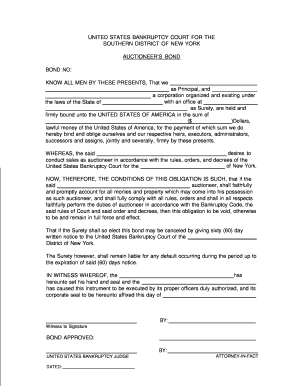
Filling out the US Bankruptcy Auctioneers Bond is an essential step for auctioneers wishing to conduct sales under the jurisdiction of the bankruptcy court. This guide will take you through each section of the form, ensuring a smooth and comprehensive completion process.
Follow the steps to fill out the bond form accurately
- Press the ‘Get Form’ button to access the US Bankruptcy Auctioneers Bond form and open it for editing.
- In the first section, fill in the 'BOND NO' field with a unique identification number for your bond. This number is crucial for tracking purposes.
- Next, input the name of the Principal, who is the individual or entity obtaining the bond.
- Include the name of the Surety, a corporation that guarantees the bond, along with its legal formation details and operating state.
- Enter the Surety's office address to ensure correct identification and contact.
- Specify the amount of the bond in the designated area. This is the monetary sum to which the bond is being secured.
- In the following section, indicate the intent of the Principal to perform as an auctioneer and reference compliance with the United States Bankruptcy Court rules.
- Provide a statement confirming the obligations of the auctioneer to manage funds responsibly and adhere to all applicable rules and laws.
- Verify and insert the date of the document's execution and ensure all parties sign where indicated, including witness signatures.
- After completing the form, remember to save your changes, and choose to download or print the document for your records.
Complete your US Bankruptcy Auctioneers Bond online today to ensure compliance and streamline your auction process.
Once a company files for bankruptcy, bondholders no longer receive principal and interest payments. When the process is complete, they may receive newly issued bonds, cash, or stock whose value may not equal the value of the bonds they owned.