Loading
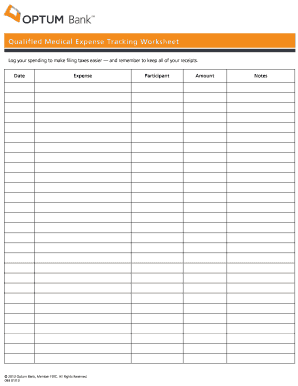
Get Qualified Medical Expense Tracking Worksheet - Optum Bank
How it works
-

Open form follow the instructions
-

Easily sign the form with your finger
-

Send filled & signed form or save
How to use or fill out the Qualified Medical Expense Tracking Worksheet - Optum Bank online
The Qualified Medical Expense Tracking Worksheet from Optum Bank is a valuable tool for users to document their medical expenses throughout the year. By maintaining accurate records, individuals can streamline their tax filing process and ensure they are prepared for potential reimbursements.
Follow the steps to complete the worksheet effectively.
- Click ‘Get Form’ button to obtain the form and open it for filling out.
- Begin by entering the date of each medical expense in the designated 'Date' field. This will help you organize your expenses chronologically.
- In the 'Expense' section, describe the nature of the medical expense incurred, such as doctor's visits, prescriptions, or medical equipment. Be specific to assist in accurate documentation.
- Next, record the participant's name in the 'Participant' field. This should be the name of the individual associated with the expense, ensuring proper attribution for tax purposes.
- In the 'Amount' field, accurately enter the monetary value of the expense. Ensuring this figure is precise will facilitate smoother reimbursements and tax documentation.
- Use the 'Notes' section to include any additional information that could be relevant to the expense, such as the service provider's name or any special circumstances surrounding the expense.
- Finally, once you have filled out all necessary fields, you can save changes, download the completed worksheet, print it for your records, or share it as needed.
Start documenting your medical expenses online today for a hassle-free tax season.
In general, you can use your HSA to pay for any qualified medical expense. Qualified medical expenses are defined by the IRS and include medical care, vision and dental care expenses, prescription drugs, and payments for long term care services and insurance.