Loading
Get Exim Bank Questionnaire
How it works
-

Open form follow the instructions
-

Easily sign the form with your finger
-

Send filled & signed form or save
How to fill out the Exim Bank Questionnaire online
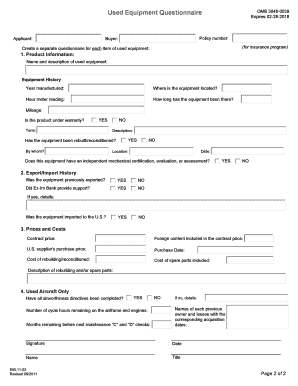
The Exim Bank Questionnaire is essential for assessing eligibility for financing support related to used equipment. This guide will help you navigate through the online form, providing clear instructions and guidance to ensure successful completion.
Follow the steps to accurately fill out the Exim Bank Questionnaire online.
- Click ‘Get Form’ button to obtain the form and open it in a suitable online editor.
- Begin by filling out the applicant's information section, including the name and contact details of the person or organization applying for support.
- In the 'Product Information' section, provide a thorough description of the used equipment, including its name and specific features.
- Complete the 'Equipment History' field with details such as the year of manufacture, current location, hour meter reading, and warranty status.
- Proceed to the 'Export/Import History' section to state whether the equipment was previously exported or imported, and specify if Exim Bank support was provided earlier.
- Fill out the 'Prices and Costs' section, detailing the contract price, any foreign content included, and costs associated with rebuilding the equipment.
- If applicable, complete the 'Used Aircraft Only' section, answering questions about airworthiness directives and maintenance cycles.
- Review the entire questionnaire for accuracy, ensuring that all fields have been filled in correctly.
- Once completed, save the changes, and choose the option to download, print, or share the form as necessary.
Complete the Exim Bank Questionnaire online to secure the financing support you need for your used equipment.
We promote reverse investment, support export from strategic sectors such as capital goods, infrastructure projects, shipping, value-added manufactured products, as well as facilitate the entry of Malaysian companies to new markets, particularly to non-traditional markets.