Loading
Get Pc-201 - Connecticut Probate Courts
How it works
-

Open form follow the instructions
-

Easily sign the form with your finger
-

Send filled & signed form or save
How to fill out the PC-201 - Connecticut Probate Courts online
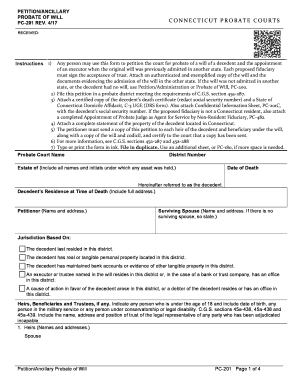
The PC-201 form is designed for users to petition the Connecticut Probate Courts for the probate of a will when the original will was previously admitted in another state. This guide will provide you with step-by-step instructions to fill out the form effectively online.
Follow the steps to complete the PC-201 form online with ease.
- Click the ‘Get Form’ button to access the PC-201 form and open it in your preferred digital format.
- Begin by entering the probate court name and district number where you plan to file the petition, followed by the date of death of the decedent.
- Provide the name and any initials under which the decedent's assets were held, along with their full residence address at the time of death.
- List the petitioner's full name and address, as well as the surviving spouse's name and address; if there is no spouse, indicate that accordingly.
- Select the appropriate jurisdiction basis by marking the relevant checkboxes according to the criteria that apply to your case.
- Detail the heirs, beneficiaries, and trustees by providing names, addresses, and relevant relationship information. Be sure to include any individuals under 18 and their dates of birth.
- Sign the petition and date it. If you are the proposed fiduciary, provide your signature and indicate your acceptance of the position of trust.
- Attach any required documents, including the authenticated copy of the will and any pertaining certificates or affidavits.
- Once all sections are completed and verified, save your changes, download the form, and prepare it for printing or sharing.
Start completing your documents online to efficiently manage your probate process.
Not all estates need to go through full probate. For instance, in Connecticut, if the decedent's solely-owned assets include no real property and are valued at less than $40,000 which is the state's small estates limit then the estate can be settled without full probate, under a much shorter and easier process.