Loading
Get Complaint To Establish Paternity - Mass.gov
How it works
-

Open form follow the instructions
-

Easily sign the form with your finger
-

Send filled & signed form or save
How to fill out the COMPLAINT TO ESTABLISH PATERNITY - Mass.Gov online
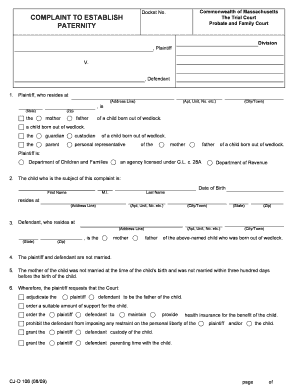
This guide provides clear and supportive instructions on completing the Complaint to Establish Paternity form in Massachusetts. By following these steps, users can ensure accurate and efficient submission of their complaint.
Follow the steps to successfully fill out the form
- Press the ‘Get Form’ button to access the form and open it in your document editor.
- Enter the docket number in the designated field, which helps identify your case within the court system.
- Provide the division of the court where the case will be filed.
- In the plaintiff section, fill out your name and address details, including state and zip code. Indicate your relationship to the child by selecting from options like mother, father, guardian, custodian, or personal representative.
- Complete the section regarding the child who is the subject of this complaint. Include the child's full name, date of birth, and address, ensuring all details are accurate.
- In the defendant section, provide the defendant's information, including name, address, and relationship to the child.
- Confirm that the plaintiff and defendant are not married and indicate the marital status of the mother at the time of the child's birth.
- In the wherefore section, specify your requests to the court, such as adjudicating paternity, ordering support, or providing health insurance for the child.
- Sign and date the form at the bottom. If you are represented by an attorney, include their contact information and bar number.
- Review all entered information for accuracy. Once confirmed, proceed to save changes, download, print, or share the completed form as needed.
Complete your complaint online today for a smoother filing experience.
“A man is presumed to be the father of a child and must be joined as a party if (1) he is or has been married to the mother and the child was born during the marriage, or within three hundred days after the marriage was terminated by death, annulment or divorce.”