Loading
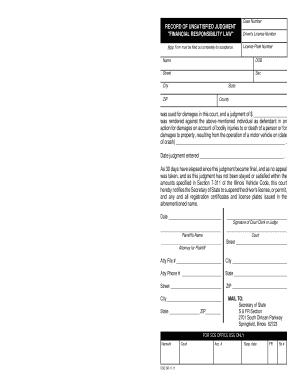
Get Dsd Sr 17
How it works
-

Open form follow the instructions
-

Easily sign the form with your finger
-

Send filled & signed form or save
How to fill out the Dsd Sr 17 online
Filling out the Dsd Sr 17 form online is a straightforward process that helps facilitate communication with the Illinois Secretary of State regarding unsatisfied judgments. This guide provides clear, step-by-step instructions to ensure that you complete the form accurately and efficiently.
Follow the steps to fill out the Dsd Sr 17 form online.
- Click the ‘Get Form’ button to obtain the form and open it in your preferred online editor.
- Begin by entering the case number in the designated field. This number is crucial for proper filing and tracking of your submission.
- Provide the driver's license number and license plate number associated with the defendant. Accurate identification is essential for processing.
- Fill in the full name and date of birth of the defendant. Ensure that all information is correct as it appears on legal documents.
- Complete the address fields, including street, city, state, and ZIP code for the defendant.
- In the section regarding the judgment details, specify the amount rendered and the date of the crash that resulted in the judgment. This information is critical for legal processing.
- Indicate the date when the judgment was entered. This timing is important to establish the 30-day requirement before submission.
- Include the name of the plaintiff and the attorney representing the plaintiff. If you are filing pro se, please indicate that in the attorney field.
- Ensure the signature of the Court Clerk or Judge is present, along with any necessary certification or court filing stamps to validate the document.
- Upon completing the form, you can save the document, download it, and print a copy for your records.
- Finally, submit the completed form to the Secretary of State's office at the provided address.
Begin completing your Dsd Sr 17 form online today to ensure timely processing.
A judgment is a court order stating that you owe the debt collector money because of a lawsuit. You may have received a judgment because the court decided in favor of the debt collector in a trial, or because you did not respond to a lawsuit that was filed against you.