Loading
Get Hotphotoxx
How it works
-

Open form follow the instructions
-

Easily sign the form with your finger
-

Send filled & signed form or save
How to fill out the Hotphotoxx online
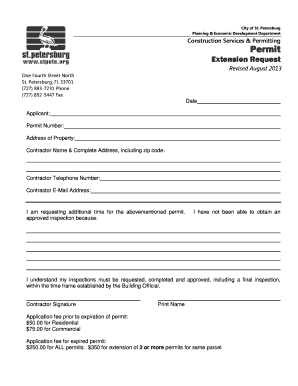
Filling out the Hotphotoxx form is an essential step in the permit extension request process. This guide will provide clear instructions to help you successfully complete the form and ensure your request is submitted correctly.
Follow the steps to complete your permit extension request
- Click ‘Get Form’ button to obtain the form and open it in the editor.
- Enter the date in the designated field at the top of the form, ensuring it is formatted correctly.
- Provide your name or the applicant's name in the 'Applicant' field.
- Input the permit number associated with your request in the specified section.
- Fill in the address of the property relevant to the permit request in the designated space.
- Complete the contractor's name and full address, including the zip code, within the appropriate fields.
- Provide the telephone number and email address for the contractor in the corresponding fields.
- In the text box where it states the reason for your extension request, clearly explain your situation regarding the inability to obtain an approved inspection.
- Acknowledge the statement regarding the requirement for inspections by checking the box or signing where indicated.
- Sign the form as the contractor, and print your name in the designated area.
- Review the application fee details: $50.00 for residential permits, $75.00 for commercial permits, $250.00 for expired permits, and $350.00 for the extension of two or more permits for the same parcel.
- Once all sections are completed, save your changes, download the form for your records, and print or share it as needed.
Start filling out your Hotphotoxx form online today to ensure timely submission of your permit extension request.
The benefit of using a drafting table is the improved posture and alignment that these tables provide. Unlike a regular table in which the artist may have to hunch over to see their work because of the flattened surface, drafting tables tend to be angled for a front-facing view.