Get Activity 2 2 3 Heat Loss And Gain
How it works
-

Open form follow the instructions
-

Easily sign the form with your finger
-

Send filled & signed form or save
How to fill out the Activity 2 2 3 Heat Loss And Gain online
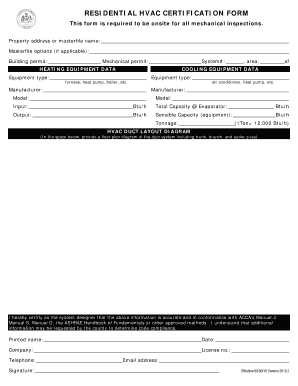
Filling out the Activity 2 2 3 Heat Loss And Gain form is an essential step in accurately documenting HVAC systems for mechanical inspections. This guide is designed to help users navigate each section of the form with ease and confidence.
Follow the steps to complete the form successfully.
- Press the ‘Get Form’ button to access the Activity 2 2 3 Heat Loss And Gain form and launch it in your preferred online editor.
- Begin by entering the property address or masterfile name in the specified field. If applicable, choose from the available masterfile options.
- Record the building permit number in the designated area. Make sure this information is accurate, as it is crucial for compliance.
- Input the mechanical permit number in the appropriate field. This helps to ensure that all permits are accounted for.
- Provide the system number in the designated area. This number helps identify the specific HVAC system associated with this form.
- Complete the heating equipment data by specifying the type of heating equipment used, such as a furnace or heat pump, and indicate the associated area in square footage (sf).
- Fill out the cooling equipment data by detailing the type of cooling equipment, including manufacturer and model. Record the input in Btu/h, total capacity at the evaporator in Btu/h, output in Btu/h, sensible capacity in Btu/h, and tonnage (noting that 1 ton equals 12,000 Btu/h).
- Include an HVAC duct layout diagram in the provided space. This should illustrate the floor plan as well as trunk, branch, and outlet sizes to clearly represent the duct system.
- Certify the accuracy of the submitted information by filling in your printed name, date, company name, license number, telephone number, and email address.
- Finally, review all the entries to ensure everything is correct before saving your changes, downloading, printing, or sharing the completed form.
Complete your documents online today to ensure your HVAC system meets all necessary codes and regulations.
To calculate heat loss and heat gain, start by determining the thermal properties of your building materials and the dimensions of your space. Incorporate variables such as insulation levels, air infiltration rates, and external temperature changes. By following the guidelines of Activity 2 2 3 Heat Loss And Gain, you can create a detailed assessment of energy movement in your environment. For a more streamlined experience, consider using resources from the US Legal Forms platform to guide you through the calculation process.