Loading
Form preview
  • US Legal Forms
  • Form Library
  • More Forms
  • More Uncategorized Forms
  • Shoplifting Policy Example

Get Shoplifting Policy Example

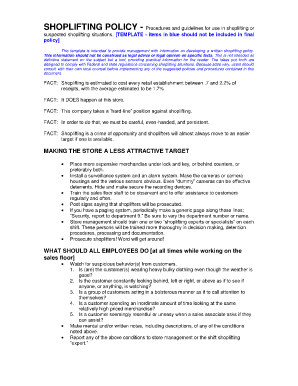
SHOPLIFTING POLICY - Procedures and guidelines for use in shoplifting or suspected shoplifting situations. TEMPLATE - items in blue should not be included in final policy This template is intended.

How it works

  1. Open form

    Open form follow the instructions

  2. Easily sign form

    Easily sign the form with your finger

  3. Share form

    Send filled & signed form or save

How to fill out the Shoplifting Policy Example online

This guide provides clear and comprehensive instructions on how to properly fill out the Shoplifting Policy Example. Whether you are creating a policy from scratch or refining an existing one, this resource will help you navigate each section with confidence.

Follow the steps to complete the form accurately.

  1. Press the ‘Get Form’ button to obtain the document, and open it in your online editing tool.
  2. Review the introductory section, which outlines the purpose of the shoplifting policy and its significance in guiding management and staff in addressing shoplifting incidents.
  3. Carefully fill out the sections detailing preventive measures. Specify procedures such as placing expensive merchandise in secure locations and implementing surveillance measures.
  4. Document the responsibilities of employees consistently monitoring customer behavior while providing assistance. Ensure clarity in the expectations set for staff in identifying suspicious activities.
  5. Include detailed protocols for responding to suspected shoplifting incidents based on the six universally accepted steps outlined in the document. Make sure to address state-specific regulations.
  6. Complete the internal reporting section found in Appendix A. Provide all necessary information, including specifics about the incident, suspect information, and observations made during the process.
  7. Once all sections are filled out, save your changes. You may also have the option to download, print, or share the completed form depending on your needs.

Get started on completing your shoplifting policy document online today!

Get form

Experience a faster way to fill out and sign forms on the web. Access the most extensive library of templates available.
Get form

Related content

Shoplifting & Internal Theft Prevention |...
Announce and observe a zero tolerance policy to prosecute shoplifters. ... For example:...
Learn more
Fraud and Theft Prevention Policy | Policy Library
Examples of theft include: Obtaining by fraud, control over University assets with the...
Learn more
Organized crime - Wikipedia
Organized crime is a category of transnational, national, or local groupings of highly...
Learn more

Related links form

PA MV-511B 2012 PA MV-550A 2016 PA MV-552A 2017 PA MV-552A 2017

Questions & Answers

Get answers to your most pressing questions about US Legal Forms API.

Contact support

A zero tolerance policy for employee theft means that a company will take immediate and decisive action against any employee caught stealing. This policy emphasizes the importance of integrity and trust within the workplace. Implementing a clear Shoplifting Policy Example can help enforce this policy, ensuring that all employees understand the consequences of theft and the importance of honesty.

A recovery statement in retail often outlines the steps a store will take to recover losses from theft, including shoplifting. For instance, a statement may specify that the store will pursue restitution from the thief and implement stricter security measures. Using a Shoplifting Policy Example can help retailers draft effective recovery statements that clarify their stance on theft and loss prevention.

The best defense for shoplifting may depend on the specific circumstances of the case. Common defenses include lack of intent to steal, mistaken identity, or a misunderstanding of the situation. If your business faces such issues, a well-crafted Shoplifting Policy Example can provide guidelines for handling disputes and reduce the risk of false accusations.

Writing a theft report involves detailing the incident clearly and concisely. Start with the date and time of the theft, describe what was stolen, and document any witnesses or evidence. Including a Shoplifting Policy Example in your training can guide employees on how to structure these reports effectively, ensuring all relevant information is captured.

To prove shoplifting, businesses typically need clear evidence demonstrating the intent to steal, the act of taking the item, and possession of it. This can include video recordings, receipts, or items that have been concealed. By establishing a Shoplifting Policy Example, you can help your team understand the importance of gathering and maintaining this evidence to support any claims.

Evidence of shoplifting can include surveillance footage, witness statements, and physical items found in a suspect's possession. Additionally, employees may document suspicious behavior leading up to the incident. A well-documented Shoplifting Policy Example can outline what constitutes evidence and ensure employees know how to collect and present it effectively.

The four elements of shoplifting include intent, taking, carrying away, and property. A person must intend to permanently deprive the owner of the item, take it from the store, carry it away, and it must be the property of another. Understanding these elements can assist in crafting a robust Shoplifting Policy Example for your business. This clarity helps protect your store and reinforces employee training.

The four elements of shoplifting include the intent to steal, the act of taking an item, possession of the item, and the lack of payment. Understanding these elements is crucial for both consumers and retailers, as they define the legal framework of theft. A Shoplifting Policy Example can clarify these components and help businesses create effective prevention strategies. Familiarizing yourself with these elements can strengthen your approach to loss prevention.

Walmart's protocol for handling shoplifting involves immediate assessment of the situation by trained personnel. Employees are instructed to avoid confrontation and to notify security or law enforcement as needed. This protocol is designed to prioritize safety while minimizing loss, and can be further understood through a Shoplifting Policy Example available on platforms like US Legal Forms.

The protocol for addressing shoplifting often includes monitoring, identification, and reporting of the incident. Employees are trained to observe suspicious behavior and to follow specific steps when theft is suspected. This protocol is crucial for maintaining a safe environment and can be detailed in a Shoplifting Policy Example. Having clear guidelines helps staff effectively respond to incidents.

Get This Form Now!

Use professional pre-built templates to fill in and sign documents online faster. Get access to thousands of forms.
Get form
If you believe that this page should be taken down, please follow our DMCA take down processhere.

Industry-leading security and compliance

US Legal Forms protects your data by complying with industry-specific security standards.
  • In businnes since 1997
    25+ years providing professional legal documents.
  • Accredited business
    Guarantees that a business meets BBB accreditation standards in the US and Canada.
  • Secured by Braintree
    Validated Level 1 PCI DSS compliant payment gateway that accepts most major credit and debit card brands from across the globe.
Get Shoplifting Policy Example
Get form
  • Adoption
  • Bankruptcy
  • Contractors
  • Divorce
  • Home Sales
  • Employment
  • Identity Theft
  • Incorporation
  • Landlord Tenant
  • Living Trust
  • Name Change
  • Personal Planning
  • Small Business
  • Wills & Estates
  • Packages A-Z
  • Affidavits
  • Bankruptcy
  • Bill of Sale
  • Corporate - LLC
  • Divorce
  • Employment
  • Identity Theft
  • Internet Technology
  • Landlord Tenant
  • Living Wills
  • Name Change
  • Power of Attorney
  • Real Estate
  • Small Estates
  • Wills
  • All Forms
  • Forms A-Z
  • Form Library
  • Legal Hub
  • About Us
  • Help Portal
  • Legal Resources
  • Blog
  • Affiliates
  • Contact Us
  • Delete My Account
  • Site Map
  • Industries
  • Forms in Spanish
  • Localized Forms
  • State-specific Forms
  • Forms Kit
  • Real Estate Handbook
  • All Guides
  • Notarize
  • Incorporation services
  • For Consumers
  • For Small Business
  • For Attorneys
  • USLegal
  • FormsPass
  • pdfFiller
  • signNow
  • altaFlow
  • DocHub
  • Instapage
Form Packages
  • Adoption
  • Bankruptcy
  • Contractors
  • Divorce
  • Home Sales
  • Employment
  • Identity Theft
  • Incorporation
  • Landlord Tenant
  • Living Trust
  • Name Change
  • Personal Planning
  • Small Business
  • Wills & Estates
  • Packages A-Z
Form Categories
  • Affidavits
  • Bankruptcy
  • Bill of Sale
  • Corporate - LLC
  • Divorce
  • Employment
  • Identity Theft
  • Internet Technology
  • Landlord Tenant
  • Living Wills
  • Name Change
  • Power of Attorney
  • Real Estate
  • Small Estates
  • Wills
  • All Forms
  • Forms A-Z
  • Form Library
Customer Service
  • Legal Hub
  • About Us
  • Help Portal
  • Legal Resources
  • Blog
  • Affiliates
  • Contact Us
  • Delete My Account
  • Site Map
  • Industries
  • Forms in Spanish
  • Localized Forms
  • State-specific Forms
  • Forms Kit
Legal Guides
  • Real Estate Handbook
  • All Guides
Prepared for you
  • Notarize
  • Incorporation services
Our Customers
  • For Consumers
  • For Small Business
  • For Attorneys
Our Sites
  • USLegal
  • FormsPass
  • pdfFiller
  • signNow
  • altaFlow
  • DocHub
  • Instapage
Social Media
Call us now toll free:
+1 833 426 79 33
As seen in:
© Copyright 1999-2026 airSlate Legal Forms, Inc. 3720 Flowood Dr, Flowood, Mississippi 39232
  • Your Privacy Choices
  • Terms of Service
  • Privacy Notice
  • Content Takedown Policy
  • Bug Bounty Program