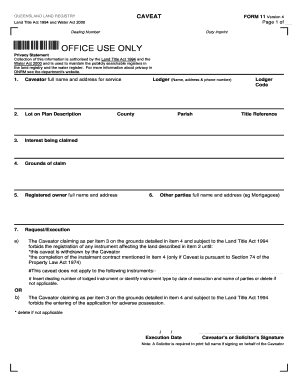
QUEENSLAND LAND REGISTRY QUEENSLAND LAND REGISTRY Land Title Act 1994 and Water Act 2000 Dealing Number CAVEAT Stamp Duty Imprint Duty Imprint FORM 11 Version 4 Page 1 of Privacy Statement Collection.
Open form follow the instructions
Easily sign the form with your finger
Send filled & signed form or save
How to fill out the Form 11 Caveat online
Filling out the Form 11 Caveat is an important process in the land registration system, allowing individuals to protect their interests in property. This guide provides clear instructions on how to complete the form online, making it accessible for users of all experience levels.
Follow the steps to complete your Form 11 Caveat online.
- Click ‘Get Form’ button to obtain the form and open it in the editor.
- Provide the caveator’s full name and address for service in the designated fields. Make sure to include accurate contact information for any correspondence.
- Enter the lot on plan description. This typically includes the lot number and the plan number, ensuring the precise identification of the land involved.
- Specify the interest being claimed. Clearly articulate the nature of your claim related to the property to avoid any ambiguity.
- Outline the grounds of your claim. Detail the reasons you believe you have an interest in the land, ensuring to keep it factual and concise.
- Fill in the registered owner’s full name and address. This information should reflect the current records held by the land registry.
- List any other parties involved, such as mortgagees, along with their full names and addresses. This step is crucial to inform all stakeholders of the caveat.
- Complete the lodger section including name, address, phone number, and any relevant county, parish, or code information to ensure proper location identification.
- Review the sections that require deletion based on your specific circumstances, particularly any that may not apply to your case.
- Sign the form digitally where prompted. If signing on behalf of the caveator, include the solicitor’s full name.
- Finally, save your changes, then download, print, or share the completed Form 11 as required for submission.
Start completing your documents online today!
Experience a faster way to fill out and sign forms on the web. Access the most extensive library of templates available.
Related content
To be completed by Register: R.W Form 11. Informal Caveat. Filed on. ------. Before the...
Aug 31, 2020 — You are solely responsible for properly evaluating any form you intend to...
These rules are particularly radical in the areas of assessment and oversight of control...
Get answers to your most pressing questions about US Legal Forms API.
How to make a caveat?
To make a caveat, you need to complete a Form 11 Caveat, which outlines your legal interest in the property. You will then need to submit this form to the relevant authority, along with any required documents and fees. This process is straightforward, and using platforms like uslegalforms can simplify it even further. Finally, make sure to keep track of your filing to ensure that your interests remain protected.
What does it mean to file a caveat?
Filing a caveat means submitting a formal request to legally notify others of your interest in a property. When you complete a Form 11 Caveat, you are signalling that your rights regarding that property must be recognized. This filing is essential in real estate transactions to prevent others from making decisions that could harm your position. Essentially, it safeguards your legal claims.
Is a caveat a good thing?
A caveat can be a very beneficial tool when you need to secure your interests in a property. Using a Form 11 Caveat allows you to assert your claims and prevent unauthorized dealings. While it may seem restrictive to some, it actually promotes transparency and fairness in real estate transactions. Thus, it serves as a protective measure for both buyers and sellers.
What is the point of caveat?
The point of filing a caveat is to protect your rights and interests in a property from being adversely affected. By using a Form 11 Caveat, you effectively communicate to others that you have a stake in the property, which must be respected. This process adds a layer of security and can aid in resolving conflicts that may arise. It's a critical part of safeguarding your financial future.
What is the use of caveat?
A caveat serves to secure a party's interest in a property or asset, ensuring that no one can sell or transfer it without the caveator's agreement. Utilizing a Form 11 Caveat helps maintain your stake in a property, especially during disputes. This is beneficial for buyers and creditors who may need to enforce their claims. Additionally, it acts as a useful tool in real estate and legal transactions.
What is the purpose of a caveat?
The purpose of a caveat is to put all parties on notice of a legal interest in property, thereby preventing any unauthorized transactions. By filing a Form 11 Caveat, you ensure that your claims regarding the property cannot be overlooked. This serves to protect your rights and provides you with leverage during negotiations. Overall, it is a proactive measure to secure your financial interests.
What does it mean to lodge a caveat?
Lodging a caveat means formally registering a notice with the appropriate legal authority to protect a specific interest in a property. When you submit a Form 11 Caveat, you prevent others from making changes to the property without your consent. This is crucial for safeguarding your rights during a transaction. Essentially, it acts as a warning to anyone dealing with the property.
Is Form 11 required every year?
Form 11 is not required to be filed annually; however, it remains effective until the issue it addresses is resolved or you decide to remove it. Once you lodge a Form 11 Caveat, it continues to protect your interest until the property changes or you formally withdraw the caveat. It's essential to monitor the situation and modify your filing as necessary. If you need assistance with keeping your documentation in order, US Legal Forms can help streamline the process.
When should you file a caveat?
You should file a caveat when you have a legal interest in a property and want to prevent any transactions or dealings without your consent. This action is crucial, especially if you suspect someone might attempt to sell or transfer the property unlawfully. Filing a Form 11 Caveat ensures that your rights are formally recognized and protected. If you are uncertain about your situation, consulting with a legal professional can provide additional clarity.
How to prepare Form 11?
To prepare your Form 11 Caveat, start by gathering necessary information regarding the property you wish to protect. You will need details like the title reference, your name, and any relevant ownership information. After collecting this information, you can fill out Form 11 accurately, ensuring you follow any specific instructions that apply. For added convenience, consider using US Legal Forms to access templates and guidance tailored for your needs.
Use professional pre-built templates to fill in and sign documents online faster. Get access to thousands of forms.
If you believe that this page should be taken down, please follow our DMCA take down process here.