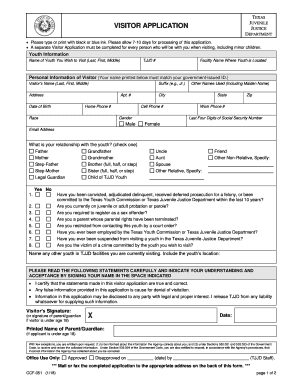
VISITOR APPLICATION TEXAS JUVENILE JUSTICE DEPARTMENT Please type or print with black or blue ink A separate Visitor Application must be completed for every person who will be with you when visiting,.
Open form follow the instructions
Easily sign the form with your finger
Send filled & signed form or save
How to fill out the visitor application - TJJD Texas online
Completing the visitor application for the Texas Juvenile Justice Department is a crucial step for individuals wishing to visit youth in their facilities. This guide provides a clear and supportive overview on how to accurately fill out the application online.
Follow the steps to successfully complete your visitor application.
- Click the ‘Get Form’ button to access the visitor application and have it opened in your editor.
- Begin by entering the youth's information you wish to visit, including their name, TJJD number, and the facility name where they are located.
- Enter your personal information, ensuring that the name matches exactly with your government-issued ID. Fill in your address, date of birth, phone numbers, email address, and any other names you may have used.
- Indicate your relationship to the youth by selecting the appropriate option from the list provided.
- Respond to the assessment questions regarding any convictions, probation status, or court orders affecting your ability to visit. Answer each question carefully.
- If applicable, list any other youth in TJJD facilities you are currently visiting, including their locations.
- Read the statements regarding the accuracy of your application. Understand that false information can lead to denial of visitation.
- Sign in the designated space, acknowledging your understanding and acceptance of the statements. If under 18, a parent or guardian should also sign.
- Once all fields are filled out accurately, review your application for any errors or omissions before finalizing. Then, save your changes, download, print, or share the form as needed.
Complete your visitor application online today to ensure your eligibility for visitation.
Experience a faster way to fill out and sign forms on the web. Access the most extensive library of templates available.
Related content
For the latest updates on COVID-19, visit our page dedicated to the pandemic. TJJD Logo.
Texas also understands that fathers' needs are distinct from those of mothers and...
... bli engagerad i Texas Juvenile Justice Department (TJJD) (tidigare Texas Youth...
Get answers to your most pressing questions about US Legal Forms API.
How does Juvie work in Texas?
Juvenile detention in Texas functions as a way to provide guidance and support for youth who have committed offenses. The system focuses on rehabilitation rather than punishment, offering various programs to address the behaviors that led to detention. Understanding the ins and outs of this system is key, and using the VISITOR APPLICATION - Tjjd Texas can help families remain engaged and informed about their loved ones' progress.
How is one sent to juvenile detention in Texas?
The process of being sent to juvenile detention in Texas usually begins with an arrest or a court referral. The juvenile court evaluates the case and decides whether detention is appropriate based on various factors, including the nature and severity of the offense. It's important for families to be informed about the legal proceedings, and the VISITOR APPLICATION - Tjjd Texas can offer support and updates during this time.
What is the minimum age for juvenile detention in Texas?
In Texas, the minimum age for juvenile detention is typically 10 years old. Children younger than this age are usually not subject to the juvenile justice system. However, situations might differ based on the specific case, so it is vital to consult local legal resources. Families can use the VISITOR APPLICATION - Tjjd Texas to understand their options and navigate this system effectively.
How do kids get sent to Juvie?
Kids may be sent to juvenile detention when they are involved in legal trouble, such as committing a crime. Law enforcement or a court can initiate the process after an offense is reported. It is essential to understand that the goal of juvenile detention is rehabilitation, not punishment, making the VISITOR APPLICATION - Tjjd Texas a crucial tool for families to stay connected during this process.
How much do probation officers make in Texas?
Probation officers in Texas generally earn between $45,000 and $70,000 each year. Factors affecting this salary include experience, education, and geographic location. If you are considering a career in law enforcement, the VISITOR APPLICATION - Tjjd Texas can help you navigate the requirements and opportunities available in Texas.
How much do juvenile probation officers make in Texas?
Juvenile probation officers in Texas earn a competitive salary that typically ranges from $40,000 to $65,000 per year. The amount can vary depending on factors such as location, experience, and specific agency. For those interested in a rewarding career, visiting the VISITOR APPLICATION - Tjjd Texas can provide information about job opportunities and necessary qualifications.
What benefits come with using the VISITOR APPLICATION - Tjjd Texas?
Using the VISITOR APPLICATION - Tjjd Texas offers several benefits for both probation officers and individuals on probation. This platform simplifies case management, improves communication, and enhances compliance with probation requirements. By utilizing this application, officers can focus more on rehabilitation efforts and less on administrative tasks. Embracing the VISITOR APPLICATION - Tjjd Texas can lead to positive outcomes for all parties involved, ensuring a more efficient and supportive justice system.
How much does a juvenile probation officer make in Texas?
Juvenile probation officers in Texas earn between $40,000 and $55,000 annually, influenced by factors such as location and years of service. This position plays a crucial role in overseeing young offenders and ensuring compliance with probation terms. The VISITOR APPLICATION - Tjjd Texas serves as a key tool for these officers, allowing them to track and manage cases effectively. If you are passionate about helping youth, becoming a juvenile probation officer can be a fulfilling career path.
How do I become a juvenile detention officer in Texas?
Must be at least 21 years of age. Must have graduated from an accredited high school or earned a certified GED. Some experience working with juvenile delinquents, including youth who are emotionally/behaviorally at risk, or experience in an adult or juvenile correctional, mental health, or detention program is helpful.
How does youth incarceration affect education?
Youth who enter the juvenile justice system have various unmet educational needs. More than half of all incarcerated youth possess math and reading skills below their grade level, and the majority have been suspended, expelled, or otherwise pushed out of traditional public schools.
Use professional pre-built templates to fill in and sign documents online faster. Get access to thousands of forms.
If you believe that this page should be taken down, please follow our DMCA take down process here.