ASSET MANAGEMENT CLIENT PUBLICATION 14 November 2011 .

Open form follow the instructions

Easily sign the form with your finger

Send filled & signed form or save
How to fill out the Dodd Frank Form online
Filling out the Dodd Frank Form PF is essential for certain investment advisers to comply with regulatory requirements. This guide provides clear and detailed steps to help users navigate the form smoothly and efficiently online.
Follow the steps to complete the Dodd Frank Form PF online.
- Click the ‘Get Form’ button to obtain the form and open it in the editor.
- Begin by reviewing the form's instructions to understand the specific requirements for your situation. This includes determining whether you are classified as a Smaller Private Fund Adviser or a Large Private Fund Adviser.
- Fill out Section 1, which applies to all advisers. Include your basic identifying information, fund-by-fund details about assets under management (AUM), performance, and leverage usage.
- If applicable, complete Section 2 for Large Hedge Fund Advisers, providing required aggregate information about hedge funds, including asset values and investment types.
- For Large Liquidity Fund Advisers, fill out Section 3, which involves detailing the fund's valuation methods, liquidity, and maturity of assets.
- Complete Section 4 if you are a Large Private Equity Fund Adviser, reporting on portfolio company obligations, sizes, leverage, and financial relationships.
- Review all entered information for accuracy and completeness before finalizing your form.
- Once finalized, you can save changes to the form, download it for your records, print, or share through appropriate channels.
Start filling out your Dodd Frank Form PF online today to ensure compliance and stay on track with regulatory requirements.
Experience a faster way to fill out and sign forms on the web. Access the most extensive library of templates available.
Related content
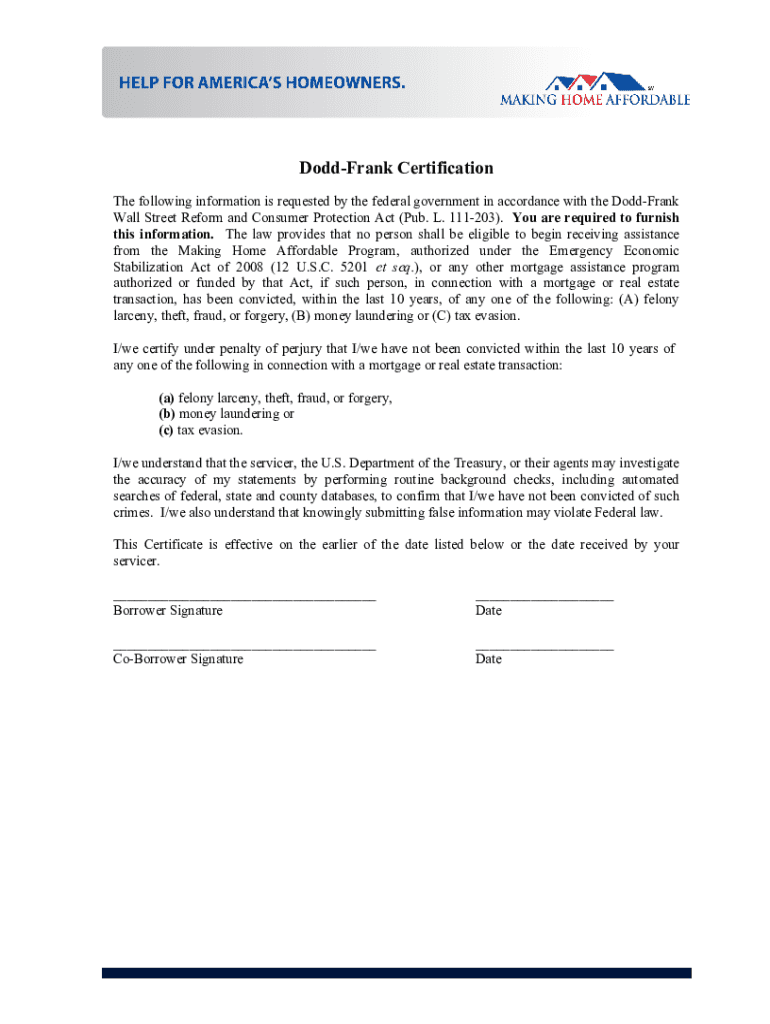
The following information is requested by the federal government in accordance with the...
See Dodd-Frank Wall Street Reform and Consumer Protection Act (Dodd-Frank Act), Pub. L...
The Federal Deposit Insurance Corporation (FDIC) is one of two agencies that provide...
Get answers to your most pressing questions about US Legal Forms API.
What does Dodd Frank require?
The Dodd Frank Act requires multiple provisions aimed at ensuring transparency and fairness in the lending process. It mandates that lenders provide clear and accurate information about mortgage products and terms. By adhering to these requirements and using the Dodd Frank Form, lenders can protect consumers and foster a more trustworthy financial environment. Understanding these regulations is essential for anyone involved in the mortgage process.
What does the Dodd-Frank Act require?
The Dodd-Frank Act requires lenders to adhere to certain standards aimed at enhancing consumer protection in financial transactions. This includes providing clear disclosures about mortgage terms and ensuring that loans are not predatory. Additionally, lenders must document their compliance with these standards, often using the Dodd Frank Form. Understanding these requirements can empower both consumers and lenders.
What is the Dodd Frank Act for mortgage?
The Dodd Frank Act for mortgage is a comprehensive piece of legislation aimed at reforming financial regulation in the United States. This law emerged from the 2008 financial crisis, with a focus on protecting consumers in the mortgage market. The Dodd Frank Form serves as a key document that lenders must use to ensure compliance with various consumer protection rules. Understanding this act can help borrowers navigate the mortgage landscape more effectively.
What is the difference between FATCA and Dodd-Frank?
FATCA (Foreign Account Tax Compliance Act) and Dodd-Frank serve different purposes in financial regulation, despite both being important laws. FATCA aims to prevent tax evasion by requiring foreign financial institutions to report on U.S. account holders, while Dodd-Frank focuses on promoting stability and accountability in the financial sector. Understanding the Dodd Frank Form is essential for compliance with Dodd-Frank provisions, while FATCA deals primarily with tax transparency. Each regulation addresses distinct challenges within the financial system.
What are the four objectives of the Dodd-Frank Act?
The four key objectives of the Dodd-Frank Act include preventing bank failures, protecting consumers, promoting transparency, and managing systemic risk. These objectives collectively work to strengthen the financial system against future crises by enhancing regulatory oversight. The Dodd Frank Form plays a vital role in helping institutions align with these objectives, making compliance an essential priority for all stakeholders. By understanding these objectives, you can better navigate the regulatory landscape.
What is the purpose of Dodd-Frank?
The purpose of the Dodd-Frank Act is multifaceted, focusing on enhancing financial consumer protections and increasing accountability among financial entities. It aims to tackle issues that led to the 2008 financial crisis, fostering greater stability in the financial sector. Through compliant practices and by utilizing the Dodd Frank Form, organizations can boost their credibility. This proactive approach benefits both businesses and consumers.
What is the main purpose of the Dodd-Frank Act?
The main purpose of the Dodd-Frank Act is to prevent another financial crisis by implementing stricter regulations on financial institutions. This act aims to protect consumers from abusive practices and ensure transparency in financial dealings. By utilizing the Dodd Frank Form, businesses can better adhere to these regulations and contribute to a healthier financial ecosystem. Understanding this purpose highlights the significance of compliance in today's market.
Is Dodd-Frank still relevant today?
Yes, the Dodd-Frank Act remains relevant today as it continues to shape financial regulation in the United States. Many provisions, particularly those focused on consumer protection and financial stability, are still in effect. The Dodd Frank Form also serves as a framework that influences how financial institutions operate. Staying informed about these regulations is essential for anyone involved in financial transactions.
What does the Dodd-Frank Act include?
The Dodd-Frank Act includes a wide range of provisions aimed at regulating the financial services industry. This legislation covers aspects such as consumer protection measures, risk management protocols, and increased oversight of derivative markets. By focusing on transparency, the Dodd Frank Form plays a crucial role in enhancing the stability of the financial system. Familiarizing yourself with its components can better prepare you for compliance requirements.
What is a Dodd-Frank transaction?
Frank transaction refers to any financial activity subject to the regulations outlined in the DoddFrank Act. This act was established to promote transparency and accountability in the financial system following the 2008 financial crisis. Under the Dodd Frank Form, various financial institutions must adhere to strict reporting and compliance standards. Understanding these transactions helps you navigate the financial landscape more effectively.
Use professional pre-built templates to fill in and sign documents online faster. Get access to thousands of forms.
If you believe that this page should be taken down, please follow our DMCA take down process here.