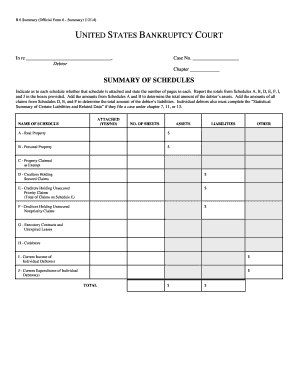
B 6 Summary Official Form 6 - Summary 12/14 UNITED STATES BANKRUPTCY COURT District of In re Debtor Case No. Chapter SUMMARY OF SCHEDULES Indicate as to each schedule whether that schedule is attached and state the number of pages in each. Report the totals from Schedules A B D E F I and J in the boxes provided* Add the amounts from Schedules A and B to determine the total amount of the debtor s assets. Add the amounts of all claims from Schedules D E and F to determine the total amount of the d.
Open form follow the instructions
Easily sign the form with your finger
Send filled & signed form or save
How to fill out the Bankruptcy B 6 online
Filling out the Bankruptcy B 6 form is an essential step in the bankruptcy process. This summary form helps provide a clear overview of your financial situation and the various schedules you need to address. This guide will support you in completing the Bankruptcy B 6 accurately and efficiently.
Follow the steps to fill out the Bankruptcy B 6 online:
- Click the ‘Get Form’ button to access the Bankruptcy B 6 form and open it in your chosen editor.
- In the form, start by indicating whether each schedule is attached by selecting 'Yes' or 'No' for each respective schedule. Also, list the number of sheets attached for each schedule.
- Report the total amounts from Schedules A and B to determine the total of your assets. Enter this total in the designated box.
- Next, total the claims from Schedules D, E, and F to assess your total liabilities, recording this in the provided space.
- If you are an individual debtor filing under chapter 7, 11, or 13, complete the 'Statistical Summary of Certain Liabilities and Related Data'. If your debts are primarily consumer debts, fill out this section as instructed.
- Detail specific types of liabilities in the corresponding fields, entering amounts as listed from the relevant Schedules.
- After completing all required information, review the form for accuracy and completeness.
- Finally, use the options available to save your changes, download the document, print it, or share it as necessary.
Complete your Bankruptcy B 6 form online today for a smoother filing process!
Experience a faster way to fill out and sign forms on the web. Access the most extensive library of templates available.
Related content
Superseded Bankruptcy Forms ; B 6 Summary, Summary of Schedules (Superseded), Bankruptcy...
If, within the 30-day period after the filing of the bankruptcy petition, the debtor (or...
Dec 27, 2022 — Regulation (EU) 2022/2554 concerns digital operational resilience for the...
Get answers to your most pressing questions about US Legal Forms API.
How hard is it to file bankruptcy by yourself?
Filing for Bankruptcy B 6 on your own can be challenging, as the process demands attention to detail and adherence to legal requirements. Many individuals benefit from utilizing user-friendly platforms like uslegalforms, which offer tools and guidance to simplify the process. While it is possible to file alone, navigating the complexities often leads people to seek professional assistance to avoid costly mistakes. Consider evaluating your comfort level and the available resources before deciding.
What disqualifies you from filing bankruptcies?
Certain factors can disqualify you from filing for Bankruptcy B 6. For instance, if you received a bankruptcy discharge in the last eight years, you won't qualify for another filing. Additionally, failing to complete the mandatory credit counseling session prior to filing can also disqualify you. Be sure to consult with a legal expert or explore the resources available on our platform to understand your specific situation.
What will I lose if I file bankruptcy?
Filing for Bankruptcy B 6 can lead to the loss of some non-exempt assets, but you may be surprised at how much you can keep. You may lose things like valuable collectibles or investment properties, yet essentials like your home and car might be protected. Additionally, your credit score will be affected, which can impact your borrowing ability in the future. Understanding what you could lose can help you make informed decisions.
What assets do you lose in bankruptcy?
When you file for Bankruptcy B 6, certain assets may be liquidated to repay creditors. Typically, you might lose non-exempt personal belongings, such as luxury items and second homes. However, many essential assets can be protected under various exemptions, allowing you to retain items like your primary residence and personal vehicle. It's important to understand these exemptions to navigate the process effectively.
How much debt do you have to have to file bankruptcy?
While there's no specific debt threshold required to file for bankruptcy, most people consider filing when their unsecured debts exceed $10,000. Filing under Bankruptcy B 6 often aims to address significant financial challenges, allowing you to rebuild. Evaluating your complete financial picture helps in deciding if this route serves your best interests.
What is the minimum debt to claim bankruptcy?
To claim bankruptcy, especially under Bankruptcy B 6, there is no set minimum debt amount. However, having at least a few thousand dollars in unsecured debt can make the bankruptcy process worthwhile. It’s essential to evaluate your financial situation and determine whether bankruptcy can provide relief. You may want to consider legal guidance to navigate your options.
What makes you eligible to file bankruptcies?
Eligibility to file for Bankruptcy B 6 typically requires passing the means test, which assesses your income against the median income in your state. Additionally, you must complete credit counseling and not have received a bankruptcy discharge in the last eight years. Meeting these criteria is crucial for a successful filing. For those unsure about their eligibility, uslegalforms provides valuable resources that can guide you.
What is the automatic stay in bankruptcy 362?
The automatic stay, described in section 362 of the Bankruptcy Code, temporarily halts most collection actions against you once you file for Bankruptcy B 6. This means creditors cannot pursue lawsuits, demands, or even eviction during this time. The stay protects your assets and gives you the breathing room to restructure your debts. It is one of the essential benefits of filing for bankruptcy.
Which bankruptcy erases all debt?
Chapter 7 bankruptcy, often referred to in discussions about Bankruptcy B 6, can wipe out most unsecured debts, such as credit card bills and medical expenses. However, some debts, like student loans and child support, typically remain. It's essential to consult a legal expert to assess your specific debts and understand which can be discharged. Utilizing resources from uslegalforms can help you navigate this process effectively.
Why are bankruptcies denied?
Bankruptcies can be denied for various reasons, including failure to meet eligibility criteria or improper documentation. For example, if you do not complete mandatory credit counseling before filing for Bankruptcy B 6, your petition may get rejected. Additionally, providing inaccurate information or failing to disclose all your debts can lead to denial. Therefore, it is crucial to understand the requirements before filing.
Use professional pre-built templates to fill in and sign documents online faster. Get access to thousands of forms.
If you believe that this page should be taken down, please follow our DMCA take down process here.