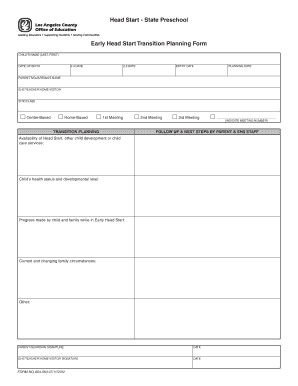
Head Start - State Preschool Early Head Start Transition Planning Form CHILD S NAME (LAST, FIRST) DATE OF BIRTH 2.6 DATE 2.4 DATE ENTRY DATE PLANNING DATE PARENT S/GUARDIAN S NAME EHS TEACHER/HOME.
Open form follow the instructions
Easily sign the form with your finger
Send filled & signed form or save
How to fill out the Early Head Start Transition Planning Form Head Start - State ... - Prekkid online
Filling out the Early Head Start Transition Planning Form is a crucial step in supporting the transition of children from Early Head Start to Head Start programs. This guide provides clear and comprehensive instructions on how to complete the form online, ensuring your experience is efficient and effective.
Follow the steps to successfully complete the transition planning form.
- Click ‘Get Form’ button to access the Early Head Start Transition Planning Form. This will open the document in an editable format.
- Begin by entering the child's name in the format of last name followed by first name in the designated field.
- Input the child's date of birth in the specified section, ensuring the format aligns with any required standards.
- Fill in the entry date along with the planning date, which refers to when the planning process is initiated.
- Provide the parent’s or guardian’s name accurately to verify the individual responsible for the child’s care.
- Document the name of the Early Head Start teacher or home visitor associated with the child's program.
- Indicate whether the child is enrolled in a center-based or home-based program by selecting the appropriate option.
- Record the meeting numbers (1st, 2nd, 3rd) for transition planning sessions, ensuring each is documented accordingly.
- Fill out the transition planning section by detailing the availability of Head Start and other child development or child care services.
- Document the child’s health status and developmental level to provide insight into their current condition.
- Summarize the progress made by the child and family while in Early Head Start to highlight development and achievement.
- Provide information regarding any current and changing family circumstances that may affect the child’s transition.
- Include any additional relevant notes in the 'Other' section to ensure all important information is captured.
- Ensure both the parent/guardian and EHS teacher/home visitor sign and date the form to validate the information provided.
- After completing all sections, save changes to the form. You may also download, print, or share the completed document as needed.
Complete your Early Head Start Transition Planning Form online today to support a smooth transition for your child.
Experience a faster way to fill out and sign forms on the web. Access the most extensive library of templates available.
Related content
Please enter a nearby address, city, zip code, or state and select from options provided...
Learn more about our program, locate an agency near you, and keep up with the latest Head...
Get answers to your most pressing questions about US Legal Forms API.
What is the earliest age to start preschool?
Most preschool programs accept children starting at age three, although some offer programs for two-year-olds. For parents interested in early education opportunities, early enrollment can significantly enhance a child's development. Use the Early Head Start Transition Planning Form Head Start - State ... - Prekkid to find the right fit for your child's educational journey.
What is the best age to start head start?
The best age to start Head Start is typically around three years old, as this is when children can fully benefit from the structured learning environment. However, younger children can be enrolled in the Early Head Start program, providing essential support earlier. Completing the Early Head Start Transition Planning Form Head Start - State ... - Prekkid will help you navigate this transition efficiently.
Who qualifies for head start in California?
In California, families who meet certain income guidelines and have children aged three to five years old generally qualify for Head Start. Additionally, priority may be given to children with special needs or those experiencing difficult life circumstances. Utilize the Early Head Start Transition Planning Form Head Start - State ... - Prekkid to ensure you have the right documentation ready.
What is the earliest age for head start?
Children can join Early Head Start programs as young as six weeks old. This early intervention is designed to support the development of infants and toddlers. To make the most of this opportunity, complete the Early Head Start Transition Planning Form Head Start - State ... - Prekkid promptly.
What is the maximum income to qualify for head start?
To qualify for Head Start programs, your income must generally fall below the federal poverty level, which varies each year. For precise figures, it's best to refer to the Early Head Start Transition Planning Form Head Start - State ... - Prekkid, as it often includes updated income guidelines. This ensures that you have the most accurate information for your family's specific circumstances.
When to start transition planning?
It's essential to begin transition planning early, ideally around six months before your child turns three. This gives you ample time to gather the necessary information and complete the Early Head Start Transition Planning Form Head Start - State ... - Prekkid. Starting early can help your child transition smoothly to preschool and avoid any potential gaps in services.
What are the five developmental domains of the Head Start Early Learning Outcomes Framework?
The five developmental domains in the Head Start Early Learning Outcomes Framework include social-emotional development, physical development, language and literacy, cognitive development, and approaches to learning. Each domain plays a critical role in a child's overall growth and readiness for school. The Early Head Start Transition Planning Form Head Start - State ... - Prekkid can help parents understand how to support their child's development across these essential areas. Fostering growth in these domains prepares children for future learning opportunities.
What are examples of transitions in child development?
Examples of transitions in child development include starting daycare, moving from toddler to preschool, and entering kindergarten. Each of these milestones represents a significant change in the child's environment and routine. The Early Head Start Transition Planning Form Head Start - State ... - Prekkid provides tools to assess and support these transitions effectively. Recognizing these transitions can help parents prepare their children for each new experience.
What is transition in early childhood education?
Transition in early childhood education refers to a child's adjustment process when entering new educational environments. This can involve emotional, social, and academic adjustments as they adapt to new settings. Resources like the Early Head Start Transition Planning Form Head Start - State ... - Prekkid can facilitate a more structured transition. Parents play a vital role in supporting their children's confidence and feelings of security during this period.
What are transitions in early childhood education?
Transitions in early childhood education involve the shifts from one educational setting or experience to another. These can include moving from home to preschool or from preschool to kindergarten. The Early Head Start Transition Planning Form Head Start - State ... - Prekkid is designed to streamline this process and provide clarity. Understanding these transitions helps caregivers provide guidance and nurturing during these crucial phases.
Use professional pre-built templates to fill in and sign documents online faster. Get access to thousands of forms.
If you believe that this page should be taken down, please follow our DMCA take down process here.