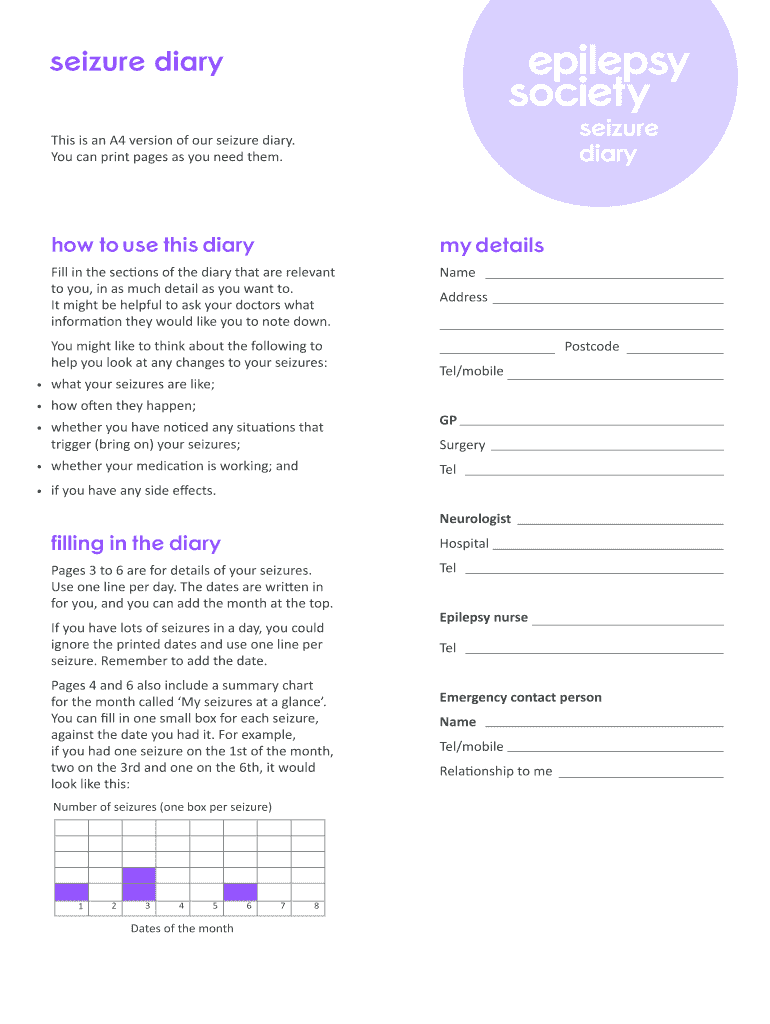
T to you, in as much detail as you want to. It might be helpful to ask your doctors what information they would like you to note down. Name You might like to think about the following to help you look at any changes to your seizures: Postcode what your seizures are like; how often they happen; whether you have noticed any situations that trigger (bring on) your seizures; whether your medication is working; and Address Tel/mobile GP Surgery if you have.

Open form follow the instructions

Easily sign the form with your finger

Send filled & signed form or save
How to fill out the Epilepsy Society Seizure Diary Form online
The Epilepsy Society Seizure Diary Form is an important tool for individuals managing epilepsy. This guide will provide clear instructions on how to complete the form online, ensuring you can effectively document your seizures and relevant experiences.
Follow the steps to complete the seizure diary form online
- Locate and press the ‘Get Form’ button to access the Epilepsy Society Seizure Diary Form and open it in the document editor.
- Begin by filling in the 'my details' section. Here, provide your name, postcode, address, and contact information. Consider discussing with your healthcare provider what specific details they would like you to record.
- In the 'filling in the diary' section, record the details of your seizures on pages 3 to 6. Use one line per day unless you have multiple seizures in one day, in which case, use one line for each seizure and ensure to note the date.
- Complete the 'my seizures' section, where you can describe different types of seizures you experience. Assign each type a unique code (e.g., A, B, C) for easy reference.
- In the designated areas, note the month, date, time of each seizure, seizure code, and comments regarding the event, including any warnings or triggers, and your feelings during recovery.
- Fill in the 'my epilepsy medication' section, listing all medications, dosages, and any side effects you have noticed. Make sure to note any changes to your medication regimen.
- Use the 'my appointments' section to record upcoming appointments with healthcare providers, including dates, times, and locations.
- Lastly, review and complete the 'how I feel' and 'my questions' sections, allowing you to express your feelings regarding epilepsy management and any questions you wish to ask your healthcare provider.
- Once you have filled out all necessary sections, you can save the document, download it, print it, or share it with your healthcare provider.
Start filling out your Epilepsy Society Seizure Diary Form online today to help manage your epilepsy effectively.
Experience a faster way to fill out and sign forms on the web. Access the most extensive library of templates available.
Related content
The National Epilepsy Foundation's My Seizure Diary is a self-management tool to help...
This epilepsy toolkit is designed to help you learn about seizures and epilepsy. Download...
Oct 2, 2024 — Epilepsy is a neurological disorder characterised by the propensity for...
Get answers to your most pressing questions about US Legal Forms API.
What is the 5 minute rule for seizures?
The 5 minute rule for seizures indicates that if a seizure lasts longer than five minutes, it may be considered a medical emergency. This is crucial information that should be noted in your Epilepsy Society Seizure Diary Form. Quickly accessing this information can guide your actions and decisions during an emergency situation.
How do you document seizure activity?
Documenting seizure activity can be done effortlessly using the Epilepsy Society Seizure Diary Form. Be sure to include essential details like type, duration, and circumstances surrounding each seizure. This thorough documentation not only aids your understanding of your condition but also supports your healthcare provider in managing your treatment.
How to do a seizure diary?
To do a seizure diary, utilize the Epilepsy Society Seizure Diary Form which simplifies tracking your seizures. Fill out the form regularly, noting each seizure's specifics, including triggers and post-seizure feelings. A well-maintained diary can significantly improve communication with your healthcare team.
How do you record a seizure?
To record a seizure, use a structured approach such as the Epilepsy Society Seizure Diary Form. This form prompts you to capture vital information like time, type, and duration of the seizure. Recording these details consistently helps you and your doctor create a comprehensive picture of your condition.
How do you describe seizure activity?
Describing seizure activity involves explaining the characteristics of your seizures. You can use the Epilepsy Society Seizure Diary Form to detail the sensations you feel, the duration, and any unusual behavior during the seizure. Accurate descriptions empower medical professionals to diagnose and recommend effective interventions.
How do you assess seizure activity?
Assessing seizure activity involves tracking the frequency and type of seizures you experience. By using the Epilepsy Society Seizure Diary Form, you can document these occurrences and identify patterns related to your health. This information is essential to help your doctor adjust your treatment plan accordingly.
How to document seizure activity?
You can document seizure activity effectively by using the Epilepsy Society Seizure Diary Form. This form allows you to note key details such as triggers, types of seizures, and recovery experiences. Consistent documentation helps in assessing progress and determining the right treatment with your healthcare provider.
How to prove you had a seizure?
To prove you had a seizure, you can maintain a record of your seizures with the Epilepsy Society Seizure Diary Form. This form allows you to document details such as the date, time, duration, and your symptoms during the seizure. Having clear, organized records helps healthcare providers understand your condition better and can support your case when seeking necessary accommodations.
What are the 3 C's for seizures?
The 3 C's for seizures refer to capturing, communicating, and collaborating. Capture detailed accounts of each seizure, communicate with healthcare providers regularly, and collaborate with support networks to manage your epilepsy effectively. Using the Epilepsy Society Seizure Diary Form fosters better communication and collaboration in your seizure management.
What should be in a seizure diary?
A seizure diary should include the seizure type, duration, time, and any accompanying symptoms. You may want to add details about medications, potential triggers, and your overall well-being. The Epilepsy Society Seizure Diary Form offers a clear layout that encourages consistency in recording this essential information.
Use professional pre-built templates to fill in and sign documents online faster. Get access to thousands of forms.
If you believe that this page should be taken down, please follow our DMCA take down process here.