Loading
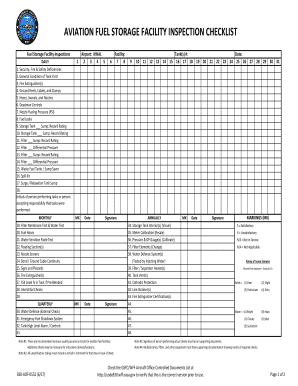
Get Aviation Fuel Farm Inspection Checklist
How it works
-

Open form follow the instructions
-

Easily sign the form with your finger
-

Send filled & signed form or save
How to fill out the Aviation Fuel Farm Inspection Checklist online
The Aviation Fuel Farm Inspection Checklist is an essential tool for ensuring the safety and compliance of fuel storage facilities. This guide provides clear, step-by-step instructions on how to complete the checklist online, enabling users to efficiently manage inspections.
Follow the steps to fill out the checklist online:
- Select the ‘Get Form’ button to obtain the Aviation Fuel Farm Inspection Checklist and open it in your preferred online editing tool.
- Begin by entering the airport information on the checklist, specifying the airport such as KWAL and the facility name.
- For each inspection item listed, input the observed measurement or assessment. These items include security, general conditions, fire extinguishers, hoses, fueling pressure, and any leaks.
- Document the status of the storage tanks and filters in the designated sections, indicating the sump ratings and any differential pressures recorded in the checklist.
- Add remarks or comments for any unsatisfactory ratings to ensure that each observation is noted and can be addressed appropriately.
- Complete the date fields corresponding to when the inspection was conducted, and ensure initials or signatures are provided where required, including for the inspector's verification.
- Once all sections have been filled out thoroughly, you may choose to save the form, download it for your records, print, or share it as necessary.
Complete your Aviation Fuel Farm Inspection Checklist online to ensure compliance and safety!
Inspecting for a gas leak involves a detailed examination of your fuel system components. Follow the Aviation Fuel Farm Inspection Checklist to identify potential trouble spots, including checking for leaks at valves and connections. Taking the time to conduct regular inspections can prevent costly accidents and ensure operational safety.