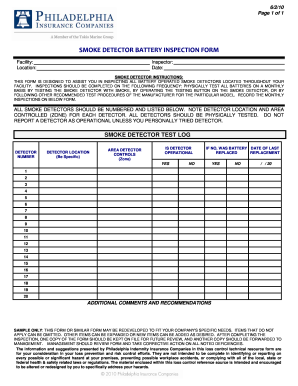
Print Application Clear Application 6/2/10 Page 1 of 1 SMOKE DETECTOR BATTERY INSPECTION FORM Facility: Location: Inspector: Date: SMOKE DETECTOR INSTRUCTIONS: THIS FORM IS DESIGNED TO ASSIST YOU.
Open form follow the instructions
Easily sign the form with your finger
Send filled & signed form or save
How to fill out the Smoke Detector Inspection Checklist online
Completing the Smoke Detector Inspection Checklist online is a straightforward process designed to ensure the safety of your facility. This guide provides step-by-step instructions to help you fill out the form accurately and efficiently.
Follow the steps to complete the Smoke Detector Inspection Checklist online.
- Click ‘Get Form’ button to access the Smoke Detector Inspection Checklist and open it for editing.
- Fill in the facility and location details in the designated fields to identify where the inspection is being conducted.
- Enter the name of the inspector and the date of the inspection in the relevant sections to document who conducted the inspection and when.
- List all smoke detectors by their assigned numbers in the 'Smoke Detector Test Log' section. Be specific about the detector's location and the area it controls.
- Physically test each smoke detector by following the manufacturer's guidelines. After testing, indicate whether each detector is operational by selecting 'Yes' or 'No'.
- If a detector is not operational, record the date of the last battery replacement in the appropriate field.
- Provide any additional comments or recommendations in the designated section to enhance the inspection report.
- After filling out all sections, save your changes, download a copy of the completed form, and print it if necessary. Ensure one copy is kept on file and another is forwarded to management.
Complete the Smoke Detector Inspection Checklist online today to help maintain a safe environment.
Experience a faster way to fill out and sign forms on the web. Access the most extensive library of templates available.
Related content
{{ Smoke alarm batteries are changed as needed. {{ Smoke alarms are less than 10 years...
☐ Smoke alarms are tested and cleaned monthly. ☐ Smoke alarm batteries are changed as...
Approximately every 7 to 8 seconds the unit tests for a smoke or heat alarm condition...
Get answers to your most pressing questions about US Legal Forms API.
How often do smoke detectors need to be checked?
Smoke detectors should be checked at least once a month to ensure they are functioning correctly. Additionally, it is wise to replace the batteries at least once a year. For a complete maintenance guide, utilizing a Smoke Detector Inspection Checklist can help you stay organized and proactive in keeping your home safe.
What is a smoke alarm inspection?
A smoke alarm inspection is a thorough evaluation of your smoke detectors to ensure they function correctly. This process typically includes checking the alarm's battery, testing the unit, cleaning the device, and verifying that it meets safety standards. By following a Smoke Detector Inspection Checklist, you can ensure that no critical steps are missed.
How do you inspect a smoke detector?
Inspecting a smoke detector involves a few key steps. First, test the alarm by pressing the test button to ensure it sounds properly. Next, check the battery status and replace it if needed. Finally, using a Smoke Detector Inspection Checklist will help you confirm that the device is clean, unobstructed, and properly mounted.
What is the .7 rule for smoke detectors?
The .7 rule for smoke detectors refers to the guideline that suggests smoke alarms should be placed no more than 0.7 meters from a wall to effectively detect smoke. Following this rule ensures optimum sensitivity while minimizing the chances of false alarms. Incorporating this into your Smoke Detector Inspection Checklist is vital for achieving ideal placement. Accurate installation significantly enhances safety and effectiveness in fire prevention.
What is the checklist for fire alarm testing?
The checklist for fire alarm testing includes various components that ensure your smoke detectors work effectively. You'll want to verify the power supply, check alarm signals, and inspect all wiring connections. Additionally, your Smoke Detector Inspection Checklist should cover the placement and condition of smoke detectors throughout the property. Regular testing helps maintain safety standards and ensures compliance with regulations.
How often do smoke detectors need to be inspected?
Smoke detectors should ideally be inspected at least once a month to ensure they function correctly. Additionally, replace the batteries annually and the devices every ten years. Utilize a comprehensive Smoke Detector Inspection Checklist to streamline your inspections and stay on top of maintenance, ensuring a safer environment for everyone.
How to tell if a smoke detector is bad?
You can tell if a smoke detector is bad by monitoring for signs like a continuous chirping sound or the absence of a response when testing. Additionally, if the unit is over ten years old, it may no longer function effectively. Replacing outdated detectors is crucial for home safety. Use our Smoke Detector Inspection Checklist to identify issues and track replacement dates.
How to inspect a smoke detector?
To inspect a smoke detector, begin by checking the battery, ensuring it is charged and properly secured. Next, test the alarm function by pressing the test button; it should sound an alert. Additionally, clean the unit from dust and debris to maintain its sensitivity. Following our Smoke Detector Inspection Checklist will help streamline your inspection process.
How often should smoke detectors be inspected?
It is advisable to inspect smoke detectors at least once every six months. Regular inspections help identify any issues that may affect the detector's performance. By including these checks in your routine, you ensure that your smoke detectors are always reliable. Use our Smoke Detector Inspection Checklist to create a consistent maintenance schedule.
What is the NFPA 72 0.7 rule?
NFPA 72 requires that all points on the ceiling have a detector within a distance of 0.7 times the listed spacing of the detector. This ensures that when detection is used, the entire space on the ceiling is covered by detection. This requirement is commonly called the Point 7 (0.7) Rule.
Use professional pre-built templates to fill in and sign documents online faster. Get access to thousands of forms.
If you believe that this page should be taken down, please follow our DMCA take down process here.