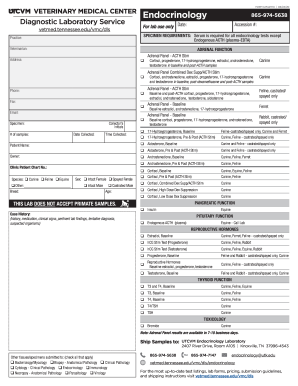
All endocrinology tests except Endogenous ACTH (plasma-EDTA) Practice: Veterinarian: ADRENAL FUNCTION Adrenal Panel - ACTH Stim Address: Cortisol, progesterone, 17-hydroxyprogesterone, , androstenedione, in baseline and post-ACTH samples Adrenal Panel Combined Dex Supp/ACTH Stim Cortisol, androstenedione, , progesterone, 17-hydroxyprogesterone and in baseline, post- and post-ACTH samples Adrenal Panel - ACTH Stim Phone: Baseline a.
Open form follow the instructions
Easily sign the form with your finger
Send filled & signed form or save
How to fill out the TN UTCVM DLS Endocrinology online
Filling out the TN UTCVM DLS Endocrinology form online is essential for ensuring accurate laboratory testing for endocrine disorders in veterinary patients. This guide will walk you through each section of the form to facilitate a smooth and efficient completion process.
Follow the steps to accurately complete the form online.
- Press the ‘Get Form’ button to access the form and open it in the online editor.
- Begin by entering the required lab use only information, including the date and accession number.
- Fill in the specimen requirements, indicating whether the specimen collected is serum or plasma-EDTA for the relevant endocrinology tests.
- Provide details about the practice and veterinarian completing the form, including the veterinarian’s name, address, phone number, and fax information.
- Choose the appropriate adrenal function tests by marking the correct checkbox for each test that will be performed on the patient.
- Complete the patient information section, including the patient’s name, owner, clinic patient chart number, species, breed, and age.
- Select the sex and reproductive status of the patient from the provided options.
- Document the sample collection details, including the collector’s initials, number of samples, date collected, and time collected.
- If necessary, provide a case history, including any history, medication, clinical signs, pertinent lab findings, tentative diagnosis, or suspected organisms.
- For additional testing, check all applicable other tissues or specimens submitted.
- Once all fields are filled out, review the completed form for accuracy, and make any necessary changes before submission.
- Finally, save your changes, download, print, or share the completed form as needed.
Complete your documents online today to ensure prompt and accurate laboratory services!
Experience a faster way to fill out and sign forms on the web. Access the most extensive library of templates available.
Related content
This ComboMATCH patient screening trial is the gateway to a coordinated set of clinical...
The Diagnostic Endocrinology Service at the University of Tennessee, College of Veterinary...
Get answers to your most pressing questions about US Legal Forms API.
How do you check endocrine levels?
Checking endocrine levels typically involves blood tests that measure hormone levels in your body. These results will provide insights into the functioning of your endocrine glands. At TN UTCVM DLS Endocrinology, our specialists interpret these results to craft an effective treatment plan tailored specifically for you.
How to check endocrinology?
To check for potential endocrine issues, you should visit a healthcare provider who can perform an evaluation. They will discuss your symptoms and may recommend various tests. If you're looking for specialized care, the TN UTCVM DLS Endocrinology team is ready to assist you with thorough assessments and appropriate treatment plans.
How do they test for endocrinology?
Endocrinologists use a variety of tests to assess hormone levels and gland function. This may involve blood tests, imaging scans, or physical exams. At TN UTCVM DLS Endocrinology, our expert team employs these diagnostics to ensure accurate identification of any endocrine issues you may have.
How to be seen by an endocrinologist?
To see an endocrinologist, start by discussing your symptoms with your primary care doctor. They can refer you to the TN UTCVM DLS Endocrinology department for further evaluation and specialized care. Scheduling an appointment is easy, and our team is dedicated to supporting you throughout your healthcare journey.
What category is endocrinology in?
Endocrinology is a branch of medicine focused on the endocrine system, which regulates hormones in the body. This includes glands such as the thyroid, pituitary, and adrenal glands. By understanding how these glands function, the TN UTCVM DLS Endocrinology team can provide specialized care tailored to your needs.
How do I know if I have an endocrine problem?
If you experience symptoms like fatigue, unusual weight changes, or mood swings, you might have an endocrine problem. It's important to consult a healthcare professional who can evaluate your symptoms and refer you to the TN UTCVM DLS Endocrinology clinic for comprehensive testing. Early diagnosis is key to effective treatment, so don’t hesitate to reach out.
What diseases come under endocrinology?
Various diseases fall under the category of endocrinology, including diabetes mellitus, hyperthyroidism, and adrenal disorders. These conditions can significantly affect an animal's health and well-being. By consulting experts at TN UTCVM DLS Endocrinology, pet owners can access specialized knowledge and treatment options to manage these critical diseases effectively.
What is endocrinology in animals?
Endocrinology in animals examines the hormones produced by endocrine glands and their impact on overall health. This branch of veterinary medicine plays a vital role in diagnosing and treating various hormonal imbalances. Professionals involved in TN UTCVM DLS Endocrinology utilize their knowledge to ensure that animal patients receive appropriate interventions for their endocrine health.
What is animal endocrinology?
Animal endocrinology focuses on the study and treatment of endocrine disorders in animals. This field covers a wide array of issues, including diabetes, thyroid dysfunctions, and adrenal gland disorders. By leveraging the expertise at TN UTCVM DLS Endocrinology, veterinarians can provide advanced care that enhances the quality of life for animals with endocrine conditions.
What is the purpose of an endocrinologist?
An endocrinologist specializes in diagnosing and treating hormonal imbalances and endocrine disorders. Their expertise is crucial for both humans and animals, ensuring that patients receive the appropriate care for conditions affecting their endocrine system. At TN UTCVM DLS Endocrinology, specialists work diligently to promote the health and well-being of animals by addressing these complex hormonal issues.
Use professional pre-built templates to fill in and sign documents online faster. Get access to thousands of forms.
If you believe that this page should be taken down, please follow our DMCA take down process here.