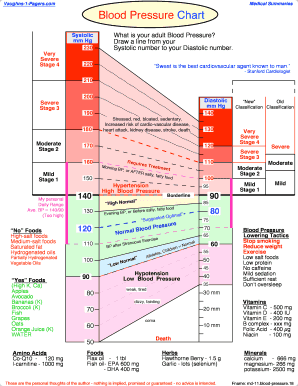
Ber. Systolic mm Hg 230 Very Severe Stage 4 220 Sweat is the best cardiovascular agent known to man. - Stanford Cardiologist 210 200 Severe Stage 3 190 180 Moderate Stage 2 My personal Daily Range Ave. BP 140/90 (Too high) Stressed, red, bloated, sedentary, Increased risk of cardio-vascular disease, heart attack, kidney disease, stroke, death. 120 Requi Mornin res Tr g BP, o r AFTE 140 nt R salty 150 110 eatme , fatty fo od Hypertension High Blood Pressure Partiall.

How it works
  • Open form

    Open form follow the instructions

  • Easily sign form

    Easily sign the form with your finger

  • Share form

    Send filled & signed form or save

How to fill out the Blood Pressure Tracking Chart Medical Form online

Filling out the Blood Pressure Tracking Chart Medical Form online is an essential step in managing your health. This guide will provide you with clear and supportive instructions to accurately complete this form, helping you track your blood pressure effectively.

Follow the steps to complete the Blood Pressure Tracking Chart Medical Form.

  1. Click the ‘Get Form’ button to access the form and open it in the online editor.
  2. Begin by entering your systolic blood pressure reading in the designated field labeled 'Systolic mm Hg'. Make sure to input the value accurately, as this number is critical for determining your blood pressure category.
  3. Next, input your diastolic blood pressure reading in the field marked 'Diastolic mm Hg'. Similar to the systolic reading, entering this value correctly is essential for proper charting.
  4. You may also want to utilize the space provided to reflect on your personal daily range. This can help in recognizing patterns that may need attention.
  5. Review the sections regarding dietary considerations such as 'Yes Foods' and 'No Foods'. This information can be useful for monitoring how your diet impacts your blood pressure.
  6. Examine the blood pressure lowering tactics listed on the form. Consider which of these suggestions you can incorporate into your daily routine to manage your blood pressure.
  7. After completing all necessary fields, ensure that all your entries are correct. You may then choose to save your changes, download a copy, or print the form for your records.

Start managing your blood pressure effectively by completing the Blood Pressure Tracking Chart Medical Form online today.

Get form

Experience a faster way to fill out and sign forms on the web. Access the most extensive library of templates available.

Related content

Healthy Blood Pressure for Healthy Hearts:...

Apr 19, 2019 — Bring this work sheet with you whenever you have your blood pressure...

Learn more
Blood Pressure Log

Please use this log to record the blood pressure and heart rate (pulse) readings you take...

Learn more
HTN Provider Toolkit

What is High Blood Pressure? Blood pressure is the measurement of the pressure or force of...

Learn more
Questions & Answers

Get answers to your most pressing questions about US Legal Forms API.

Contact support

How to fill in a blood pressure chart?

Filling in a blood pressure chart requires precise entries for the most effective tracking. Use the Blood Pressure Tracking Chart Medical Form to record your readings alongside the date and time. Ensure you are consistent with your measurements and make notes of any medications or symptoms you experience. This detailed record will help both you and your healthcare team in managing your health.

To write your blood pressure, format it as shown on the Blood Pressure Tracking Chart Medical Form: systolic number over diastolic number, like 130/85. This format helps provide clarity for you and your healthcare providers. Always check your monitor for accurate readings and input them immediately after measuring. Consistent practice of this method ensures you have reliable data over time.

Documenting blood pressure involves more than just noting numbers; it's about keeping a record that is easy to follow. Use the Blood Pressure Tracking Chart Medical Form to ensure consistency in your entries. Include the values, date, time, and any relevant notes about your health status. This systematic documentation helps in assessing your overall health trends.

Writing blood pressure on a physical form follows the same principles used in a Blood Pressure Tracking Chart Medical Form. You would typically express your blood pressure as two numbers, the systolic above the diastolic, separated by a slash. Make sure to include the date, and be careful to ensure clarity and neatness in your handwriting. This attention to detail helps ensure your readings are understood by others.

Filling in a blood pressure form requires you to enter specific information as outlined in the Blood Pressure Tracking Chart Medical Form. Start by providing personal details, such as your name and the date of the reading. Then, input your systolic and diastolic readings accurately. Always double-check your entries, making sure everything is legible.

To write blood pressure on a form, refer to your Blood Pressure Tracking Chart Medical Form. Write the systolic reading on the top line and the diastolic reading on the bottom line. You can further add notes about your condition, medication, or time of day. Organized recording allows you and your doctors to make informed decisions.

When writing blood pressure on a chart, use the right format specified in the Blood Pressure Tracking Chart Medical Form. Typically, you should enter the systolic value over the diastolic value, like 120/80. Additionally, remember to include the date and any relevant notes regarding the reading for future reference. This clear format helps in understanding trends over time.

To document blood pressure readings, start by using a Blood Pressure Tracking Chart Medical Form. This form will help you organize data systematically, allowing you to enter the systolic and diastolic numbers clearly. Ensure you record the date and time for each reading to track your progress effectively. Consistent documentation aids in communicating changes to healthcare professionals.

Writing BP readings involves specifying the systolic pressure over diastolic pressure, typically formatted like this: '120/80 mmHg.' Consistency is key, so always include the date and time on your Blood Pressure Tracking Chart Medical Form. This practice helps you monitor changes and share your readings with healthcare professionals when necessary.

Tracking blood pressure readings involves regular monitoring at set intervals. You can use a home blood pressure monitor for convenience. Document the readings on the Blood Pressure Tracking Chart Medical Form, noting any significant changes or patterns, to better understand your blood pressure trends.

Get This Form Now!

Use professional pre-built templates to fill in and sign documents online faster. Get access to thousands of forms.

If you believe that this page should be taken down, please follow our DMCA take down process here.

Get Blood Pressure Tracking Chart Medical Form