Loading
Form preview
  • US Legal Forms
  • Form Library
  • More Forms
  • More Uncategorized Forms
  • Filable Benificiary Deeds Form

Get Filable Benificiary Deeds Form

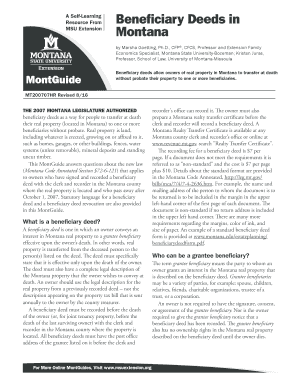
Beneficiary Deeds in Montana by Marsha Goetting, Ph.D., CFP , CFCS, Professor and Extension Family Economics Specialist, Montana State University-Bozeman; Kristen Juras, Professor, School of Law,.

How it works

  1. Open form

    Open form follow the instructions

  2. Easily sign form

    Easily sign the form with your finger

  3. Share form

    Send filled & signed form or save

How to fill out the Filable Beneficiary Deeds Form online

Filling out a beneficiary deeds form online can simplify the process of transferring real property in Montana without the need for probate. This guide provides a step-by-step approach to ensure a clear and effective completion of the form.

Follow the steps to successfully fill out the online form.

  1. Use the ‘Get Form’ button to access the beneficiary deeds form. This will allow you to obtain the form and open it for editing.
  2. Begin by entering your name or the names of the owners who are granting the interest in the property. Make sure to fill in the complete names as they appear on the title.
  3. Specify the grantee beneficiaries. Enter the names of the individuals or entities who will receive the property upon your death. Be sure to list their full names and addresses.
  4. Provide the complete legal description of the Montana property to be transferred. This should be taken from a previously recorded deed, not the property tax bill.
  5. Indicate the conditions under which the property will transfer, especially if there are multiple grantee beneficiaries. Specify if they will hold the property as joint tenants with right of survivorship or as tenants in common.
  6. Review the language on the form, ensuring that it states the deed is effective only upon your death and includes the required post office address of the grantee.
  7. Once completed, save your changes to the form. You can then download, print, or share the form as needed.

Complete your documents online to ensure a smooth process in managing your estate.

Get form

Experience a faster way to fill out and sign forms on the web. Access the most extensive library of templates available.
Get form

Related content

SIMPLE REVOCABLE TRANSFER ON DEATH (TOD) DEED
Jun 30, 2025 — Use this deed to transfer the residential property described below...
Learn more
Revocable Transfer on Death Deed
This form must be recorded with the clerk and recorder in the county where the real...
Learn more
Realty Transfer Tax Statement of Value (REV-183)
Attach a complete copy of the trust agreement and identify the grantor's relationship to...
Learn more

Related links form

Instructions On Use Of RADIATION CASUALTY ASSESSMENT TOOL - Ceep Medication Authorization Formnew - Escondidocharter Grading Rubric Science Fair Project Milestone 4 40 Name - Escondidocharter PCDFORMv113.doc - Sboc

Questions & Answers

Get answers to your most pressing questions about US Legal Forms API.

Contact support

Transferring property title between family members is effectively done using a Filable Beneficiary Deeds Form. This method allows you to change the title of the property with minimal hassle and in a way that is legally recognized. It fosters goodwill among family members while significantly reducing any legal complications.

Using a Filable Beneficiary Deeds Form is often the easiest way to transfer property after death. This document enables you to directly name a beneficiary for your property, bypassing the lengthy probate process. It simplifies the transfer and reduces the burden on your loved ones during a difficult time.

Leaving assets to heirs can be simply managed with a Filable Beneficiary Deeds Form. This form allows you to specify exactly who will receive your property after your passing. It minimizes legal complications and ensures that your wishes are fulfilled efficiently, providing peace of mind for you and your family.

The best way to transfer property after death is by using a Filable Beneficiary Deeds Form. This legal document allows you to designate a beneficiary who will automatically receive your property without going through probate. By utilizing this form, you can ensure a smoother transfer process and avoid potential conflicts among heirs.

To fill out a beneficiary form, begin by entering your name as the property owner and the name of the beneficiary. Make sure to specify the property details clearly and sign the form in accordance with state requirements. For a seamless experience, consider using a platform like USLegalForms that offers guidance on creating and filing a Filable Beneficiary Deeds Form.

Filling a beneficiary form involves providing accurate and complete information about the beneficiary and the assets involved. Start by obtaining a Filable Beneficiary Deeds Form and follow the provided instructions carefully. It's often helpful to consult resources or professionals to ensure you complete it correctly.

In the beneficiary name section of a Filable Beneficiary Deeds Form, you should provide the full legal name of the individual or entity you wish to designate. Make sure to include any relevant information, such as their relationship to you, to clarify your intentions. This clarity helps avoid disputes among potential heirs.

Yes, filling out a beneficiary form is important if you wish to specify who will receive your assets. This is particularly true for real estate, as using a Filable Beneficiary Deeds Form can simplify the transfer process. Without a designated beneficiary, your assets may go through a lengthy probate process.

A beneficiary is an individual or entity designated to receive assets from an estate. For instance, if you name your child as a beneficiary in a will or a Filable Beneficiary Deeds Form, they will inherit your property or funds upon your passing. It's essential to choose a reliable person or organization to ensure your wishes are honored.

The 3-year rule for a deceased estate generally refers to the time limit for filing estate tax returns, which typically must be filed within three years of the decedent’s death. While this rule can vary by jurisdiction, understanding it is important in managing an estate. Utilizing a filable beneficiary deeds form can help streamline your estate planning process and potentially avoid complications associated with estate taxes. Consulting a professional for personalized advice can also be beneficial.

Get This Form Now!

Use professional pre-built templates to fill in and sign documents online faster. Get access to thousands of forms.
Get form
If you believe that this page should be taken down, please follow our DMCA take down processhere.

Industry-leading security and compliance

US Legal Forms protects your data by complying with industry-specific security standards.
  • In businnes since 1997
    25+ years providing professional legal documents.
  • Accredited business
    Guarantees that a business meets BBB accreditation standards in the US and Canada.
  • Secured by Braintree
    Validated Level 1 PCI DSS compliant payment gateway that accepts most major credit and debit card brands from across the globe.
Get Filable Benificiary Deeds Form
Get form
  • Adoption
  • Bankruptcy
  • Contractors
  • Divorce
  • Home Sales
  • Employment
  • Identity Theft
  • Incorporation
  • Landlord Tenant
  • Living Trust
  • Name Change
  • Personal Planning
  • Small Business
  • Wills & Estates
  • Packages A-Z
  • Affidavits
  • Bankruptcy
  • Bill of Sale
  • Corporate - LLC
  • Divorce
  • Employment
  • Identity Theft
  • Internet Technology
  • Landlord Tenant
  • Living Wills
  • Name Change
  • Power of Attorney
  • Real Estate
  • Small Estates
  • Wills
  • All Forms
  • Forms A-Z
  • Form Library
  • Legal Hub
  • About Us
  • Help Portal
  • Legal Resources
  • Blog
  • Affiliates
  • Contact Us
  • Delete My Account
  • Site Map
  • Industries
  • Forms in Spanish
  • Localized Forms
  • State-specific Forms
  • Forms Kit
  • Real Estate Handbook
  • All Guides
  • Notarize
  • Incorporation services
  • For Consumers
  • For Small Business
  • For Attorneys
  • USLegal
  • FormsPass
  • pdfFiller
  • signNow
  • altaFlow
  • DocHub
  • Instapage
Form Packages
  • Adoption
  • Bankruptcy
  • Contractors
  • Divorce
  • Home Sales
  • Employment
  • Identity Theft
  • Incorporation
  • Landlord Tenant
  • Living Trust
  • Name Change
  • Personal Planning
  • Small Business
  • Wills & Estates
  • Packages A-Z
Form Categories
  • Affidavits
  • Bankruptcy
  • Bill of Sale
  • Corporate - LLC
  • Divorce
  • Employment
  • Identity Theft
  • Internet Technology
  • Landlord Tenant
  • Living Wills
  • Name Change
  • Power of Attorney
  • Real Estate
  • Small Estates
  • Wills
  • All Forms
  • Forms A-Z
  • Form Library
Customer Service
  • Legal Hub
  • About Us
  • Help Portal
  • Legal Resources
  • Blog
  • Affiliates
  • Contact Us
  • Delete My Account
  • Site Map
  • Industries
  • Forms in Spanish
  • Localized Forms
  • State-specific Forms
  • Forms Kit
Legal Guides
  • Real Estate Handbook
  • All Guides
Prepared for you
  • Notarize
  • Incorporation services
Our Customers
  • For Consumers
  • For Small Business
  • For Attorneys
Our Sites
  • USLegal
  • FormsPass
  • pdfFiller
  • signNow
  • altaFlow
  • DocHub
  • Instapage
Social Media
Call us now toll free:
+1 833 426 79 33
As seen in:
© Copyright 1999-2026 airSlate Legal Forms, Inc. 3720 Flowood Dr, Flowood, Mississippi 39232
  • Your Privacy Choices
  • Terms of Service
  • Privacy Notice
  • Content Takedown Policy
  • Bug Bounty Program