Loading
Get Nys Poa 1 2020-2026
How it works
-

Open form follow the instructions
-

Easily sign the form with your finger
-

Send filled & signed form or save
How to fill out the Nys Poa 1 online
Navigating the Nys Poa 1 form can seem daunting, but with the right guidance, the process becomes much simpler. This guide aims to provide a step-by-step approach to help users complete the form accurately and confidently, ensuring your power of attorney is properly executed.
Follow the steps to fill out the Nys Poa 1 form online.
- Click ‘Get Form’ button to obtain the form and open it in the editor.
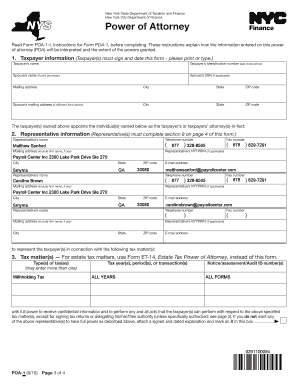
- Begin with the taxpayer information section. Enter the taxpayer’s name, identification number, and mailing address. Ensure accuracy in spelling and numbers. If it is a joint tax return, include your spouse’s name and SSN as well.
- Proceed to the representative information section. Provide the name, telephone number, email address, and mailing address of each representative appointed. If applicable, include the NYTPRIN number.
- Next, fill in the tax matters section. Indicate the type(s) of taxes you are authorizing the representative to handle. Specify the relevant tax years or periods, and enter any notice or assessment IDs if available.
- In the retention/revocation section, check the box if you want to revoke any previous powers of attorney associated with the same tax matters.
- For the signatures, both the taxpayer and spouse (if applicable) must sign and date the form. Ensure that the authorized representative's capabilities are also included when necessary.
- Finalize the form by acknowledging it before a notary public or having it witnessed by two individuals. This is a crucial step for the document's validity.
- Once all sections are accurately filled out, users can save changes, download a copy, print it, or share the completed form as needed.
Complete your power of attorney documents online to simplify the process.
The NYS POA 1 form is generally needed by individuals who wish to designate someone else to manage their affairs. This includes those concerned about their health, finances, or other legal matters. By completing this form, you empower a trusted person to act on your behalf when you cannot.