Loading

Open form follow the instructions

Easily sign the form with your finger

Send filled & signed form or save
How to fill out the Florida Captive Wildlife Critical Incident Disaster Plan Form online
The Florida Captive Wildlife Critical Incident Disaster Plan Form is essential for managing wildlife in situations of emergency. This guide will provide clear instructions to help users effectively complete this form online.
Follow the steps to fill out the form correctly.
- Click ‘Get Form’ button to acquire the form and open it for editing.
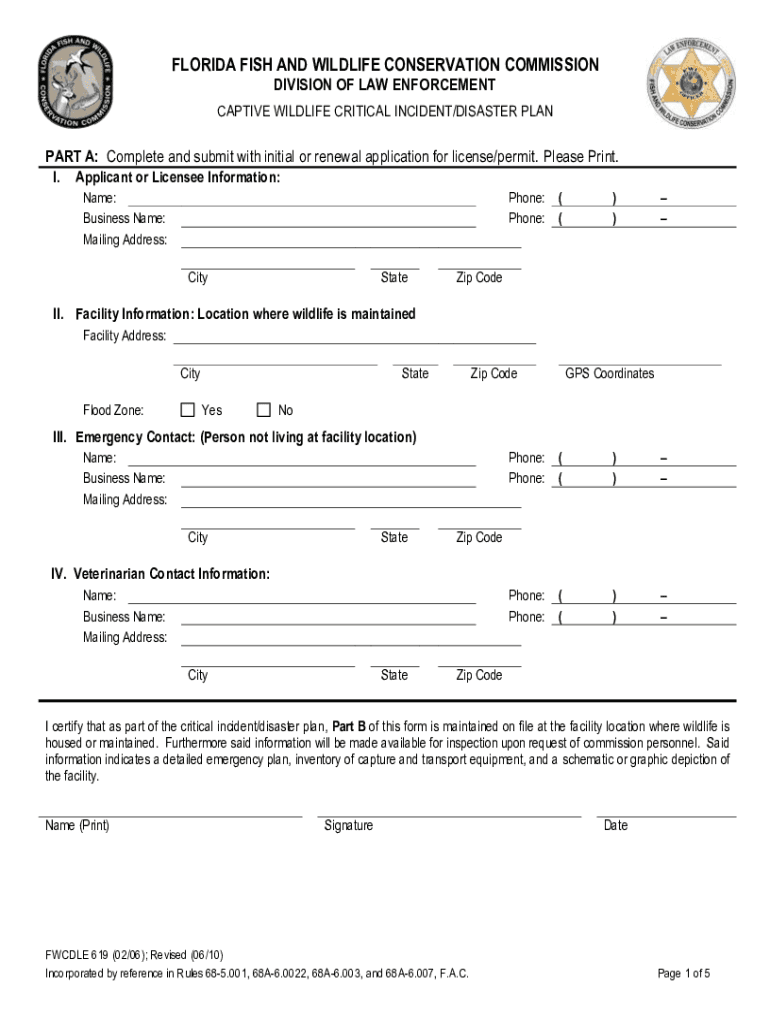
- Complete Part-A, which includes filling in applicant or licensee information. Include your full name, emergency contact phone numbers, business name, and mailing address.
- Provide facility information, entering the complete facility address and GPS coordinates for the main entrance/exit if known.
- Fill out the emergency contact section by entering the details of an individual who does not reside at the facility but can assist in emergency situations.
- Enter veterinarian contact information, including their name, business name, mailing address, and contact phone numbers.
- Prepare Part-B by detailing an emergency plan. This should include information on pre-event, event, and post-event actions, as well as evacuation plans.
- List all equipment necessary for capturing and transporting wildlife, along with contact information for authorized individuals who can use this equipment.
- Attach a facility information checklist, including any schematics or depictions relevant to the layout and emergency supplies.
- Document miscellaneous emergency supplies and where they are stored, ensuring all relevant information is provided.
- Compile a current animal inventory, including the total number of each species and any identifying features.
- Once all sections are completed, save your changes, and you may then download, print, or share the completed form as needed.
Begin the process of filling out your document online today.
Experience a faster way to fill out and sign forms on the web. Access the most extensive library of templates available.
Related content
... CRITICAL INCIDENT/DISASTER PLAN All Applicants (new or renewal) must provide Part A of...
1. A plan to secure conditional snakes or lizards in the event of disasters or critical...
• Sensitive and endangered wildlife species and critical habitats exposed to PCBs. ... A...
Get answers to your most pressing questions about US Legal Forms API.
What is class 1 wildlife in Florida?
Class 1 wildlife in Florida refers to species that represent the highest risk to people and ecosystems. These include dangerous large animals that require extensive management and care. If you own or plan to own any Class 1 animals, having a Florida Captive Wildlife Critical Incident Disaster Plan Form is vital, as it outlines your approach to safety and emergency management.
What are the 16 species banned in Florida?
Florida has specific regulations that include the banning of 16 species known to pose significant risks. This list includes animals like the Burmese python and the green iguana. Understanding these regulations is critical, especially if you are developing a Florida Captive Wildlife Critical Incident Disaster Plan Form, to ensure you are not in violation of state law.
What are class 2 animals in Florida?
Class 2 animals in Florida include species that can be more dangerous than Class 3 but less so than Class 1 animals. Examples include wolves, certain large cats, and various reptiles. Owning these animals requires a specific permit, and submitting a Florida Captive Wildlife Critical Incident Disaster Plan Form is a crucial step in ensuring you're prepared for emergencies related to these animals.
What animals can you own in Florida without a permit?
In Florida, you can own certain animals without a permit, such as domestic cats and dogs. Additionally, some small animals like hamsters and guinea pigs fall under this category. However, if you are considering animals that might pose a risk or require special care, it’s wise to have a Florida Captive Wildlife Critical Incident Disaster Plan Form prepared, should you need to address any incidents that may arise.
What animals are Class 3 in Florida?
Class 3 animals in Florida are those considered less dangerous, like certain reptiles and non-dangerous mammals. Examples include some species of iguanas, deer, and certain rodents. While you can own these animals more easily, including a Florida Captive Wildlife Critical Incident Disaster Plan Form remains essential for ensuring you are prepared for any unexpected events.
How to get a nuisance license in Florida?
To obtain a nuisance license in Florida, you must apply with the Florida Fish and Wildlife Conservation Commission (FWC). The process generally involves demonstrating that the animal poses a threat or nuisance. Including a Florida Captive Wildlife Critical Incident Disaster Plan Form in your application can help address potential emergencies effectively. This form outlines procedures for managing animal-related incidents.
What are class 1 animals in Florida?
Class 1 animals in Florida include species that pose the highest level of threat to humans and the environment. Examples of these animals are lions, tigers, and certain primates. To own such animals, individuals must navigate strict regulations and submit a Florida Captive Wildlife Critical Incident Disaster Plan Form. This ensures proper management and emergency response strategies.
What is a Class 3 pet permit in Florida?
Class III, for Exhibition or Public Sale License Captive Wildlife Critical Incident - Disaster Plan (required of all new and renewal applicants wishing to possess captive wildlife (for personal use, exhibition or public sale), venomous reptiles and/or reptiles of concern).
How much is a Class 3 permit in Florida?
If you will be taking your skunk out where the public can see it at anytime, you must have a Class III for Exhibition Permit. The cost is $50.00 no matter how many skunks you own. For either permit, the only way to obtain it is to apply on-line at .myfwc.com. Currently permits are taking 8 to 12 weeks to process.
What are Class 3 animals in Florida?
Class III Wildlife Animals like exotic birds (parrots, parakeets, finches), small mammals (foxes, skunks, raccoons, lemurs), many reptile species (snakes, lizards, turtles, tortoises) and all amphibian species (frogs, salamanders, etc.)
Use professional pre-built templates to fill in and sign documents online faster. Get access to thousands of forms.
If you believe that this page should be taken down, please follow our DMCA take down process here.