
Open form follow the instructions

Easily sign the form with your finger

Send filled & signed form or save
How to fill out the Contractors Bond Form 13b 1 online
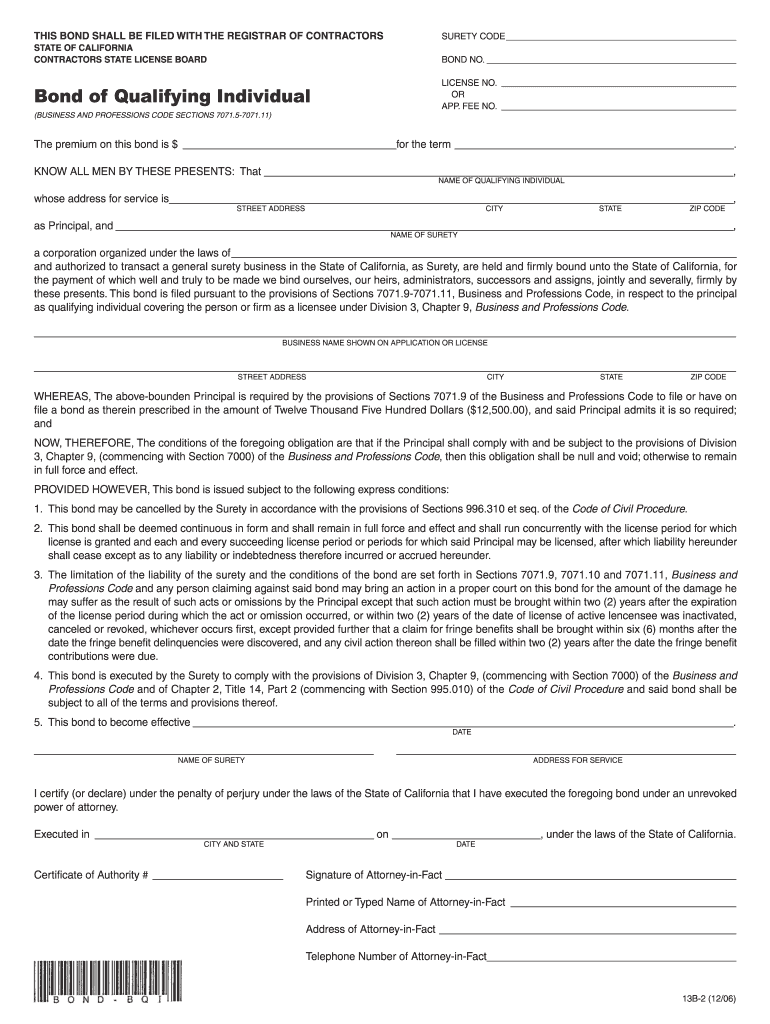
Filling out the Contractors Bond Form 13b 1 is an important step for qualifying individuals in the state of California. This guide provides clear, step-by-step instructions to assist users in completing the form online with ease and confidence.
Follow the steps to successfully complete the Contractors Bond Form 13b 1.
- Click the ‘Get Form’ button to access the Contractors Bond Form 13b 1 and open it in the online editor.
- In the 'Surety Code' field, enter the relevant surety code associated with your bond. This information can typically be found on the bond documentation you received from your surety.
- Complete the 'Bond No.' field by filling in the unique bond number issued by your surety company.
- For the 'License No.' field, input your contractor's license number, or if you are in the application process, provide your application fee number in the 'App. Fee No.' field.
- Indicate the premium amount for the bond in the designated field. This should reflect the cost for the term of the bond.
- In the 'Name of Qualifying Individual' field, provide your full name. This is the individual qualifying for the contractor’s license.
- Fill in your service address, including the street address, city, state, and zip code to ensure accurate communication.
- Next, enter the name of the surety company in the 'Name of Surety' field. This is the organization that backs your bond.
- Indicate the state of incorporation for the surety company. This is typically the state where the surety has been authorized to conduct business.
- Review and clarify any conditions of the bond listed in the form to ensure you understand the obligations and limitations described.
- Complete the effective date of the bond by entering the date when the bond becomes enforceable.
- Providing your signature as the Attorney-in-Fact is essential. Ensure all required information such as printed name, address, and phone number is included.
- Once all fields are completed, review the entire form for accuracy before saving your changes. You can choose to download, print, or share the form as needed.
Complete your Contractors Bond Form 13b 1 online today to ensure compliance and facilitate your licensing process.
Experience a faster way to fill out and sign forms on the web. Access the most extensive library of templates available.
Related content
Contractors with a license bond on file with CSLB must ensure their contractor bond is...
IMPORTANT: This form is divided into two sections: Section 1 - Emergency Contact...
List the organization's five current highest compensated employees (other than an officer...
Get answers to your most pressing questions about US Legal Forms API.
What is the most favorable bond rate for a contractor?
The most favorable bond rate for a contractor typically ranges from 1% to 2% of the bond amount. This competitive rate often reflects a contractor's strong financial standing and credit history. Contractors seeking to lower their bond rates should consider improving their credit score and financial documentation. Using platforms like uslegalforms can provide you with essential resources and support to secure the best rates for the Contractors Bond Form 13b 1.
What are the three types of construction bonds?
The three main types of construction bonds are bid bonds, performance bonds, and payment bonds. Bid bonds guarantee that a contractor will honor their bid and undertake the contract if awarded. Performance bonds ensure that the project is completed per the contract stipulations, while payment bonds protect subcontractors and suppliers by ensuring they receive payment. Each type plays a crucial role in the construction industry and complements the Contractors Bond Form 13b 1.
How does a contractor bond work in California?
In California, a contractor bond functions as a pledge that the contractor will comply with local laws and project requirements. When a contractor obtains the Contractors Bond Form 13b 1, they assure the project owner that their work will be completed according to specifications. If the contractor fails to meet these commitments, the project owner can file a claim against the bond to recover losses. This process helps uphold industry standards and protects consumers.
What is a bond form?
A bond form is a financial document that creates a legal agreement between three parties: the principal, the obligee, and the surety. In the context of construction, the Contractors Bond Form 13b 1 serves as a guarantee that a contractor will fulfill their obligations. It protects the project owner in case the contractor fails to meet their responsibilities. This form is essential for managing risks in construction projects.
How to fill a bond order?
Filling a bond order requires understanding the specific requirements of the order and collecting the necessary documents. Start by completing all fields thoroughly, ensuring accurate details about the bond type and amounts. Utilizing the Contractors Bond Form 13b 1 will make this process straightforward and help you maintain compliance with all regulations.
How to fill a bond form?
To fill out a bond form, gather all necessary documentation, then provide accurate and complete information in the given fields. Clearly read the instructions and ensure that all details align with your business structure and project requirements. The Contractors Bond Form 13b 1 offers guidance and prompts that simplify this process.
Do California contractors need to be bonded?
Yes, California contractors usually need to be bonded to operate legally. Bonding protects consumers and guarantees that contractors adhere to local laws and regulations. By completing the Contractors Bond Form 13b 1, you ensure compliance with California's licensing requirements and secure your ability to work within the state.
What are the three types of bonds that can be required from a contractor?
Three essential types of bonds required from contractors include performance bonds, payment bonds, and maintenance bonds. Performance bonds ensure project completion, payment bonds protect subcontractors and suppliers, and maintenance bonds cover post-project issues. When securing your Contractors Bond Form 13b 1, make sure to select the appropriate type for your specific project needs.
How do you form a bond with someone?
Forming a bond with someone involves building trust and a solid relationship over time. Engage in meaningful conversations, share experiences, and consistently support each other. While this question may not directly relate to a Contractors Bond Form 13b 1, understanding relationships can enhance teamwork in professional settings.
What information is needed for a bond?
Typically, you will need personal information, business details, and project specifics when applying for a bond. This includes your credit history, business licenses, and financial statements. When using the Contractors Bond Form 13b 1, providing accurate and comprehensive information will expedite the bonding process and improve your chances of approval.
Use professional pre-built templates to fill in and sign documents online faster. Get access to thousands of forms.
If you believe that this page should be taken down, please follow our DMCA take down process here.