Loading

Open form follow the instructions

Easily sign the form with your finger

Send filled & signed form or save
How to fill out the Discharge Plan online
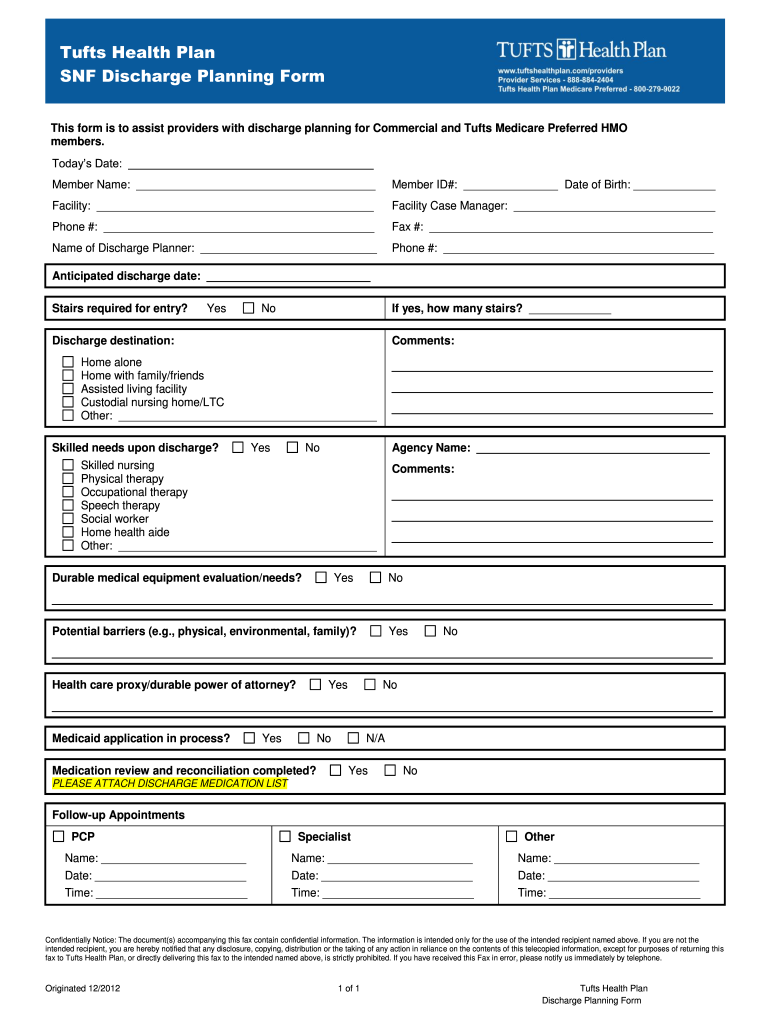
The Discharge Plan serves as a crucial document to facilitate the successful transition of members from healthcare facilities to their homes or other care settings. This guide will provide a step-by-step approach to filling out the Discharge Plan online, ensuring all necessary information is accurately captured.
Follow the steps to complete the Discharge Plan effectively.
- Click ‘Get Form’ button to obtain the form and open it in your preferred digital editor.
- Begin by entering today's date in the designated field. This helps to establish a clear timeline for the discharge process.
- Provide the member’s full name and Member ID number, along with their date of birth. Accurate identification is essential for processing.
- Fill in the facility's name where the member is currently receiving care. Additionally, include the case manager's and discharge planner's names and contact information to facilitate communication.
- Indicate the anticipated discharge date. This information helps in planning the discharge process effectively.
- Specify if stairs are required for entry to the discharge destination. If applicable, indicate how many stairs are involved.
- Select the discharge destination from the provided options, including home alone, home with family/friends, assisted living facility, custodial nursing home, or other. If other, specify the destination.
- Determine if any skilled needs are required upon discharge. If yes, specify the types of skilled services needed.
- If skilled services are needed, list the agency name and the types of therapy or care required, such as nursing, physical therapy, or social work.
- Assess the need for durable medical equipment and complete any necessary comments regarding equipment evaluation.
- Identify potential barriers that may affect the discharge process. This could include physical, environmental, or family-related barriers.
- Indicate if a healthcare proxy or durable power of attorney is established. This is important for legal decision-making concerning the member's health.
- Confirm whether a Medicaid application is in process, as this can impact discharge planning.
- Answer whether a medication review and reconciliation has been completed. Attach the discharge medication list if applicable.
- Record follow-up appointments for the primary care physician and any specialists, including their names, dates, and times to ensure continuity of care.
- After completing the form, review all entries for accuracy. You can then save changes, download, print, or share the completed Discharge Plan as needed.
Complete your Discharge Plan online today to ensure a smooth transition for the member.
Experience a faster way to fill out and sign forms on the web. Access the most extensive library of templates available.
Related content
by PR Patel · 2023 · Cited by 63 — Discharge planning is the process of transitioning...
Nov 17, 2023 — What Is Included in a Hospital Discharge Plan? · A detailed description...
Areas plans must consider when developing and approving discharge plans ... MMCOs must...
Get answers to your most pressing questions about US Legal Forms API.
What are the 10 steps of discharge planning?
The 10 steps of discharge planning typically include assessing patient needs, setting discharge goals, developing a care plan, organizing follow-up appointments, ensuring medication education, preparing caregivers, addressing home environment safety, coordinating available resources, documenting the plan, and providing a copy to all stakeholders. Each step enhances the clarity and effectiveness of the Discharge Plan, promoting better recovery chances.
What does discharge mean in planning?
In planning, discharge refers to the process of formally transitioning a patient from a medical facility. This involves organizing care, addressing patient needs, and ensuring all necessary resources are available as part of the Discharge Plan. Effective discharge planning is crucial for achieving positive health outcomes and continuity of care.
What is a discharge plan?
A discharge plan serves as a roadmap that guides patients from the healthcare setting to home or other care environments. It incorporates the patient's medical needs, support systems, and any required follow-up actions. By providing this structure, a Discharge Plan helps minimize the risk of readmission and enhances patient outcomes.
What is the discharge plan?
A discharge plan is a detailed document that outlines the steps necessary for a patient to transition safely from a healthcare facility to their home or another level of care. It includes assessments, resources, and follow-up instructions tailored to the patient’s unique needs. Essentially, it forms the foundation for post-care success.
What are examples of discharge goals?
Examples of discharge goals can include ensuring the patient can perform daily activities independently or securing necessary medical follow-ups. A Discharge Plan might also focus on improving health management through education about medications and lifestyle changes. Each goal should aim for the patient’s overall well-being post-discharge.
How do you write a discharge plan?
Writing a discharge plan involves several key steps. Start by assessing the individual’s health, needs, and home environment. Then, set measurable goals, identify caregivers, and note any follow-up appointments. Using resources available on platforms like USLegalForms can enhance your discharge planning, making it comprehensive and user-friendly.
How do I write a discharge plan?
To write a discharge plan, begin by gathering all relevant patient information, including medical history and current health status. Outline the goals for the patient’s recovery and specify the resources and support needed. With tools like USLegalForms, you can find templates that simplify this process, ensuring you cover all necessary aspects within your Discharge Plan.
What is the purpose of a discharge planning meeting?
The purpose of a discharge planning meeting is to create a structured transition for a patient returning home or to another care setting. It involves assessing the patient’s needs, identifying resources, and establishing a clear Discharge Plan. This meeting ensures that all parties, including healthcare providers and family members, collaborate effectively for the patient's best outcomes.
How do you document a patient discharge?
To document a patient discharge, record key elements such as the discharge date, follow-up instructions, medications prescribed, and any referrals made. Ensure the documentation is clear and includes the patient's understanding of their post-discharge care. Utilizing a platform like uslegalforms can help you streamline document management and ensure compliance.
What is the process of discharging?
The process of discharging involves finalizing the discharge plan, reviewing it with the patient, and ensuring that all necessary arrangements are made. This includes confirming follow-up appointments, providing necessary prescriptions, and educating patients about their care needs. Proper discharge facilitates a smoother transition back to the community.
Use professional pre-built templates to fill in and sign documents online faster. Get access to thousands of forms.
If you believe that this page should be taken down, please follow our DMCA take down process here.