Open form follow the instructions
Easily sign the form with your finger
Send filled & signed form or save
How to fill out the Vacuum Truck Inspection Checklist online
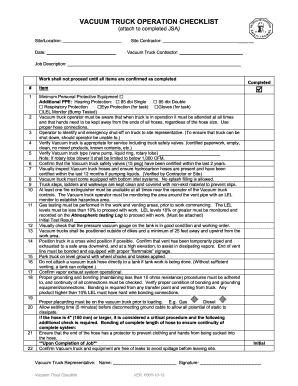
This guide provides comprehensive instructions on how to complete the Vacuum Truck Inspection Checklist online. By following these steps, users can ensure that all necessary safety measures are verified and documented.
Follow the steps to fill out the Vacuum Truck Inspection Checklist online.
- Press the ‘Get Form’ button to access the Vacuum Truck Inspection Checklist and open it in your online editor.
- Begin by entering the site/location where the work is being performed. This ensures that the inspection is documented for the correct location.
- Next, fill in the date of the inspection. Accurate dating is crucial for compliance and record-keeping.
- Enter the name of the site contractor. This allows for clear identification of who is responsible for the project.
- Input the name of the vacuum truck contractor in the designated field, documenting the entity responsible for the equipment.
- Provide a detailed job description to explain the work being performed. This should encapsulate the scope of the operation.
- Check the box next to 'Minimum Personal Protective Equipment' to signify that the required safety gear is available.
- Specify any additional personal protective equipment required, such as hearing protection and respiratory protection, by checking the appropriate boxes.
- Verify the type of vacuum truck being used, including checking on safety valves and certification paperwork.
- Conduct a visual inspection of all hoses and equipment components to ensure compliance with safety standards.
- Confirm that all safety measures, such as having fire extinguishers readily available, are in place before proceeding.
- Perform gas testing and record initial test results, ensuring that LEL levels are acceptable before beginning work.
- After completing the job, ensure the vacuum truck and equipment are free from leaks before exiting the site.
- Finalize the checklist by having the vacuum truck representative sign and date the form, providing verification of completion.
Complete your Vacuum Truck Inspection Checklist online to ensure compliance and safety today!
Experience a faster way to fill out and sign forms on the web. Access the most extensive library of templates available.
Related content
EXHAUST SYSTEM a. Any exhaust system determined to be leaking at a point forward of or...
Does each industrial truck have a warning horn, whistle, gong, or other ... Are electrical...
Inspect the carbon brushes on the various electric motors. Refer to the table below for...
Get answers to your most pressing questions about US Legal Forms API.
How much can you make with a vac truck?
The earnings from operating a vacuum truck can vary widely, typically ranging from $45,000 to $100,000 annually. Factors such as experience, location, and type of services offered play a significant role in determining income. Investing in quality training and using an organized vacuum truck inspection checklist can lead to better job performance, ultimately driving higher earnings in this field.
How to inspect a truck?
Inspecting a truck involves checking various aspects, including brakes, lights, tires, and the vacuum system. Make sure to follow the vacuum truck inspection checklist to ensure no critical area is overlooked. Conduct a thorough visual inspection, and perform functional tests on all equipment. This comprehensive approach not only enhances safety but also extends the truck's lifespan.
What is the pressure rating for a vacuum truck?
The pressure rating for a vacuum truck typically ranges from 15 to 27 inches of mercury, depending on the truck's model and manufacturer. It's essential to consult the vehicle's specifications and ensure that the vacuum truck meets safety standards. Properly understanding the pressure rating is vital for safe operation and helps maintain the effectiveness of the vacuum truck inspection checklist.
How to create an inspection checklist?
Creating a vacuum truck inspection checklist involves understanding the essential components of the vehicle. Start by identifying the critical systems that need regular inspection, such as the vacuum system, hose connections, and safety features. Document these elements in a clear, organized format. You can utilize platforms like US Legal Forms to access templates that can help streamline this process.
Do vacuum trucks need to be grounded?
Yes, vacuum trucks should be grounded to prevent static electricity buildup that can lead to hazardous situations. Grounding helps ensure safety when transferring flammable materials, as outlined in your Vacuum Truck Inspection Checklist. Make sure to inspect the grounding systems regularly to maintain compliance with safety regulations.
How to inspect the vehicle?
Inspecting the vehicle involves a systematic approach that covers various aspects of the truck. Start by checking the exterior for any signs of damage or wear. Then, move on to the engine compartment and the interior to evaluate gauges and controls. Make sure your Vacuum Truck Inspection Checklist includes each system to guarantee a thorough vehicle assessment.
How does a vacuum truck operate?
A vacuum truck operates by using suction to extract liquids and solids from various sites. The tank creates a vacuum through a powerful pump, which draws materials into the storage compartment. Understanding this process can enhance your approach to the Vacuum Truck Inspection Checklist, as you can assess critical components that impact functionality.
What is the most important reason to inspect your truck?
The primary reason to inspect your truck is to ensure safety and reliability. Regular inspections can help prevent accidents and costly repairs by identifying issues early. By incorporating a comprehensive Vacuum Truck Inspection Checklist, you actively protect your investment and contribute to the safety of all road users.
What do you inspect on a truck?
During the inspection, focus on several key areas of the truck. You should examine the structural integrity of the vehicle, ensuring there are no cracks or rust. Additionally, inspect tires for wear and proper inflation. Don't forget to check the braking system, lights, and any other safety features included in your Vacuum Truck Inspection Checklist for effective performance.
What are the 7 steps of the inspection process?
The Vacuum Truck Inspection Checklist typically includes seven essential steps. First, perform a visual inspection to check for obvious damage. Second, verify fluid levels, such as oil and hydraulic fluids. Third, inspect hoses and connections for leaks. Fourth, check electrical systems and lights. Fifth, assess the condition of the vacuum tank and its fittings. Sixth, examine safety equipment, including valves and gauges. Finally, conduct a road test to ensure overall operational efficiency.
Use professional pre-built templates to fill in and sign documents online faster. Get access to thousands of forms.
If you believe that this page should be taken down, please follow our DMCA take down process here.