Loading

Open form follow the instructions

Easily sign the form with your finger

Send filled & signed form or save
How to fill out the Interspousal Transfer Deed online
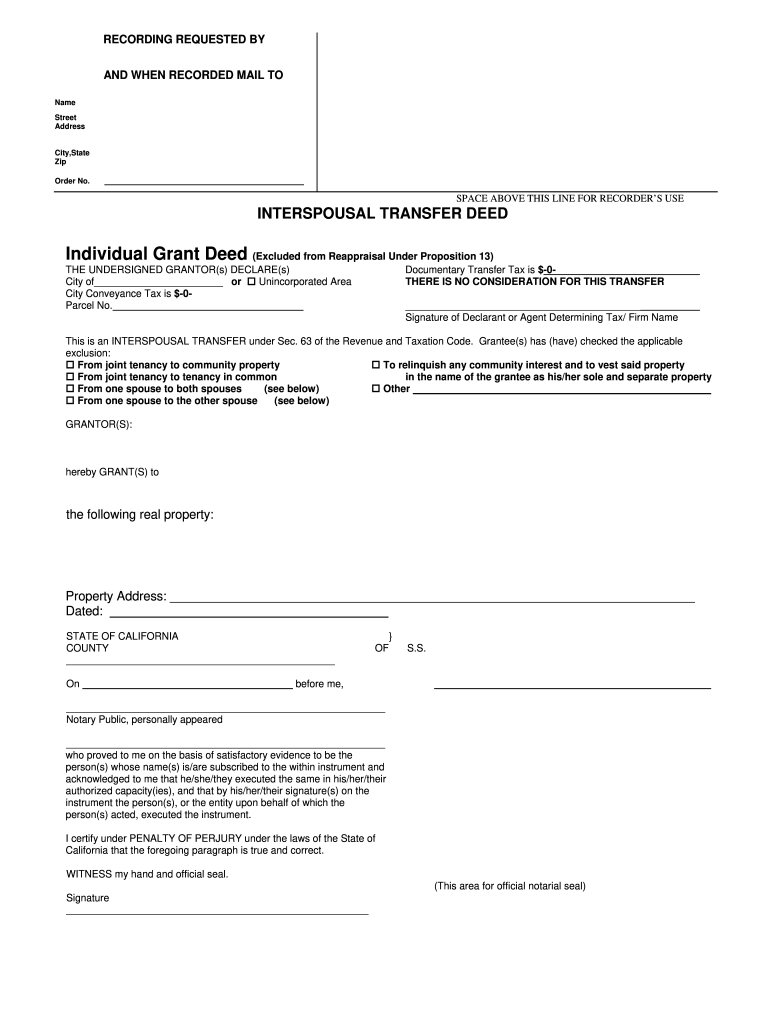
The Interspousal Transfer Deed is a vital document that allows spouses or partners to transfer property between them without incurring taxes or reappraisal. This guide provides clear and supportive instructions to help you fill out the form online successfully.
Follow the steps to complete the Interspousal Transfer Deed online.
- Click ‘Get Form’ button to access the Interspousal Transfer Deed and open it in the online editor.
- Fill in the recording information section at the top of the form. Enter the name, street address, city, state, and zip code of the person or entity requesting the recording.
- In the designated area, indicate any order number if applicable. Ensure accuracy since this information will be crucial for your records.
- Proceed to the section labeled 'THE UNDERSIGNED GRANTOR(s) DECLARE(s).' Here, you will need to affirm that no consideration is being exchanged for this transfer, thereby selecting the appropriate options regarding tax exceptions.
- Identify yourself as the Grantor by entering your name. Legal names should be used as they appear on identification documents.
- Fill in the Grantee's details, specifying the full names. Indicate any applicable changes in ownership type using the checkboxes provided.
- Clearly describe the property being transferred in the given field. Include the property address to avoid any ambiguity.
- Enter the date of the declaration in the appropriate field, ensuring it reflects the actual date of your signing.
- Leave the notary section blank as this will be filled in at the time of notarization. Ensure that a notary public will witness your signatures according to local regulations.
- After completing all necessary fields, review your entries to confirm accuracy. Finally, save your changes, and choose whether to download, print, or share the completed form for filing.
Begin your Interspousal Transfer Deed today by completing the form online.
Experience a faster way to fill out and sign forms on the web. Access the most extensive library of templates available.
Related content
The inter-spousal exclusion protects the surviving spouse when a death occurs or when a...
by P Fillmore · 1986 · Cited by 2 — Section 442 reads: Where a transfer of property is...
Sep 24, 2004 — The transfer of the Title to You is invalid as a preferential transfer or...
Get answers to your most pressing questions about US Legal Forms API.
How do I add my spouse to the deed in California?
To add your spouse to the deed in California, you will need to create and execute an interspousal transfer deed. This process involves drafting the deed, providing the necessary property details, and securing both spouses' signatures. Once notarized, you should file the deed with the county recorder's office to finalize their ownership status.
What is the effect of interspousal transfer deed in California?
The interspousal transfer deed effectively transfers property between spouses while often eliminating tax repercussions. This deed legally recognizes the ownership change and solidifies each spouse's rights over the property. It can play a crucial role in divorce proceedings, helping to delineate asset ownership clearly.
What is the most commonly used transfer deed in California?
In California, the interspousal transfer deed is one of the most commonly used methods for transferring property between spouses. It is favored for its simplicity and effectiveness, particularly during divorce or property settlements. This deed enables couples to maintain clear ownership records and prevent future disputes.
What is the difference between a quitclaim deed and an interspousal transfer deed in California?
A quitclaim deed transfers ownership rights without any guarantees about the property title, making it quite basic. In contrast, an interspousal transfer deed specifically applies to situations involving spouses and often provides tax benefits. While both can transfer property, the interspousal transfer deed is more tailored for marital circumstances.
What is an interspousal transfer deed in California?
An interspousal transfer deed in California is a legal document that allows spouses to transfer property ownership between themselves without additional tax implications. This deed is particularly valuable during divorce or separation for dividing assets. By utilizing this formal transfer method, couples can ensure a clear and amicable division of property rights.
What is the strongest form of deed?
The strongest form of deed is the warranty deed, which offers the highest level of protection to the grantee. However, in divorce situations, the interspousal transfer deed serves as a reliable option for transferring property between spouses. While it may not include the extensive guarantees of a warranty deed, it effectively facilitates the transfer in a straightforward manner.
How to transfer ownership to spouse?
To transfer ownership to your spouse, you typically need to execute an interspousal transfer deed. This process involves filling out the deed form, including relevant property and owner details, and then signing it in front of a notary public. Once you record the signed deed with the county recorder's office, the ownership transfer becomes official.
Which type of deed is used most often in divorce?
The most commonly used deed in divorce situations is the interspousal transfer deed. This deed allows couples to transfer property ownership between themselves without going through extensive legal processes. It is particularly useful for simplifying asset division during divorce settlements and ensures both parties can maintain clarity over property rights.
How do I add my spouse to my property title in California?
Adding your spouse to your property title in California involves using an Interspousal Transfer Deed. This deed allows you to declare your spouse as a co-owner of the property. You must complete the deed, sign it, and file it with the county recorder to update the title. Utilizing the resources on US Legal Forms makes this process straightforward and ensures you fill out the deed correctly.
What can I do with a grant deed in California?
With a grant deed in California, you can transfer ownership of property, clarify title information, or correct previous errors in property records. This document serves as legal proof of ownership and can help streamline future transactions, such as sales or transfers. Using a resource like UsLegalForms can ensure that your grant deed is properly prepared and filed.
Use professional pre-built templates to fill in and sign documents online faster. Get access to thousands of forms.
If you believe that this page should be taken down, please follow our DMCA take down process here.