Open form follow the instructions
Easily sign the form with your finger
Send filled & signed form or save
How to fill out the Occupational Profile online
The Occupational Profile is a vital document that captures an individual's occupational history, interests, values, and daily living patterns. This guide provides clear, step-by-step instructions for filling out the Occupational Profile online, ensuring that users can effectively communicate their needs and experiences.
Follow the steps to complete your Occupational Profile online:
- Click the ‘Get Form’ button to access the Occupational Profile. This will allow you to open the form in the editor for filling out.
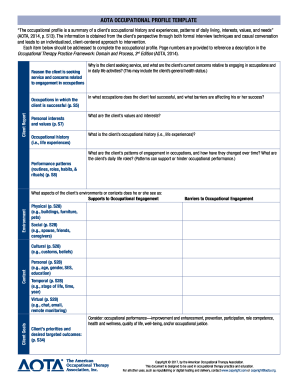
- Begin by stating the reasons for seeking service. Consider your current concerns related to engaging in daily life and various occupations, including any health status that may impact your activities.
- Identify the occupations where you feel successful. Note any barriers that currently affect your success in these areas.
- Detail your personal interests and values. Consider what matters most to you and how these influence your daily activities.
- Provide a summary of your occupational history. Reflect on your life experiences that have shaped your engagement in occupations.
- Outline your performance patterns, including routines, roles, habits, and rituals. Describe how these have changed over time and how they influence your occupational performance.
- Evaluate your environment. Identify both supports and barriers to occupational engagement in your physical and social contexts.
- Consider cultural, personal, and temporal contexts that may affect your occupational engagement.
- Articulate your client goals, including your priorities and desired outcomes. Focus on elements such as improvement, participation, health and wellness, and overall quality of life.
- Review your completed profile for accuracy and satisfaction. Once finalized, you can save changes, download, print, or share the form.
Take action now and complete your Occupational Profile online to better understand and communicate your occupational needs.
Experience a faster way to fill out and sign forms on the web. Access the most extensive library of templates available.
Related content
Strength level – a job is classified into five strength levels: sedentary, light...
The Occupational Experience Profile is an occupation-focused assessment designed for use...
On completion of the apprenticeship, butchers will prepare and place meat cuts and...
Get answers to your most pressing questions about US Legal Forms API.
What type of information is included in an occupational profile?
An occupational profile includes detailed information about an individual's interests, roles, routines, and environment. It helps identify strengths and challenges related to occupational performance. This profile is vital for crafting personalized interventions and supports within occupational therapy practice.
How to write a narrative note for occupational therapy?
When writing a narrative note for occupational therapy, focus on clear and concise descriptions of the client's sessions. Begin with observations, followed by your assessments and treatment plans. This approach not only documents progress but also enhances the client’s occupational profile by reflecting their unique journey.
What is narrative in occupational therapy?
In occupational therapy, a narrative often serves as a tool to understand a client’s experiences and cultural background. It allows therapists to gain insight into how daily activities influence a person's well-being. This understanding can help craft an individualized occupational profile that addresses specific needs and goals.
How to write a personal statement for occupational therapy?
Writing a personal statement for occupational therapy involves outlining your passion, relevant experiences, and career goals. Start with a strong introduction that captures your interest in the field. Use your occupational profile to show how your experiences have prepared you for a future in occupational therapy.
What should a narrative include?
A strong narrative should encompass your motivations, experiences, and future goals in the field of occupational therapy. Include specific examples that demonstrate your skills and understanding. By doing so, you effectively enrich your occupational profile, making it more relatable and persuasive to your audience.
What is the occupational profile history?
The historical context of the occupational profile dates back to the early developments in occupational therapy. Initially, it was centered on understanding clients' roles, interests, and routines. Over time, this concept evolved to emphasize the importance of tailoring therapeutic interventions based on a client’s unique occupational profile.
Which three things must you do to write an engaging narrative?
To write an engaging narrative, focus on authenticity and storytelling. First, share specific anecdotes that highlight your passion for occupational therapy. Second, maintain a clear structure with a beginning, middle, and end. Lastly, reflect on the lessons learned during your journey, as these add depth to your occupational profile.
What to include in an occupational narrative?
An occupational narrative should include your personal journey, key experiences, and insights into the field. Discuss how your past experiences shaped your understanding of occupational therapy. This can help you create a compelling occupational profile that resonates with your audience or admissions committee.
How long should a personal statement be for occupational therapy?
A personal statement for occupational therapy should typically be between 750 to 1,000 words. This length allows you to adequately express your motivations, experiences, and aspirations within the field. Remember, clarity and focus are key; ensure every word contributes to portraying your unique occupational profile.
What to include in occupational history?
When compiling occupational history, include details about past jobs, hobbies, volunteer work, and daily routines. Additionally, focus on significant life events that impacted the individual’s engagement in activities. This rich context contributes to creating a thorough occupational profile, facilitating targeted support and interventions.
Use professional pre-built templates to fill in and sign documents online faster. Get access to thousands of forms.
If you believe that this page should be taken down, please follow our DMCA take down process here.