Loading
Form preview
  • US Legal Forms
  • Other Templates
  • More Forms
  • More Multi-State Forms
  • Grease Trap Cleaning Log 2020

Get Grease Trap Cleaning Log 2020-2026

How it works

  1. Open form

    Open form follow the instructions

  2. Easily sign form

    Easily sign the form with your finger

  3. Share form

    Send filled & signed form or save

How to fill out the Grease Trap Cleaning Log online

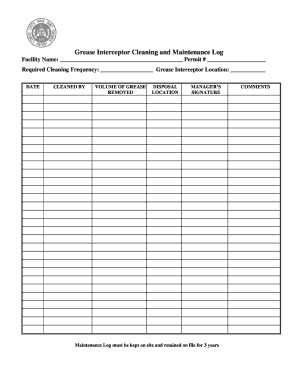
The Grease Trap Cleaning Log is an essential document for maintaining compliance with grease disposal regulations. This guide provides clear instructions on how to accurately fill out the log online, ensuring that you meet both legal requirements and best practices for maintaining your facility's grease trap.

Follow the steps to complete your Grease Trap Cleaning Log accurately.

  1. Press the ‘Get Form’ button to access the Grease Trap Cleaning Log and open it in your preferred online tool.
  2. In the 'Facility Name' field, enter the name of the facility where the grease interceptor is located.
  3. Fill in the 'Permit #' section with the appropriate permit number assigned to your facility.
  4. Specify the 'Required Cleaning Frequency' as directed by your facility’s guidelines or local regulations.
  5. Indicate the 'Grease Interceptor Location' by providing the physical location or description where the grease interceptor is situated.
  6. Record the cleaning 'Date' by entering the date when the grease interceptor was last serviced.
  7. Complete the 'Cleaned By' section by providing the name or identification of the person responsible for the cleaning.
  8. In the 'Volume of Grease Removed' field, accurately measure and record the volume of grease that has been extracted during the cleaning process.
  9. Document the 'Disposal Location' by writing in where the removed grease has been disposed of, ensuring compliance with local disposal regulations.
  10. Have a manager sign the log in the 'Manager’s Signature' field to validate the completion of the cleaning.
  11. Utilize the 'Comments' section for any additional notes or observations regarding the cleaning process or conditions of the grease trap.
  12. Finally, save your changes to the log. You may then choose to download, print, or share the completed form for your records.

Start completing your Grease Trap Cleaning Log online today to ensure compliance and proper maintenance.

Get form

Experience a faster way to fill out and sign forms on the web. Access the most extensive library of templates available.
Get form

Related content

GREASE TRAP CLEANING AND MAINTENANCE LOG
GREASE TRAP CLEANING AND MAINTENANCE LOG. FACILITY NAME ... CLEANING COMPANY: ...
Learn more
Best Management Practices For Fats, Oils and...
Jun 5, 2024 — The maintenance log serves as a record of the frequency and volume of...
Learn more
OWNER'S MANUAL
Congratulations on your selection of a Honda generator! We are certain you will be pleased...
Learn more

Related links form

ZA Old Johannesburg Warehouse Absentee Bids 2016 USALLIANCE Financial Add Joint Owner Form 2015 USALLIANCE Financial Add Joint Owner Form 2019 University Of Michigan School Of Social Work Out-of-Sequence Petition 2006

Questions & Answers

Get answers to your most pressing questions about US Legal Forms API.

Contact support

Common household items like baking soda and vinegar can help dissolve grease in a grease trap, but they may not be enough for heavy buildups. Enzyme-based cleaners can also be effective as they break down grease naturally. Don't forget to note any treatments in your Grease Trap Cleaning Log for future reference. Regular maintenance is key to keeping your grease trap functional.

To clear a clogged grease trap, start by turning off the water and inspecting the trap for visible blockages. Use a plumber's snake or similar tool to remove solidified grease. If the clog persists, you may need to consider professional cleaning services. Documenting each step in your Grease Trap Cleaning Log can help track recurring issues and develop preventive strategies.

A grease trap should be cleaned every one to three months, depending on its size and usage. High-volume establishments, such as restaurants, may require more frequent cleanings. To determine the best schedule, maintain a Grease Trap Cleaning Log that records cleaning dates and grease levels. This approach helps prevent costly backups and ensures regulatory compliance.

To record grease trap cleaning, create a detailed entry in your Grease Trap Cleaning Log. Include the date of cleaning, the amount of grease removed, and any observations about the trap's condition. This log not only helps monitor cleaning schedules but also serves as proof of maintenance for health inspections. Keeping accurate records supports compliance with local regulations.

To clean a grease trap, first turn off water flow and access the trap cover. Remove accumulated grease and solids, using appropriate tools to prevent spills. Rinse the trap with hot water, ensuring all remnants are gone, and document your procedure in the Grease Trap Cleaning Log. Regular maintenance ensures smooth operation and compliance with health codes.

The 25% rule states that a grease trap should not be more than 25% full of grease and solids. This rule helps maintain efficient operation and prevents clogs in the plumbing system. Regularly monitoring and recording this percentage in your Grease Trap Cleaning Log can ensure compliance with local regulations. If the trap exceeds this limit, it is time for immediate cleaning.

Products such as enzyme-based cleaners or specific grease-dissolving chemicals can effectively dissolve grease in a grease trap. These options are typically safer for the environment and your plumbing. By documenting the products used in your grease trap cleaning log, you can assess which ones work best over time.

To clear a blocked grease trap, you may need to pump it out completely and clean the interior. Sometimes, using a professional plumbing service may be necessary for severe blockages. Keeping a grease trap cleaning log can help you understand the frequency of blockages and guide your prevention measures.

Inspecting a grease trap involves checking the levels of grease and solids, looking for any signs of wear, and ensuring all parts are intact. Regular inspections prevent buildups that can lead to costly repairs. Document your inspections in a grease trap cleaning log to establish a regular maintenance routine.

The best way to clean a grease trap involves a systematic approach, starting with safely removing the lid and scooping out the waste. Use scrapers or brushes for thorough cleaning of surfaces. For effective tracking of your cleanings, maintain a detailed grease trap cleaning log.

Get This Form Now!

Use professional pre-built templates to fill in and sign documents online faster. Get access to thousands of forms.
Get form
If you believe that this page should be taken down, please follow our DMCA take down processhere.
Get Grease Trap Cleaning Log
Get form
  • Adoption
  • Bankruptcy
  • Contractors
  • Divorce
  • Home Sales
  • Employment
  • Identity Theft
  • Incorporation
  • Landlord Tenant
  • Living Trust
  • Name Change
  • Personal Planning
  • Small Business
  • Wills & Estates
  • Packages A-Z
  • Affidavits
  • Bankruptcy
  • Bill of Sale
  • Corporate - LLC
  • Divorce
  • Employment
  • Identity Theft
  • Internet Technology
  • Landlord Tenant
  • Living Wills
  • Name Change
  • Power of Attorney
  • Real Estate
  • Small Estates
  • Wills
  • All Forms
  • Forms A-Z
  • Other Templates
  • Legal Hub
  • About Us
  • Help Portal
  • Legal Resources
  • Blog
  • Affiliates
  • Contact Us
  • Delete My Account
  • Site Map
  • Industries
  • Forms in Spanish
  • Localized Forms
  • State-specific Forms
  • Forms Kit
  • Real Estate Handbook
  • All Guides
  • Notarize
  • Incorporation services
  • For Consumers
  • For Small Business
  • For Attorneys
  • USLegal
  • FormsPass
  • pdfFiller
  • signNow
  • altaFlow
  • DocHub
  • Instapage
Form Packages
  • Adoption
  • Bankruptcy
  • Contractors
  • Divorce
  • Home Sales
  • Employment
  • Identity Theft
  • Incorporation
  • Landlord Tenant
  • Living Trust
  • Name Change
  • Personal Planning
  • Small Business
  • Wills & Estates
  • Packages A-Z
Form Categories
  • Affidavits
  • Bankruptcy
  • Bill of Sale
  • Corporate - LLC
  • Divorce
  • Employment
  • Identity Theft
  • Internet Technology
  • Landlord Tenant
  • Living Wills
  • Name Change
  • Power of Attorney
  • Real Estate
  • Small Estates
  • Wills
  • All Forms
  • Forms A-Z
  • Other Templates
Customer Service
  • Legal Hub
  • About Us
  • Help Portal
  • Legal Resources
  • Blog
  • Affiliates
  • Contact Us
  • Delete My Account
  • Site Map
  • Industries
  • Forms in Spanish
  • Localized Forms
  • State-specific Forms
  • Forms Kit
Legal Guides
  • Real Estate Handbook
  • All Guides
Prepared for you
  • Notarize
  • Incorporation services
Our Customers
  • For Consumers
  • For Small Business
  • For Attorneys
Our Sites
  • USLegal
  • FormsPass
  • pdfFiller
  • signNow
  • altaFlow
  • DocHub
  • Instapage
Social Media
Call us now toll free:
+1 833 426 79 33
As seen in:
© Copyright 1999-2026 airSlate Legal Forms, Inc. 17 Station Street, Suite 303, Brookline, MA 02445
  • Your Privacy Choices
  • Terms of Service
  • Privacy Notice
  • Content Takedown Policy
  • Bug Bounty Program